Interdisciplinary artist between art and science. Through explorations of the earth’s surface and the physical record, I investigate the relationships between lithosphere and biosphere, geological time and historical time, passing and existing. I notice the effects of the conception of the individual and the environment as something separate and external, which is perceived, inhabited and modified according to cultural constructions and subjectivities. I reflect on the idea of an expanded ecosystem where space, matter and human and non-human living beings coexist in fields of empathic relationships.
Read the full artworks text
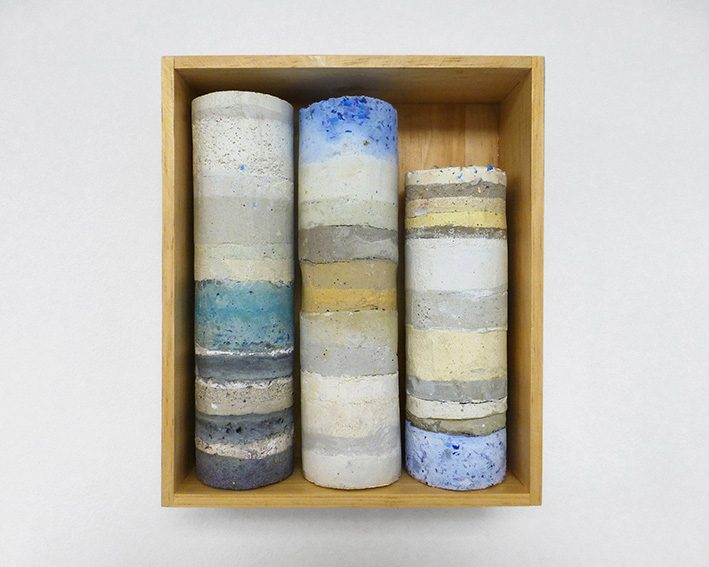
"Artifacts of time, monolithic and stereotomic, that settle on the earth as if they were born from it, where their sedimentary and stratified condition accounts for a totality composed of infinite particles capable of containing the atomic condition of the world in the same space. Its fossil stability resides in the transformation itself: its mass wears away and thus allows to show the fragility of a living geological matter that configures all that exists, but at the same time is translated by the present condition of the physical and cultural context." Text by Daniel Eslava
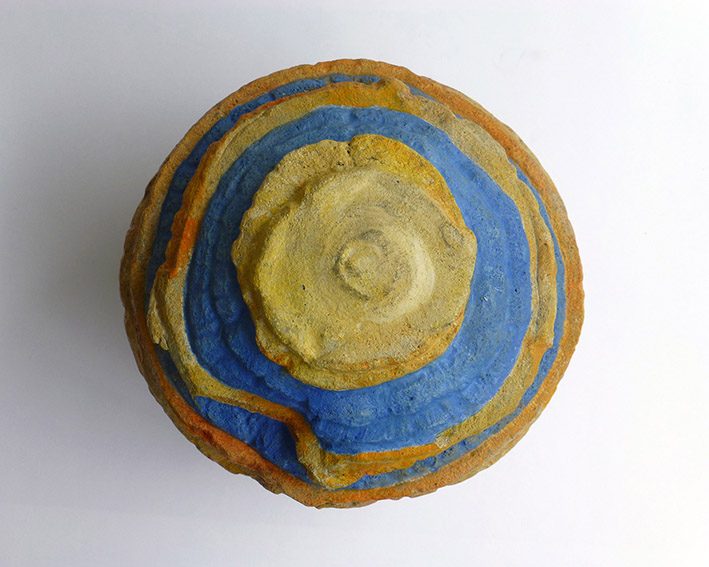
In recent years it has been proposed to redefine the current geological epoch, the Holocene, as the "Anthropocene" due to the impact of human activities on the planet, or "Capitalocene" if we consider that these activities are developed within a system of economic and political power, or even "Technocene" if we focus on the industrial and technological waste that accumulates in the lithosphere, hydrosphere and terrestrial atmosphere. In June 2023 the Anthropocene Working Group (AWG) of the International Stratigraphic Commission announced that a horizon with elevated levels of radioactive isotopes, identified in the sediments of Lake Crawoford in Canada, could mark the beginning of the Anthropocene around 1950. Tecnolitas (2023) is a series of synthetic stratigraphies in the form of lithological cores or cores, made from the casting of successive layers of mineral aggregates, calcareous cements, technological debris and recycled petroleum polymers, which addresses the discussion of the Anthropocene, reflects on the technofossils and proposes, anticipating the millions of years it may take for sediments to become rocks, possible geological records of our time.
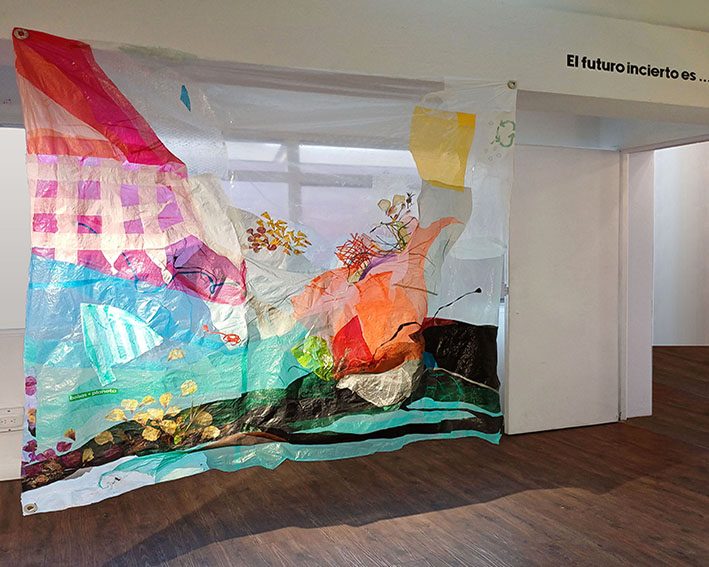
Picnic Table Cover and Park air reservoirs (2023) are installations of recycling and resignification of the "plasticity" of polyethylene bags found in the parks of the city of Bogota. "The stations of making emerged among the conceptual knots of uncertainty that is rarely evident in an exhibition (...) Therefore, we proposed a methodology of interconnection of knowledge based on gestures of simplicity. By proposing the image of the rooted, we managed to glimpse the points or detonating nodes of habitats. And so, we came together to postulate the parks as "living islands" that possessed an agency that it was crucial to reveal (...) Living material either by its organic composition or by its history in the space it once inhabited. Seeds, debris, fibers, plastics, cardboard, leaf litter, platforms, grass (...) Waste ends up nesting, showing the complexity of forms that inhabit them and allowing us to recognize that other physical, sonorous, material and sensitive relationships are possible, providing us with new paradigms of empathy towards the rest of the entities of the planet. Living beings share their noises and footprints; suddenly we are aware of the air that we previously took for granted..." Excerpt from the curatorial text of Futurus Inciertus, a project of reflection and co-creation around the climate crisis, proposed by the Vypo platform and the Abago collective (Programming Grant in Visual and Plastic Arts of the Santa Fe Gallery network Idartes 2023)
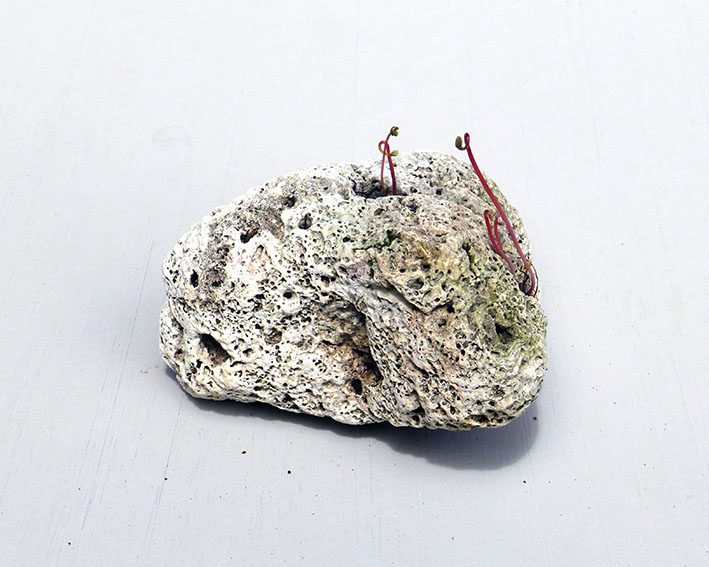
Anthropocenic Rocks (2023) is an exercise of collection, classification and recontextualization of construction debris found in the parks and streets of the city of Bogotá. What makes a material or substance to be considered a rock? Is it its mineral composition? Its solid and compact physical state? Its textural characteristics and relationship between particles or crystals, matrix and cement? Its formation process and its igneous, metamorphic or sedimentary origin? If we take a brick or a ceramic tile manufactured in a burning kiln, would we not be looking at a solid and compact material, composed of clay minerals, vitrified and recrystallized as a magma that has cooled? Or is not construction concrete an aggregate of gravels, sands and cement extracted from limestone rocks, set and lithified? However, if we wonder a little about what natural rocks can mean or represent according to our conception of time and the passing of time, we feel that they seem to have always existed and remain almost intact, evading any reference to the passage of time. Then we could say that a brick and a fragment of concrete are rocks, evidently artificially manufactured rocks, but rocks at last, only that they would not constitute an evidence of geological time, but they would be warning us of our own existence.
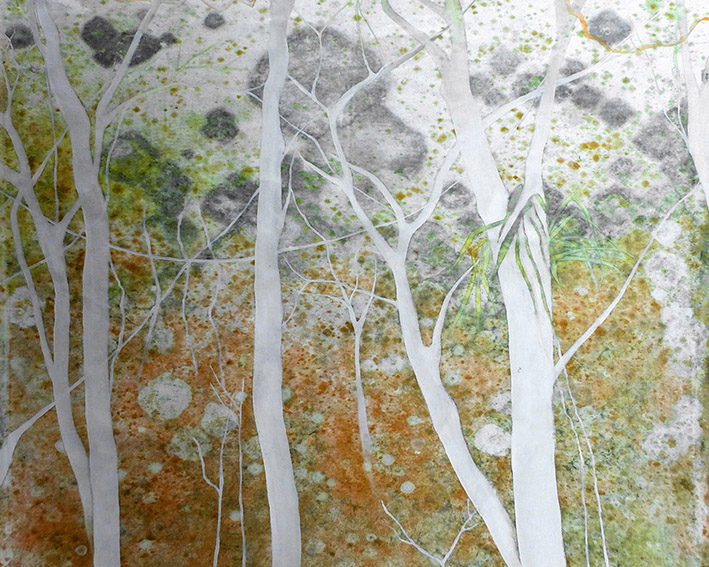
Ecosystem I (2023) is a pictorial installation and an intervention of a habitat built in the middle of the tropical rainforest of the Tayrona region in the Colombian Caribbean, which arises from the observation of the biological interactions that appear in this place between living organisms and natural or artificial structures.
The lianas or lianas use the support of the trees while they rise and entangle themselves as a woody tissue without beginning or end. They comprise 10% to 40% of the individuals and plant species in tropical rainforests, contribute to diversity and help animals move through the canopy, however, as they are proliferating due to the increase in carbon dioxide and temperature, they could alter the growth and reproduction of trees, but at the same time signify an adaptive process of forests to climate change factors. Tropical forests play a fundamental role in the global carbon cycle. Trees absorb carbon dioxide through photosynthesis and then store the carbon in their biomass, which reduces the amount of this greenhouse gas in the atmosphere.
The green sub-aerial microalgae (chlorophytes) are also photosynthetic and their development is favored by the environmental conditions of light, humidity, temperature, food, support and environmental disturbances. Thus, in the intervention site, the growth of algae prints on the cotton fabric of a kiosk of ancient architecture, a series of living geometric shapes that could well compose an abstract painting. Hence, the intervention incorporates and collaborates with these forms, keeping them visible on the outer side of the canvas, turning them into the dense and multicolored background of the drawing of tree silhouettes and tangled lianas in the foreground. The algae are drawn by themselves, the lianas, replicating the action, are drawn by the artist. On the inner side of the canvas, the growth patterns of the microalgae are repainted with dots of photoluminescent paint, revealing a glowing microcosm.
The set of elements coexists in a hybrid and autonomous ecosystem, which allows perceiving this habitat as a new space of multiple processes and relationships. At the same time it enables different visual devices by interacting with natural light, artificial light, counter light or the absence of light, giving the installation a temporary and changing sense, a phenomenon that is also evident because the microalgae are alive and therefore will continue to spread over the surfaces. The result is a dynamic amalgam of images that reveal and fade at different times, like superimposed layers that turn on and off but are always included, just as the environment and living beings could be interconnected in an expanded ecosystem, without dividing or fragmenting it into categories such as nature, object, space, instant, art and utility.
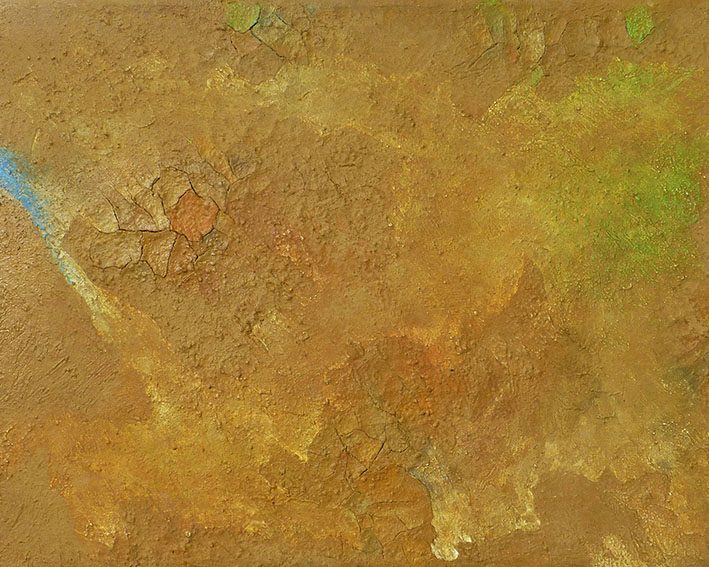
Living Clay (2021) is a pictorial installation designed as a light interior wall for a house built in guadua. The nine panels that make up the work are made with sticks of caña brava, a species native to the area, and covered with several layers of mud, also collected on the site and with which the walls and floors of the building are constructed. Barro vivo arises from the participation in a residency-workshop on bio-construction techniques with mud and other natural materials tutored by Mauricio Guerra and Laura Franco. Mauricio and Laura are ecological biologists who have been developing since 2018 a permaculture and conservation project called ¨La Lomita¨, located in the Taykú sector in the vicinity of the Tayrona National Park (Magdalena, Colombia). In this way, among bromeliads, heliconias, caracolis and sambocedros; titis, howlers, toucans and paujiles; granite rocks, yellow clay and grey sands; rain, wind, sun and sea, of the Caribbean coastal tropical rainforest, Barro Vivo collects and mixes with the earth all this variety of shapes, colours and sensations that impress the visitor or resident. This stay in times of pandemic and confinement, allows the artist a concrete experience of approach to techniques, materials and natural environments, which provide elements for the formulation and production of work, while raising possibilities of adopting a sustainable way of living and artistic practice.
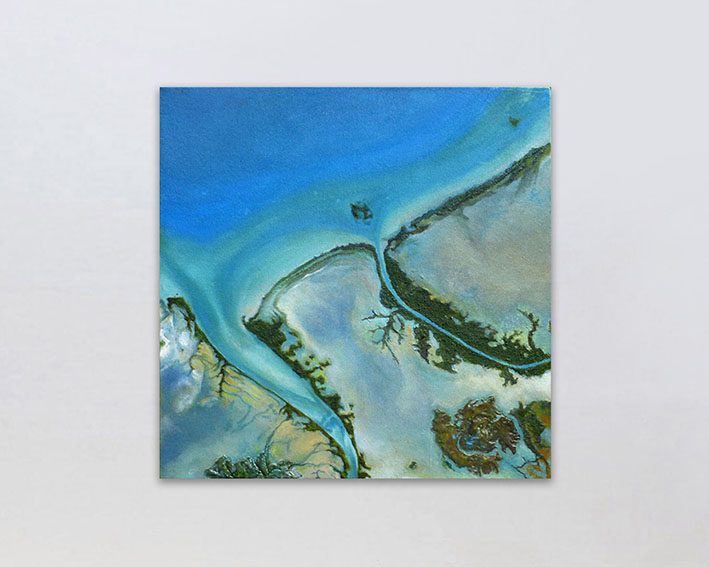
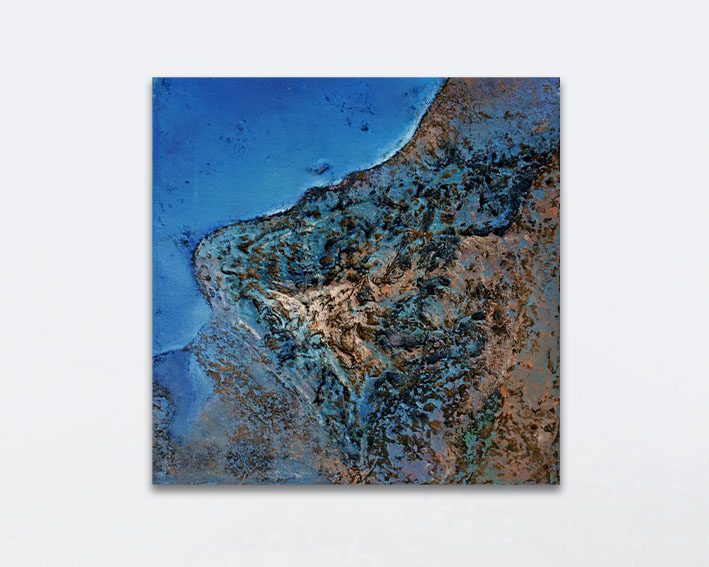
Meeresrand (2021), is a project of oil and mixed media paintings of coastlines and littorals (based on satellite images), made in collaboration with the young Austrian artists Sayen Löffler and Iara Löffler. The coastlines (meeresrand in German) are the transitional and dynamic places of the encounter between the sea and the land, two forces of nature that balance each other by combining and generating a new diversity of characteristic geoforms: beaches, cliffs, bars, barrier islands, deltas, estuaries, intertidal plains... In this same sense, the collaboration between the two artists, propitiates an encounter between two cultures, two generations and two ways of painting, reflecting different handles of colour and gestural expressiveness that coexist in the same work. Although islands and coastlines are by nature changeable and exposed to marine erosion, the global rise in sea level caused by the increase in the average temperature of the earth and the consequent melting of the polar ice caps, has contributed to the progressive advance of the sea over the continent and even to the complete submergence of some small islands in the Pacific. This, in a way, gives the work a contingency sense, portraying physical features that could disappear at any moment.
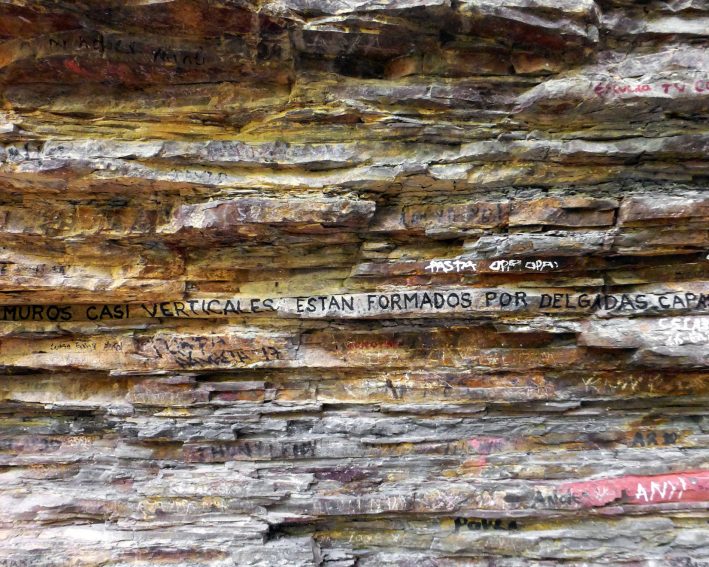
Timeline (2020) proposes a landscape intervention on the ¨Pandi-Icononzo Natural Bridge¨, which was formed when large stones fell through the crack that deepened the Sumapaz River on the Magdalenense slope of the eastern mountain range and became stuck, allowing communication between the Muisca settlements in the region from before the conquest. Considered a natural wonder, this place inspired legends, was explored in the scientific expeditions of the 19th century and became a silent witness and scene of horror in the era of violence, to now become an ecotourism destination. The intervention consists of writing a text on the sandstone that forms one of the walls of the crevice, always following the same sedimentary layer as if it were a line, resulting in a written line 20 metres long. The text is constructed with sections of stories referring to the site. The characters are written with red pigment, black ink and felt-tip pen, echoing the rock paintings of El Helechal (a nearby archaeological site); the chronicles of expeditionaries and the signatures that recent visitors have left on the rock, respectively. Timeline intersects on the same plane the geological and historical conceptions of time. The principles of stratigraphy postulate that strata are deposited and accumulate vertically and have the same age along their entire horizontal extent. The historical perspective accounts for past events as changes in time and usually represents them chronologically on a continuous, horizontal line. Timeline warns of the shortness of human existence in relation to the infinity of geological time by narrating episodes that took place from colonial times to the present day, on a single centimetric stratum that can contain the geological record of 500 years. The writing of the text resorts to cave painting and graffiti, as means that allow the subjectivity of the individual to leave its mark on the environment and thus reaffirm its existence. When the text is composed from previous narratives from different eras, Línea de Tiempo produces a timelessness of story and place.
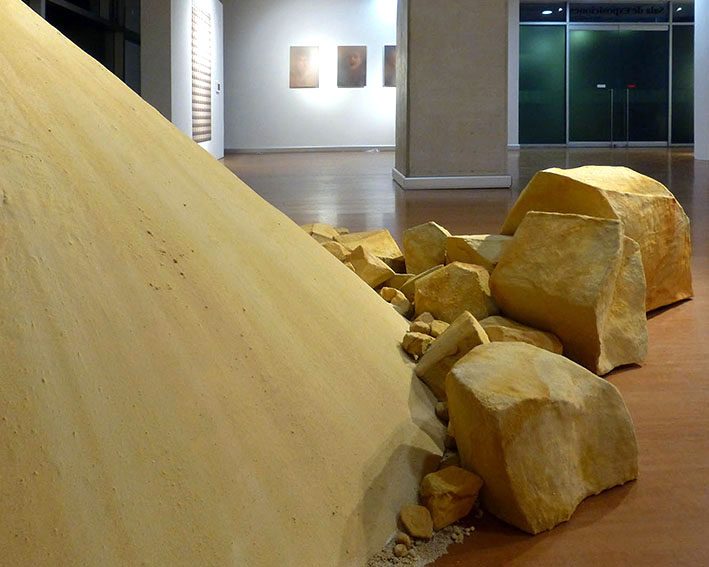
Mass Movement (2019) is a sculptural and pictorial installation consisting of a sandy-looking conical mound surrounded by boulder-like blocks scattered on the floor. The installation simulates the deposit cone of a mass removal phenomenon, more commonly referred to as a landslide, except that here the cone is empty and the rocks and rock fragments are not authentic. Remoción responds to a particular process that takes the knowledge and experience acquired in the field of geosciences and shifts them to the field of art, creating a hybrid that reconciles and complements the artist's interests. Hence also the name and meaning of the installation: the removal of a volume of previously established cognitive and experiential elements and their subsequent rearrangement and recoding in a new form and in a new context. In this sense it is a very personal work, where the resolution sits as an installation somewhere between sculpture and painting; halfway between an element of nature and a constructed object. The installation exploits the materiality and kinetics of natural processes, by generating associations with cultural history and the symbolic power of them, it alters the natural order by bringing the exterior landscape into the interior space and somehow blurs the line between the real object and the artistic image.
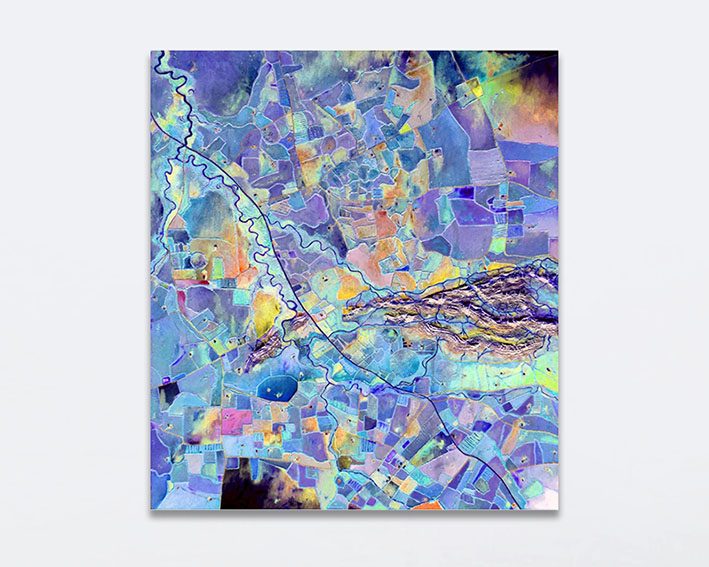
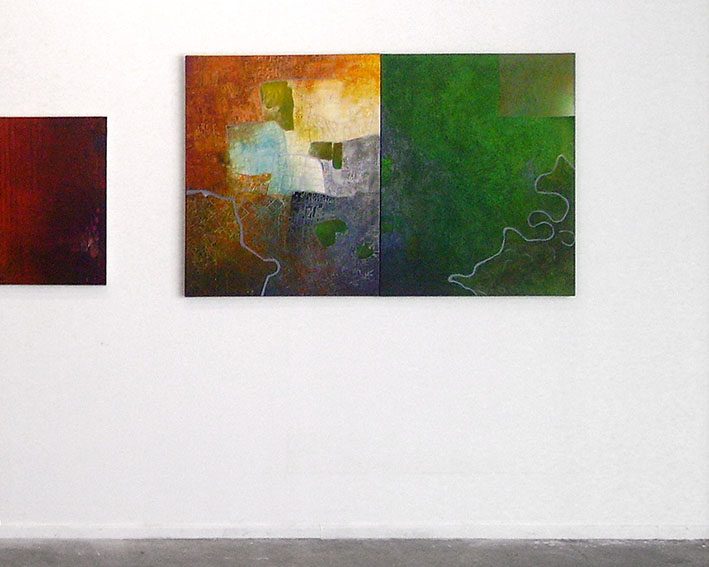
Terrarios (2018) is a series of paintings that draws on the elevated viewpoint of the satellite image, but reduces the scale and focuses attention on the physical features produced by human settlement and its interaction with the environment. The composition of the paintings is not based on a particular image, but comes from the mind and hand of the artist. This series also repeats the process of numerical capture and reproduction of the remote sensor, by intervening and presenting the pictorial works as digital works that simulate the false-colour band composition of Landsat images. The visual result of the digital processing of the initial paintings induces the interpretation of the artificial image as real, partly normailing the anthropogenic modifications of the landscape, which historically and politically have been considered as processes of adaptation and modernisation, minimising environmental impacts.
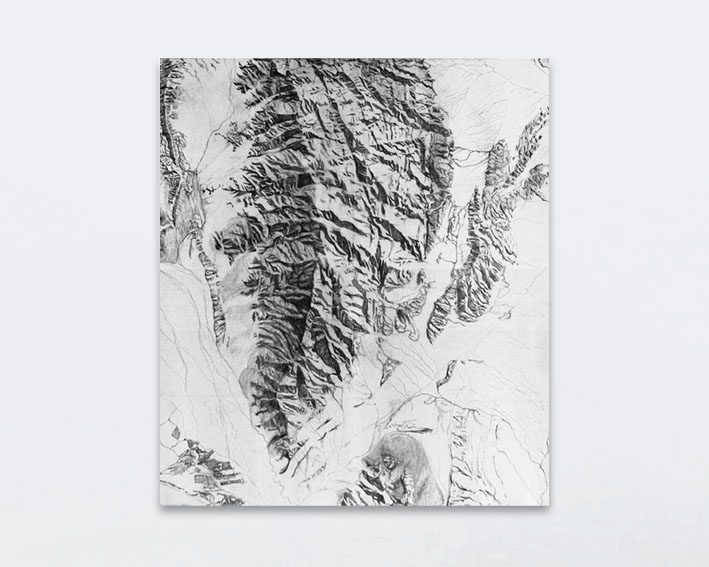
Terráqueos (2017) explores the elevated viewpoint and its possibilities of perception and representation of space. Using satellite images of the Earth, a series of paintings are produced in which the cartographic approach to the landscape blurs the boundaries between figure and background, in a way approaching abstraction. The exercise of reproducing pictorially the image captured by the remote sensor, echoing "informalism" by working the surface with reliefs and geoforms, emphasises the materialisation of the digital image. This enables the viewer to perceive the terrestrial features as real and close elements, experiencing beyond the practicality and accessible virtuality of satellite imagery, provided by the location and navigation tools Google Maps and Google Earth.
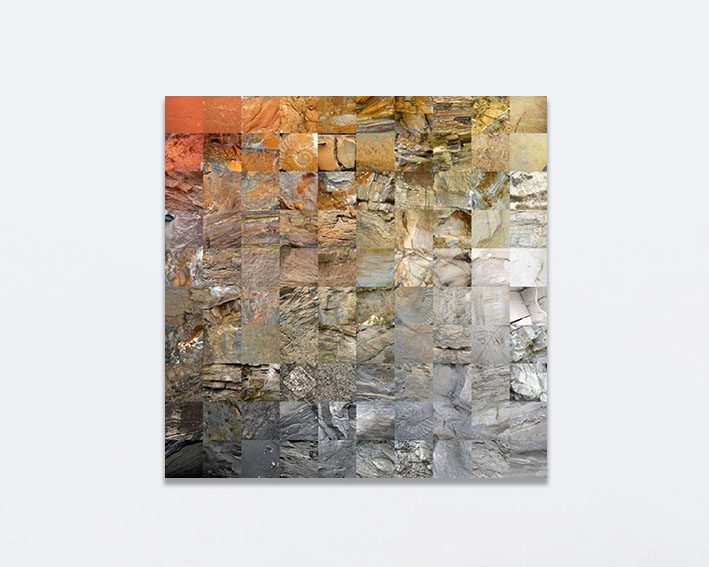
Lithographic (2010-2015) compiles and reorganises geological information collected in the field over five years of participation in hydrocarbon exploration projects. The photographic record and lithological descriptions are digitally recomposed as photographs and drawings, in the style of illustrative plates in scientific publications, but replacing the technical parameters of classification with aesthetic criteria of composition. These images, which acquire an unusual expressiveness by highlighting the visual richness of the rocks, evoke a romantic vision of nature that contrasts with the objectivity of scientific research, which is encouraged, disseminated and valued mainly in terms of its usefulness for the extractive or productive industry.
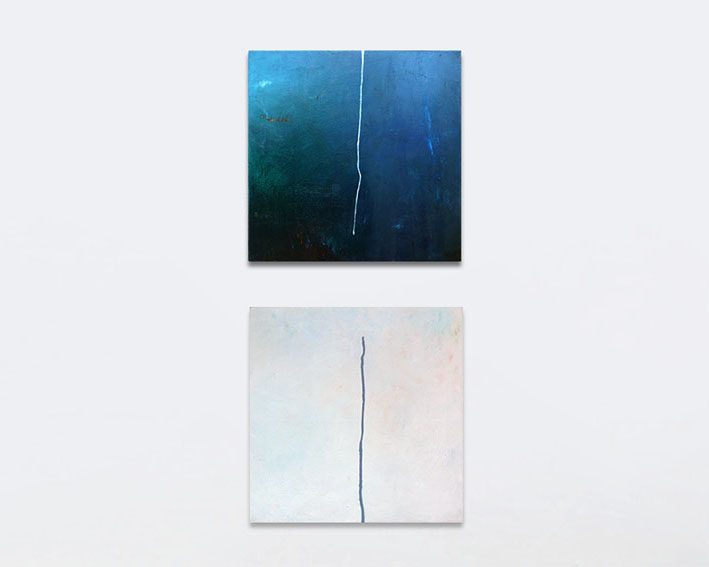
Stalagtite (Stalactite/Stalagmite, 2010) is a pictorial exercise that simulates a natural physical and chemical process. Stalactites (stalaktos: runoff) and stalagmites (stalagmos: dripping) are formed on the ceiling and floor of caves by the chemical precipitation of water filtered through cracks in the rock, which constantly drips and drips over long periods of time. In the work, which is worked as a diptych, the colour dissolved by the dripping solvent applied to the upper paint leaves a discoloured line and then drains into the lower paint, generating this time a line of colour on the initial background.
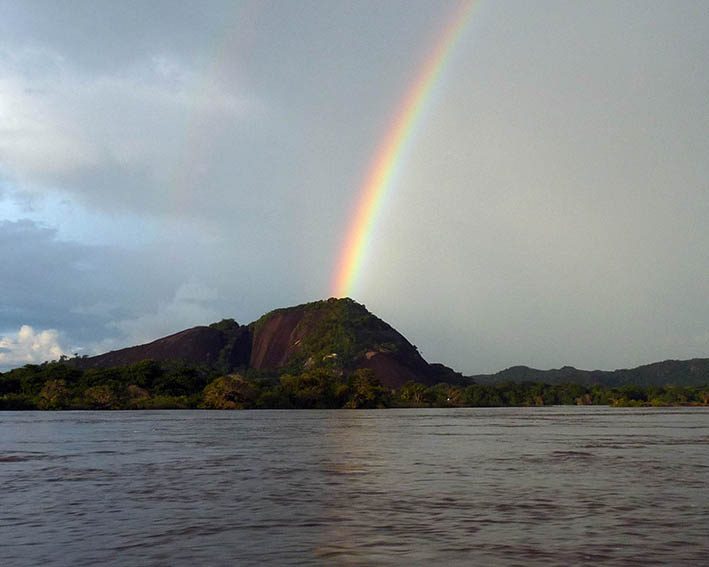
Spontaneous (2010-2021) is a photographic series of mainly natural landscapes and rural scenes, made during different trips and journeys since 2010. The series contrasts forms and apparitions produced by the weather or natural phenomena, with anonymous and unsuspecting installations and compositions made by the hand of man. Journeys involve, even temporarily, changing rhythms and breaking the everyday; natural landscapes encourage observation and the experience of space and time. Thus, being in the countryside and nature intensifies the capacity to notice and be amazed by extraordinary manifestations: spontaneous or unusual, subtle or spectacular, as is life itself. Spontaneous is about the action of seeing and capturing something when we find ourselves in the right place at the right time, but above all it is about what is already there by itself, for its own reasons, what appears and remains or what appears and then disappears, by a combination of intentions and coincidences. To become aware of something also implies that something escapes us, but that it exists whether it is seen or not, inhabiting infinite time or just an instant, without the need to prove its existence.
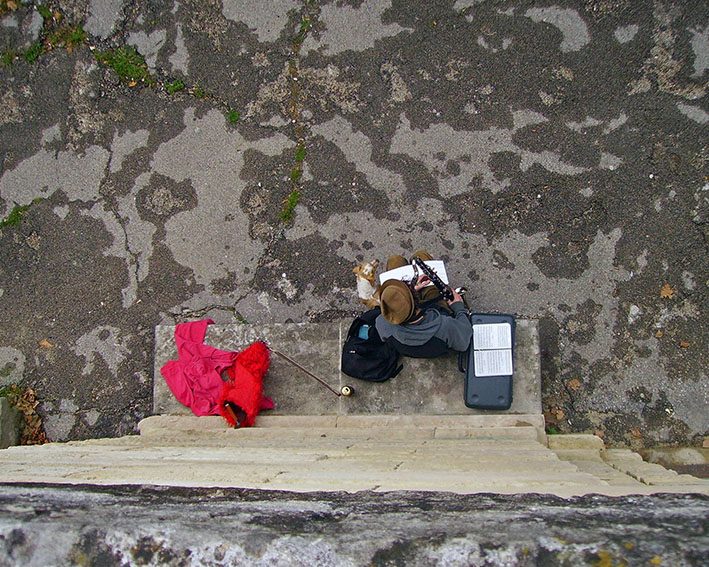
Les Passants Les occupants (2009) is a photographic series that explores dynamics and relationships established between the modern urban landscape of the city of Montpellier seen predominantly from an elevated viewpoint and the people who transit or occupy public spaces. Here, as in most metropolises, the predominant ground materials are concrete, cobblestones and asphalt. Traffic signs and a variety of different-coloured fittings break up the grey monotony and create almost geometrical compositions. Passers-by and occupants enter into this composition, sometimes following the delimiting elements, sometimes interrupting them and sometimes even using them as rest furniture. Shadows, water, fallen leaves and blades of grass growing in the crevices also inhabit these spaces and enrich the forms and textures of the images as living presences reluctant to withdraw. In the same direction, Ronde (2009) is a video and photography project that follows the steps of an alienated person, who wanders frantically, always describing the same circular route in a sector of Montpellier. The mute, monotonous and repetitive way, although following the established codes for the passer-by, in which this individual passes through the public space, provokes the sensation of being in front of an automaton that has become just another element of the urban design and the transport system. Paradoxically, the space that has been modified or constructed by human beings for their own comfort or functionality then becomes a conditioning factor in their behaviour.
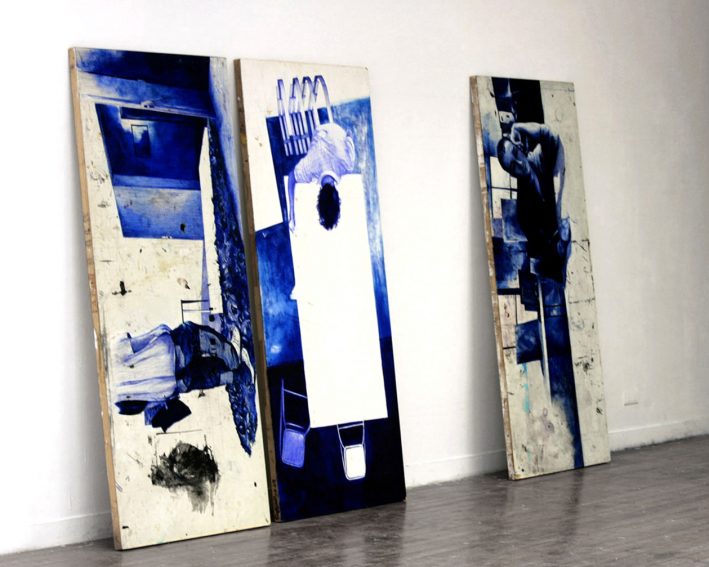
Table(aux) (2009) is a series of drawings made with blue pen and acrylic on white painted boards, initially used as work tables in the art school workshops. The images represented come from photographs that capture scenes of these student spaces and include these tables within their composition, posing various games between object-image; context-functionality and horizontal-verticality. The tables are at the same time, and in a tautological sense, support and representation, and also acquire a double category: functional furniture and art object. Tables arranged horizontally fulfil their implicit function, while their vertical arrangement gives them the status of a painting, but they are still tables, as tables in a state of repose or display. Table(aux) is related to other works that propose observations and reflections on the dynamics of creation and exhibition in the academic environment of art schools, such as the series Ecole (2009).
Concentric triangle (2009) is a work that involves drawing, painting and sculpture. It is an approach from the perspective of human geography, of the Sierra Nevada de Santa Marta, establishing an association between the physical place (the mountain) and the cultural symbolic element (the backpack). The mountain, which has a triangular geometric shape, is the centre and the inhabited space, provides the water, the land, the jungle, the wool. The wool woven concentrically is the backpack, it guards life (the coca leaf) and at the same time represents the ancestral cosmogony of the indigenous peoples of the Sierra. Everything has a centre and everything is intertwined in a vital circle. The plastic treatment of the handmade object in the work is the path that leads both the artist and the spectator from the physical and sensitive dimension to the symbolic content.
Green Brick (2009) is a pictorial and sculptural work, resulting from the observation of contrasting satellite images and aerial photographs of Colombian jungles and the slums of Ciudad Bolívar in Bogotá. Green and orange are chromatically opposites, just as the jungle vegetation and the brick structures are also opposites in terms of presence and anthropogenic intervention. The elevated plane approached as a device for capturing images from an unusual point of view, gave rise to an exploration of new possibilities of perception and representation of space, resulting in the work in a cartographic abstraction of the landscape, or if one approximates the viewing distance a little to the human scale, in an unusual perspective of body-object arrangements in public space. In the remote sensing images, differences in height or relief enhance the three-dimensionality of the landscape, like a model effect, which led to accompanying the pictorial realisation with small sculptural installations of precarious little houses anchored in stone and living pictures of grass sown on frames.
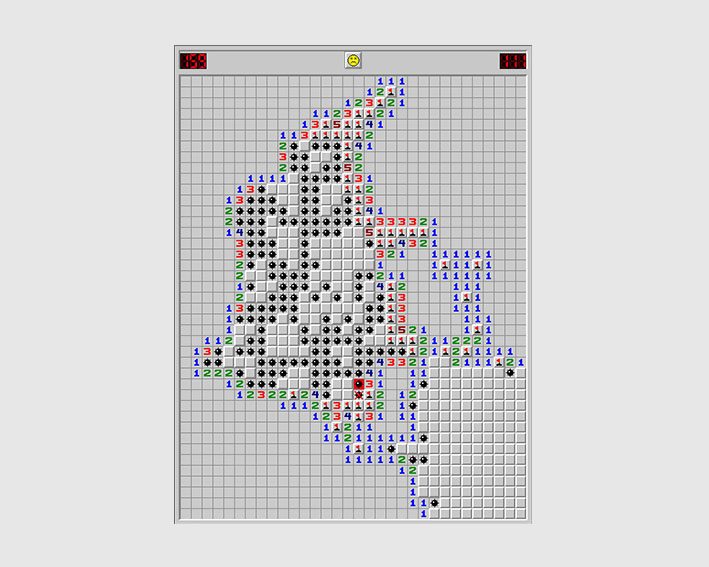
If it only was just a game (2008) is a video-animation project, which appropriates the programming and visual design of the classic PC game minesweeper. This is a game of reasoning, whose objective is to discover hidden mines and deactivate them following a spatial and numerical logic. The appropriation consisted of locating the mines and adjusting the dimensions of the board, in such a way that as the game progresses, the political map of Colombia and the areas where the armed conflict has been most intense become visible. Unlike in reality, if a mine is activated in the game, there is always the possibility of restarting without any damage, hence the name of the work. If it were only a game, it cynically denounces the seriousness of the armed conflict in Colombia and the violence of anti-personnel mines. A physical extension of this work corresponds to an interactive installation where inflated balloons are camouflaged in leaves, branches and earth scattered on the floor of the room, so that they burst when stepped on by the spectator or visitor who is invited to walk over the installation to enter the exhibition.
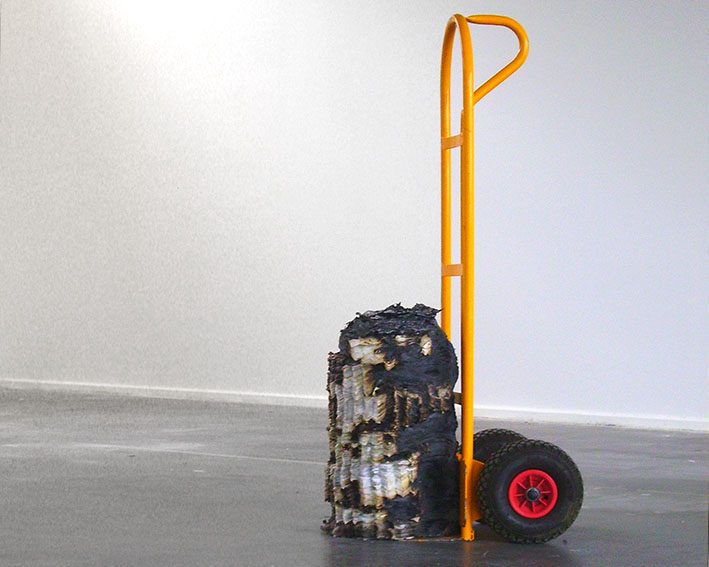
Incolumna (2008) is a sculptural work, built with sheets of paper arranged one on top of the other, giving the column form of classical architecture. Each sheet of paper contains a text and images that relate the events that took place during the ¨Toma y retoma del Palacio de Justicia¨. Barbaric events that compromised the military forces and the government and which have still not been clarified, calling into question the institutions of power and justice of the state. In this way, the ashes to which the palace was reduced in the retaking and the impunity in the death and disappearance of a hundred victims, became the foundations of the "new palace". By being burnt, as well as making direct reference to the tragic outcome, the piece takes on a sense of urgency and denounces the need to expose the rubble and uncover the truth behind this violent event.
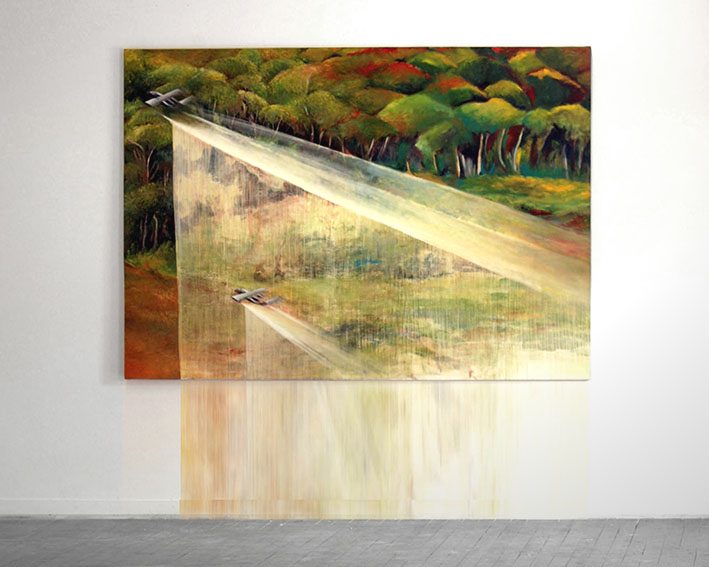
For several decades, Colombia has been experiencing an armed conflict between Marxist guerrilla groups and the state. Since the 1980s, this conflict has been exacerbated by the emergence of right-wing paramilitary groups and the use of coca production as a mechanism for financing the war. Plan Colombia was proposed in 1998 in the context of peace negotiations as a social development programme that would offer farmers a real alternative to coca cultivation. In 1999, in conjunction with the Clinton administration, a plan was implemented that deviated from its initial purpose and focused on putting an end to drug cultivation and trafficking through a vast glyphosate spraying operation. The aerial spraying of this highly toxic herbicide affects food crops, renders land infertile, contaminates water sources and harms the health of peasants. Plan Colombia (2008) is a large-format painting of a mediatised photograph of two planes fumigating a coca crop in the middle of a Colombian jungle. It poses a metaphorical association between the presence of colour on the canvas and life, or between the discoloured, scraped and removed paint and the pollution and destruction of the environment. The pictorial gesture takes on importance and reinforces the idea, when the canvas is finished after it has been hung and the wall is incorporated into the work in a performative and performative sense.
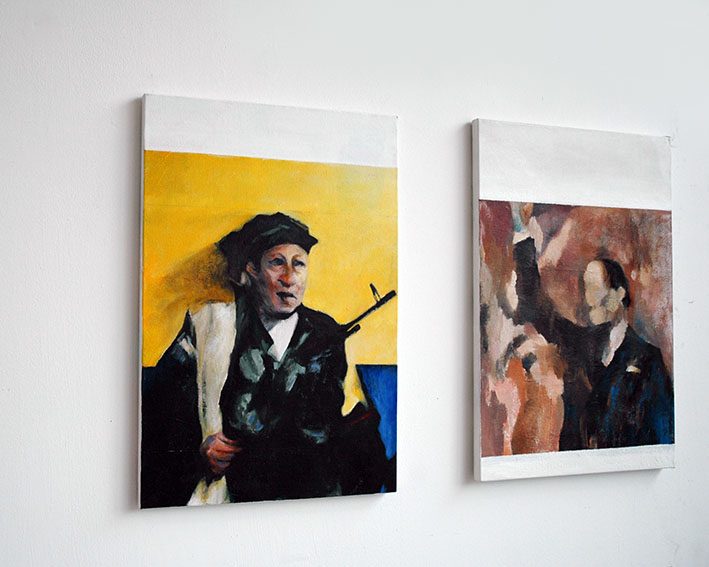
Political portraits (2008) resorts to the pictorial appropriation of images and photographs (which have been massively disseminated by the media) of actors in the armed conflict and in the social, political and economic history of Colombia. These images, painted here as portraits with thick brushstrokes, spots of colour, glazes and blurring that blur the faces of the characters, are so iconic and so deeply rooted in the collective memory of ordinary citizens that they are easily recognisable, without even the fact of exhibiting the portrait of a paramilitary chief next to that of a guerrilla commander, or that of a drug-trafficking mafia boss next to that of a people's warlord, being disconcerting.
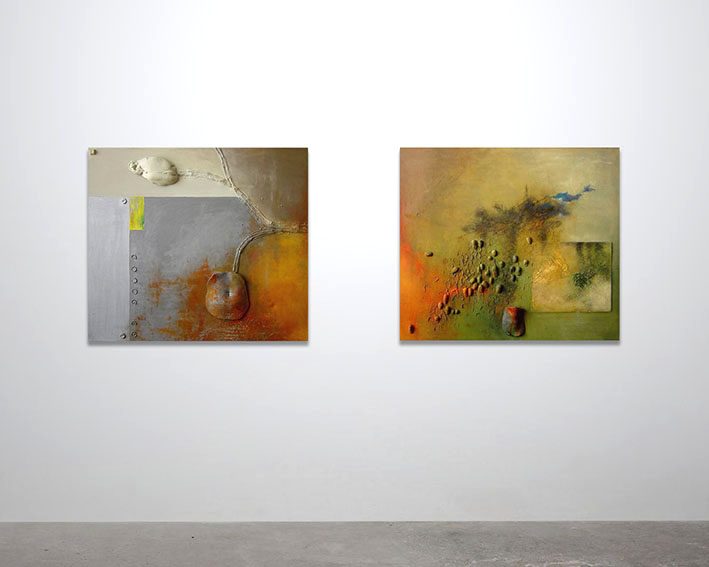
General Diagnosis (2006) is a polyptych composed of six oil and mixed media paintings, made from the assembly of plaster casts of parts of the human body, body prints and casts and impressions of various objects. The line and the drawing do not exist as such, only the paint and the coloured stains cover the textures and reliefs as if on a blank canvas. Diagnóstico General is about a naive and simple look at the world, where the absurdities of society, such as hunger, poverty, consumerism, fanaticism, violence, can be revealed at a glance, not only in the expression of a face, but also in the gesture and emotion contained in a hand, fingers, a throat, a belly...
Landmines (2006) is another work from 2006, conceived as a process of successive transformations and recompositions, involving various techniques such as plaster casts, assemblage of supports and objects, oil and mixed techniques, photography, digital edition, printing on canvas and oil pastel. This reprocessing of the work is activated from the same fragmented and chaotic composition, which refers to the destructive cruelty of anti-personnel mines, and from which three parts are reproduced that can be superimposed or combined to recompose the initial image.
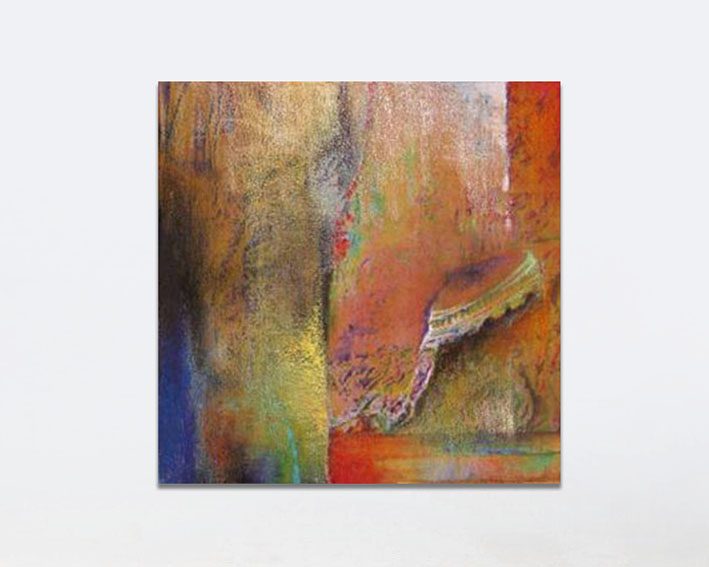
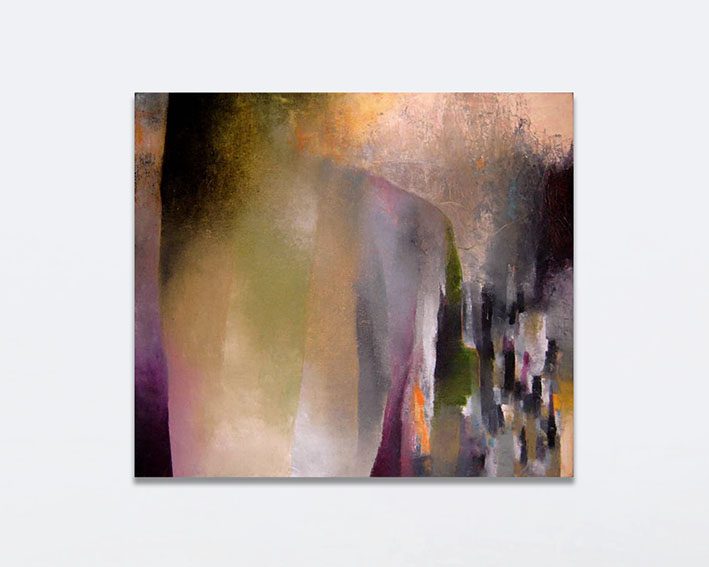
Geography (2006) is a series of oil and mixed media paintings on canvas, which resorts to lyrical abstraction to evoke landscapes and places that have already been observed or inhabited and are still present in the artist's own memory. It is a personal and sensitive work that retraces the steps and searches for images and moments of the past, to relive them through subtle forms and faded hues, as places appear in our memories. In a way it is an unfinished series... it is an endless series.
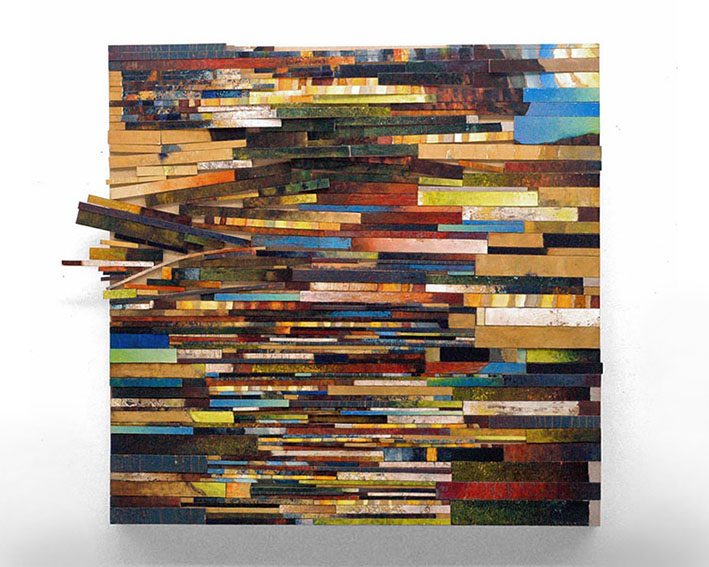
Exercises (2005) comprises a group of oil and mixed media paintings on different supports such as canvas, wood, cardboard and in various formats. They are carried out as a series of explorations of the natural elements of composition: colour, light, form, texture and reflections on the artist's own need and pictorial sensibility. They also raise questions related to painting itself, such as: Is it possible to compose, decompose and recompose a piece, would it still be the same work or would it be a new one, or when is a painting really finished?