Straticromias
Straticromias (2022) is a sculptural project that proposes a series of synthetic stratigraphies made by filling ceramic molds with successive layers of mixtures of sand, calcareous cement and mineral pigments.
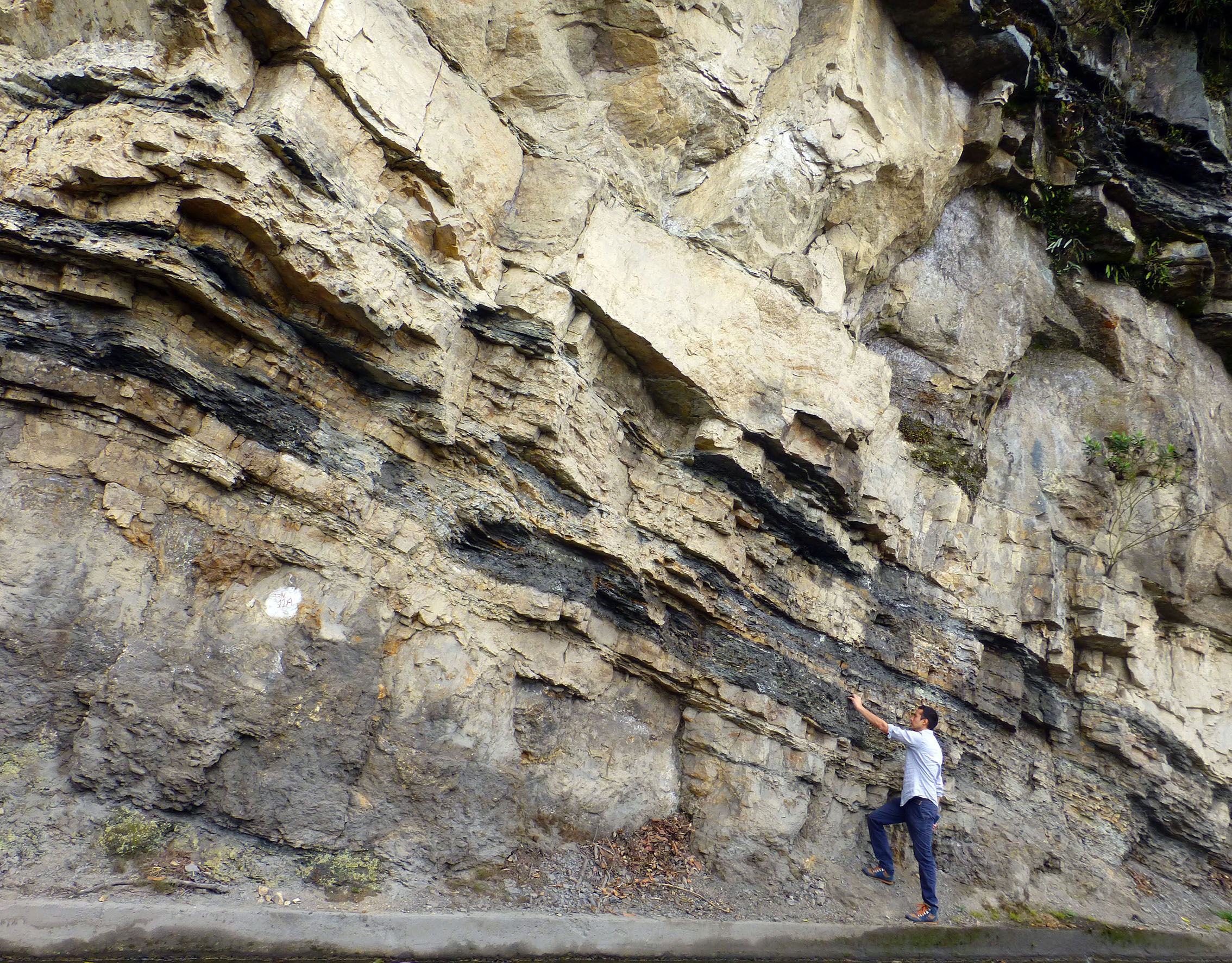
In recent years, the possibility of redefining our current geological epoch with the name "Anthropocene" has been raised, taking into account the impact of human activities on the planet. when and where did human activity begin to leave its indelible mark on the Earth's surface? did it begin with the industrial revolution, with the extraction of fossil fuels, with nuclear testing or with the development of agriculture thousands of years ago? Since 2009 a group of scientists (Anthropocene Working Group AWG) has been searching for a recognizable marker within the stratigraphic record to support the formal definition of the Anthropocene as a new epoch on the Geologic Time Scale. In stratigraphy, the science that studies and interprets sedimentary rocks and units, a stratigraphic marker consists of a sedimentary horizon of great lateral continuity that is clearly recognizable by its physical characteristics or fossil content, being very useful for correlating events or delimiting sequences. Typically these markers are the result of generally catastrophic, instantaneous episodes causing extinctions of life, such as volcanic eruptions or marine avalanches. A condensed section is, on the contrary, an interval of marine sediments that accumulated very slowly, representing a very long period of time. Thus, fossils and organic material are very abundant there and are concentrated in thin black horizons. When these sequences are deposited during marine transgressions and are associated with maximum flooding surfaces, they can also form important stratigraphic markers.
In 2015, the Visual Arts Institute at the University of Wisconsin-Milwaukee organized the exhibition Placing the Golden Spike: Landscapes of the Anthropocene, which invites us to contemplate how the manipulation of local ecologies and the global exploitation of natural resources will require new ways of living in the 21st century and brings together nine contemporary artists who through photography, sculpture, video animation, film, performance, and participatory events explore different places where the golden spike (in stratigraphy GSSP, Global Stratotype Section and Boundary Point) that would mark the beginning of the Anthropocene, such as the surreal landscapes of oil fields, nuclear waste dumps, polluted atmosphere, rising sea levels, plastic waste, and even digital space.
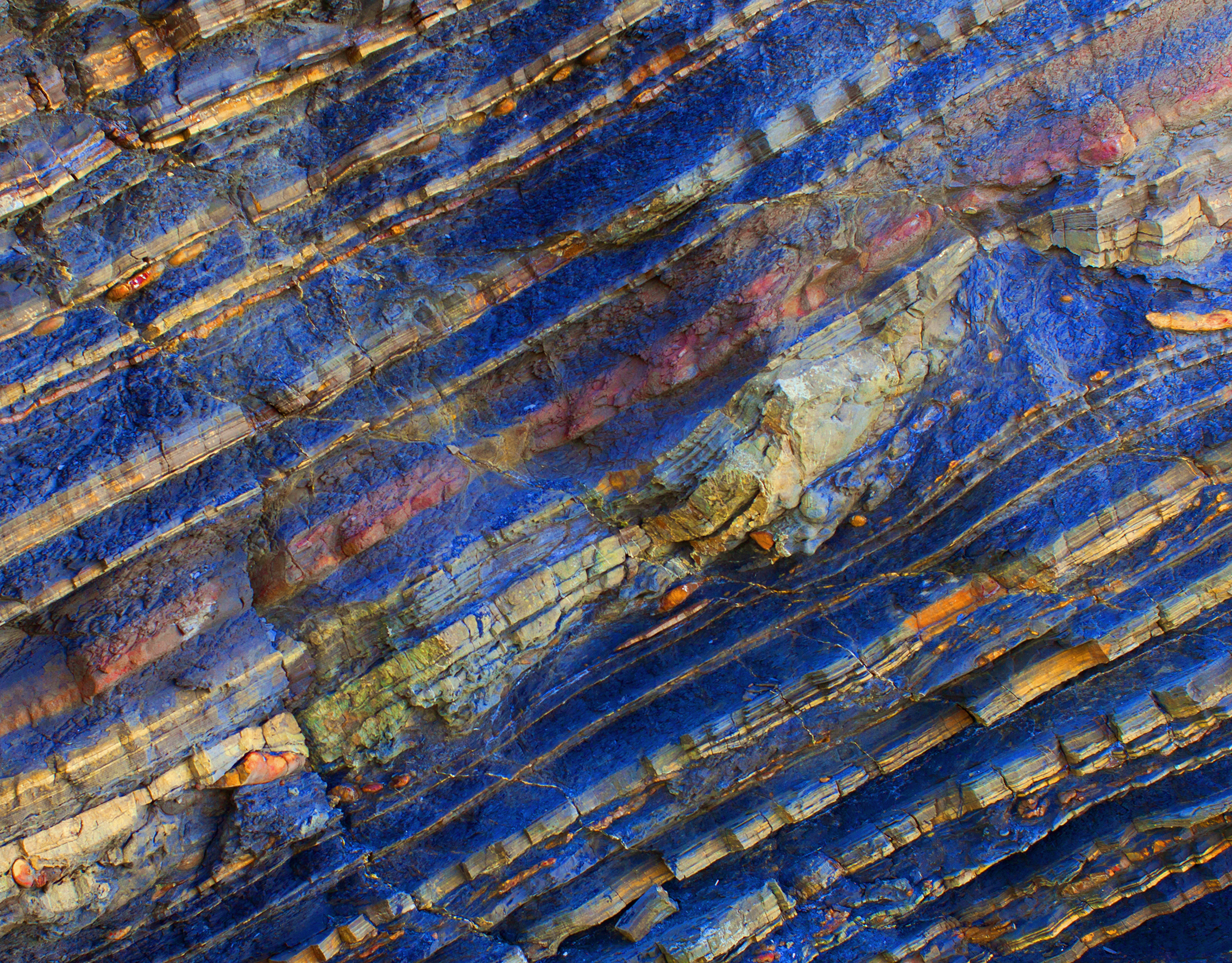
Straticromias resorts to geological concepts such as stratigraphic markers and symbolic associations such as the physical record with existence, the succession of layers with time and color with art, to take up the discussion on the Anthropocene and imagine through color and material sculptural relics of industrialized society. Could we mark an era without becoming the cause of a short and catastrophic event by destroying or irreversibly impacting the place we inhabit?
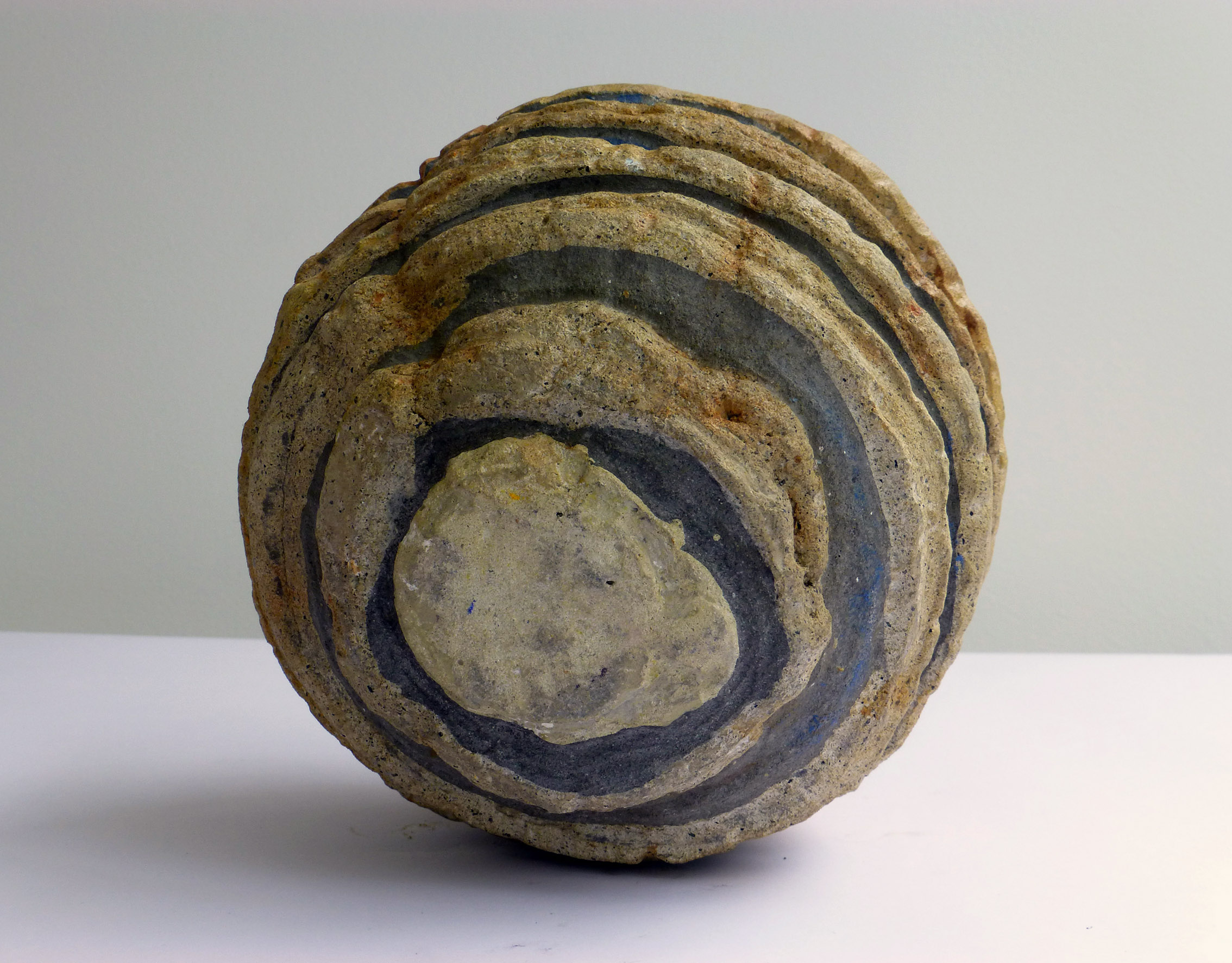
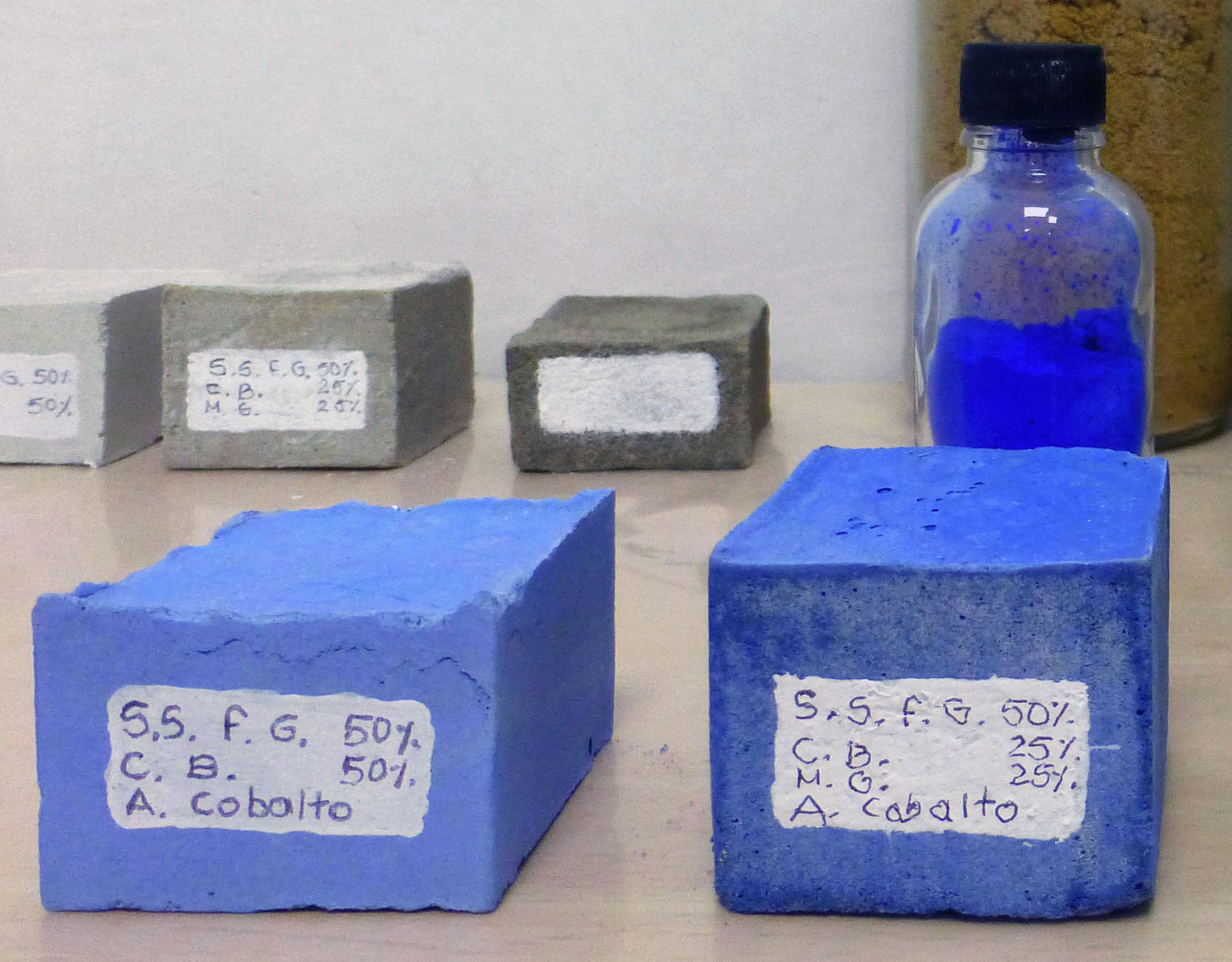
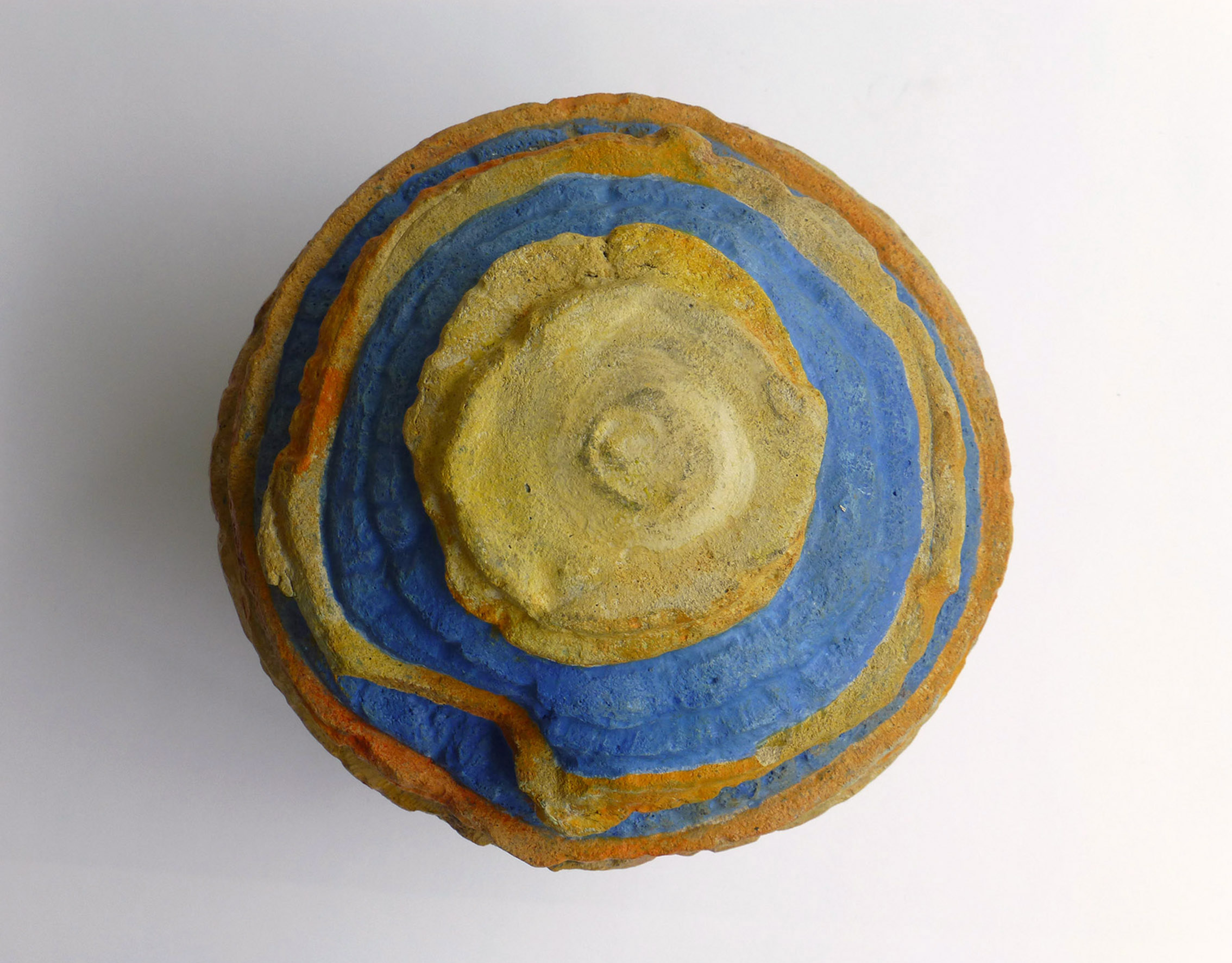
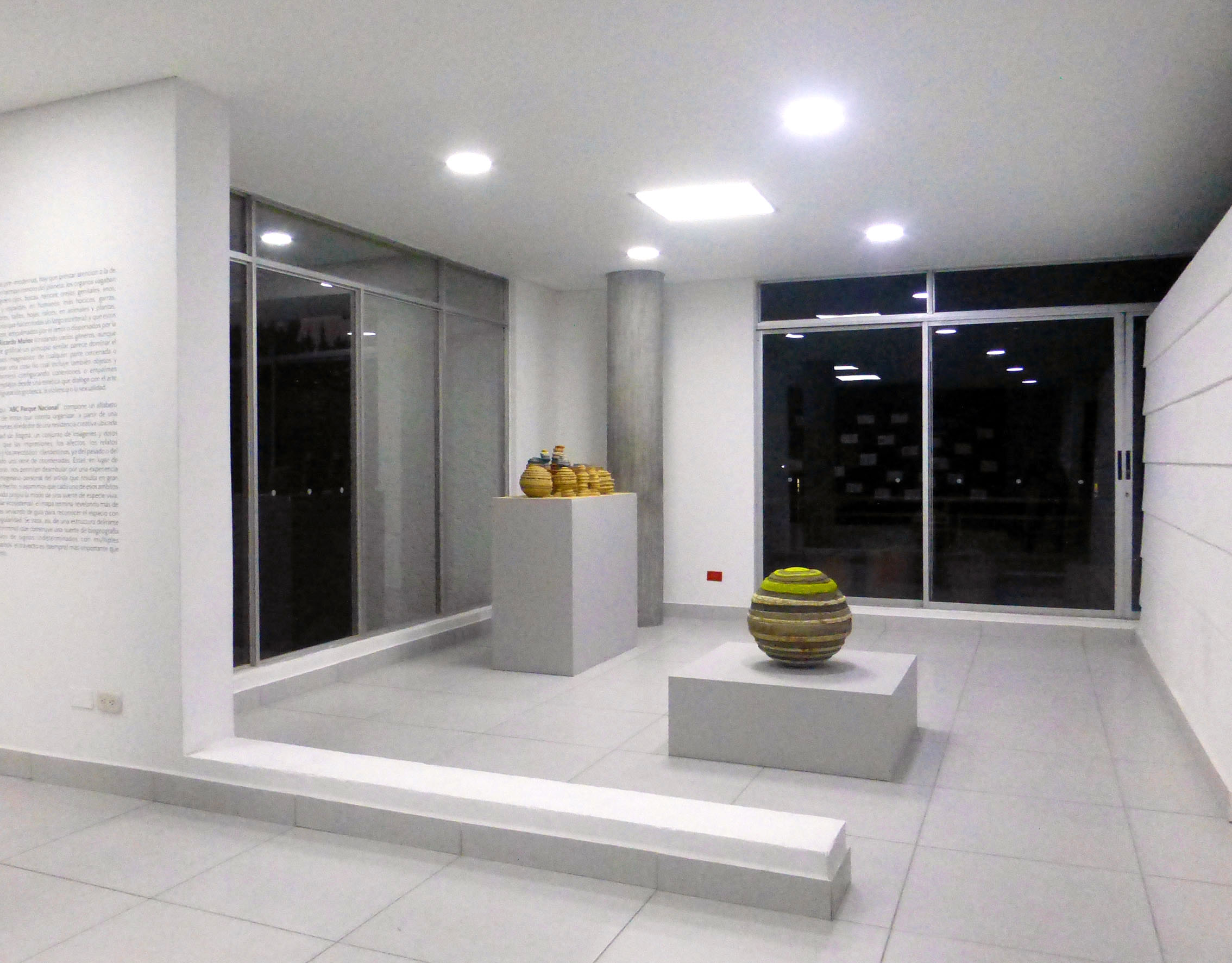
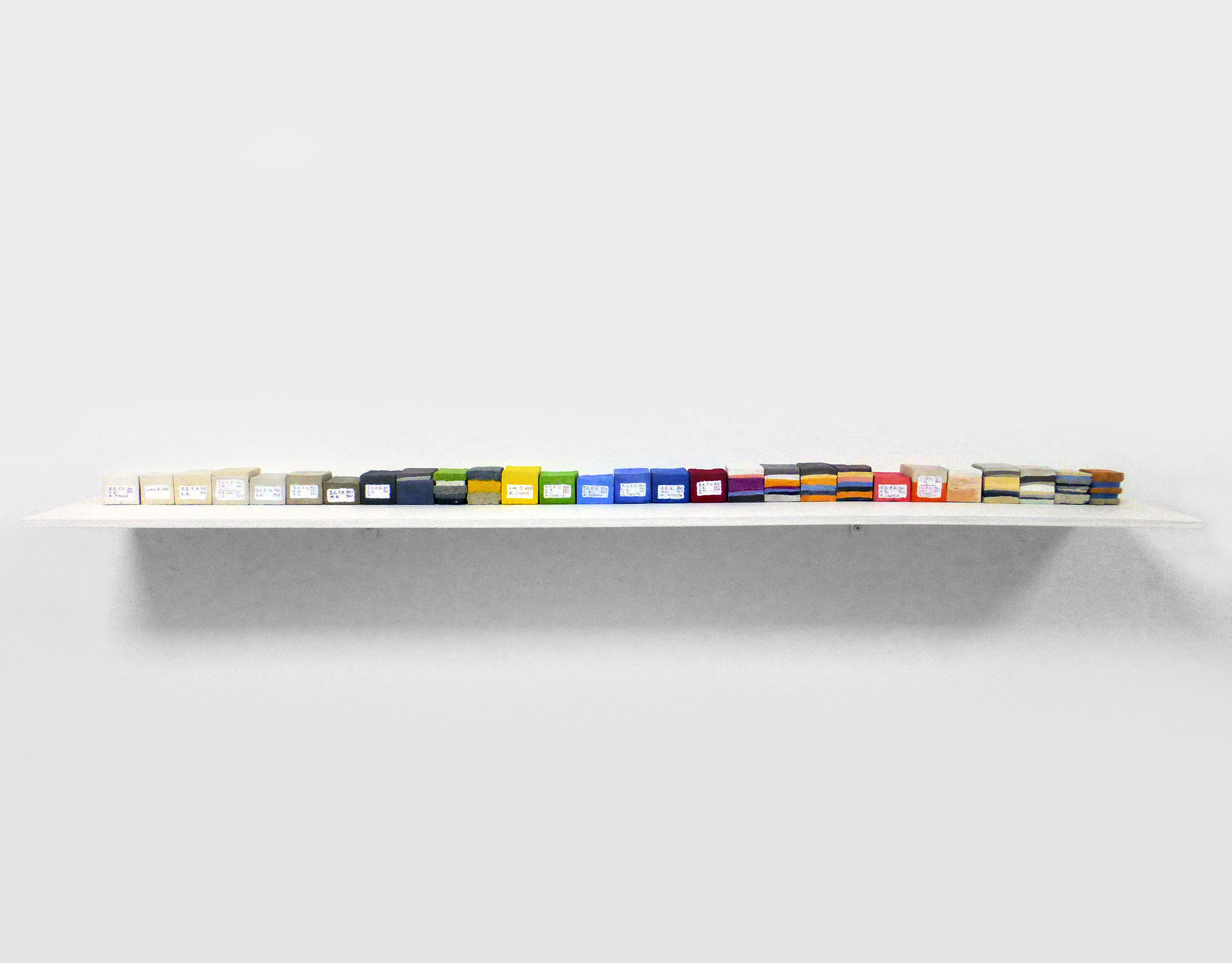
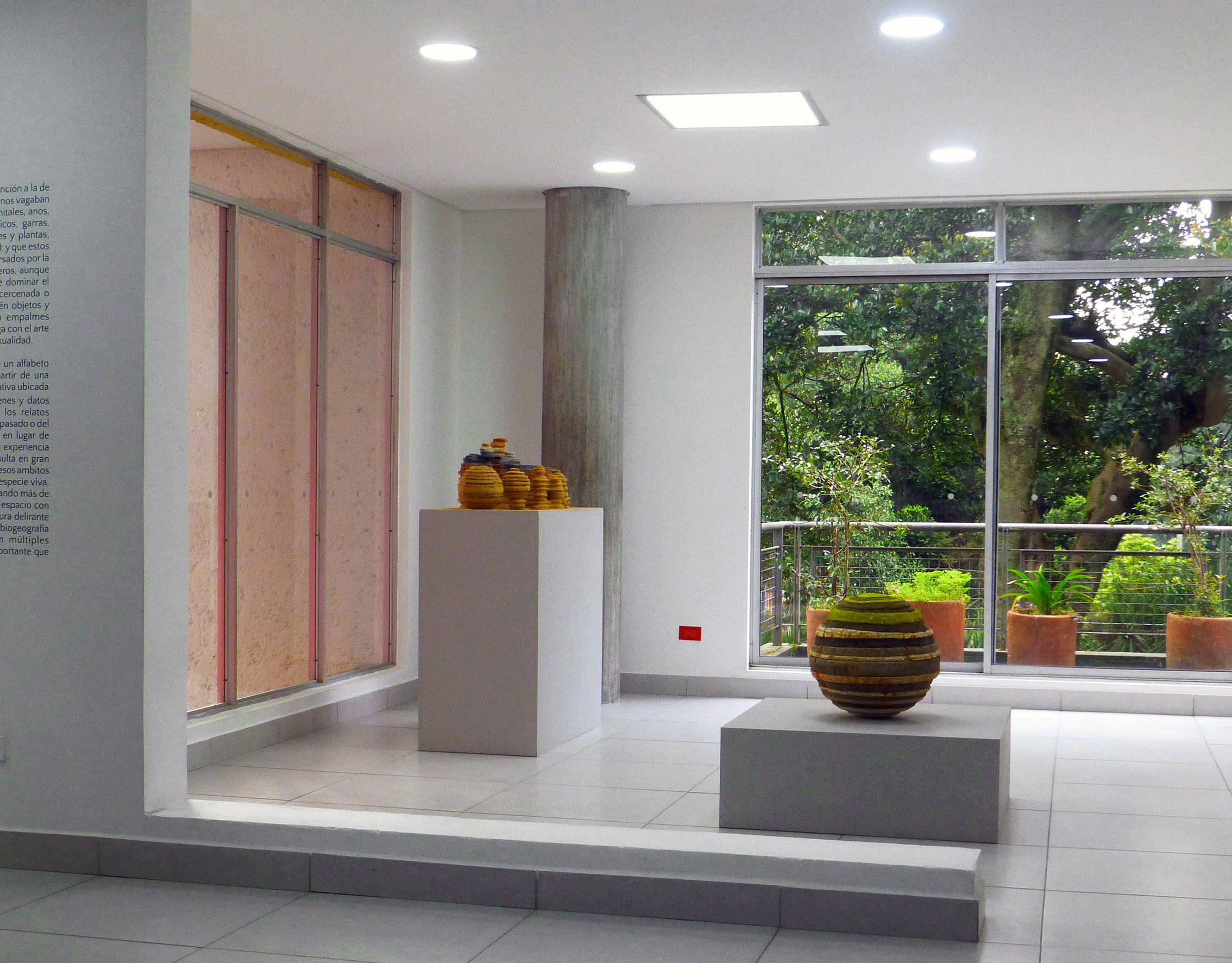
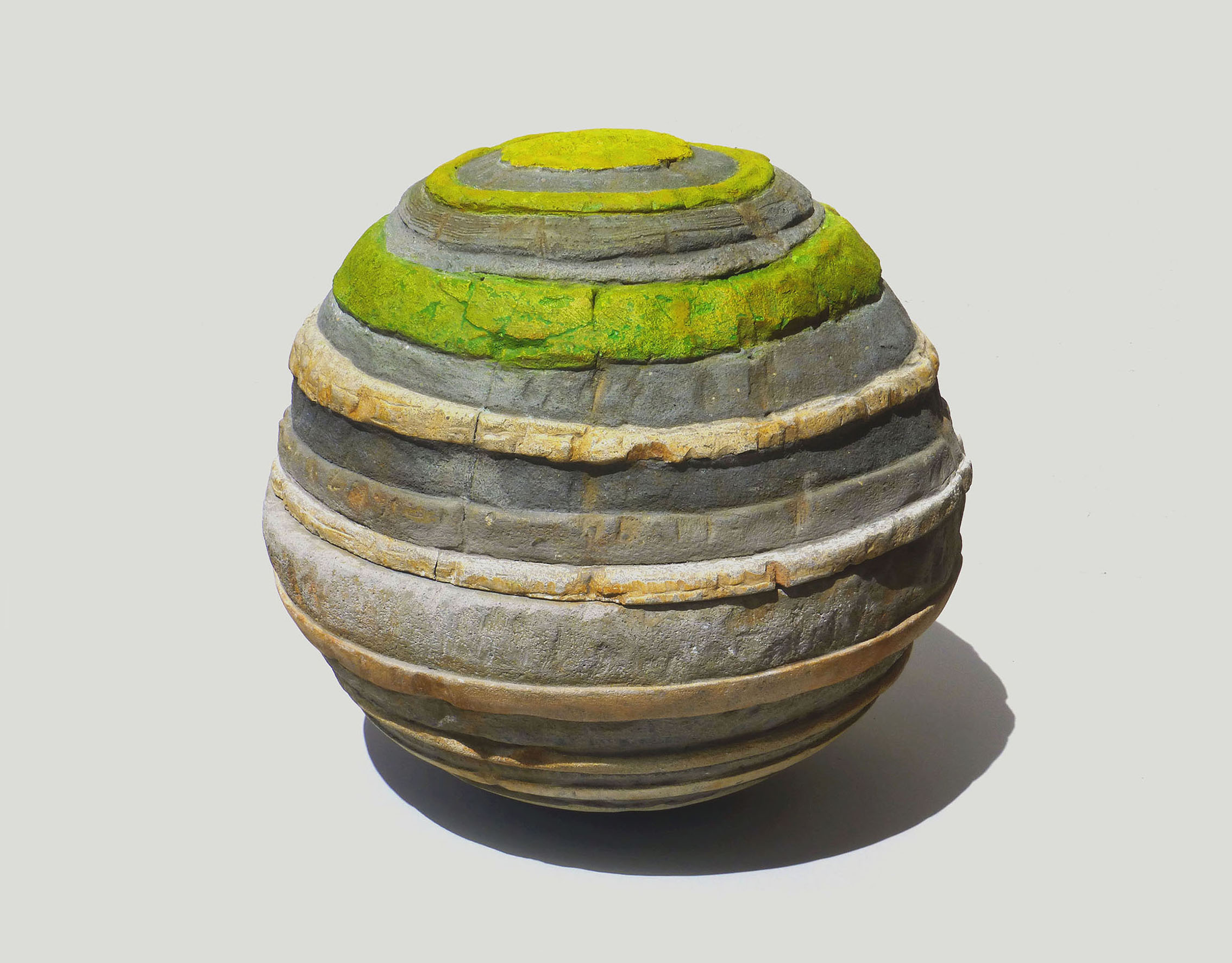
StraticromIas, 2022
Sculpture; Aggregates, cements and mineral pigments, variable sizes