Ecosystem I
"The world beyond the human is not a world devoid of meaning to which humans would give meaning... it exists beyond the relationship between a human subject and objects, beyond the division between nature and culture... The anthropocene is translated by the collapse of special hierarchies, by the collision between different kingdoms and states of matter and, above all, by the access of nature to the category of subject. We do not have on the one hand some spaces and on the other hand their occupants: there are only networks of semiotic and material relations between the actors who form at a given time and in a given place some fields of subjectivation."
Nicolas Bourriaud; Inclusions (2020)
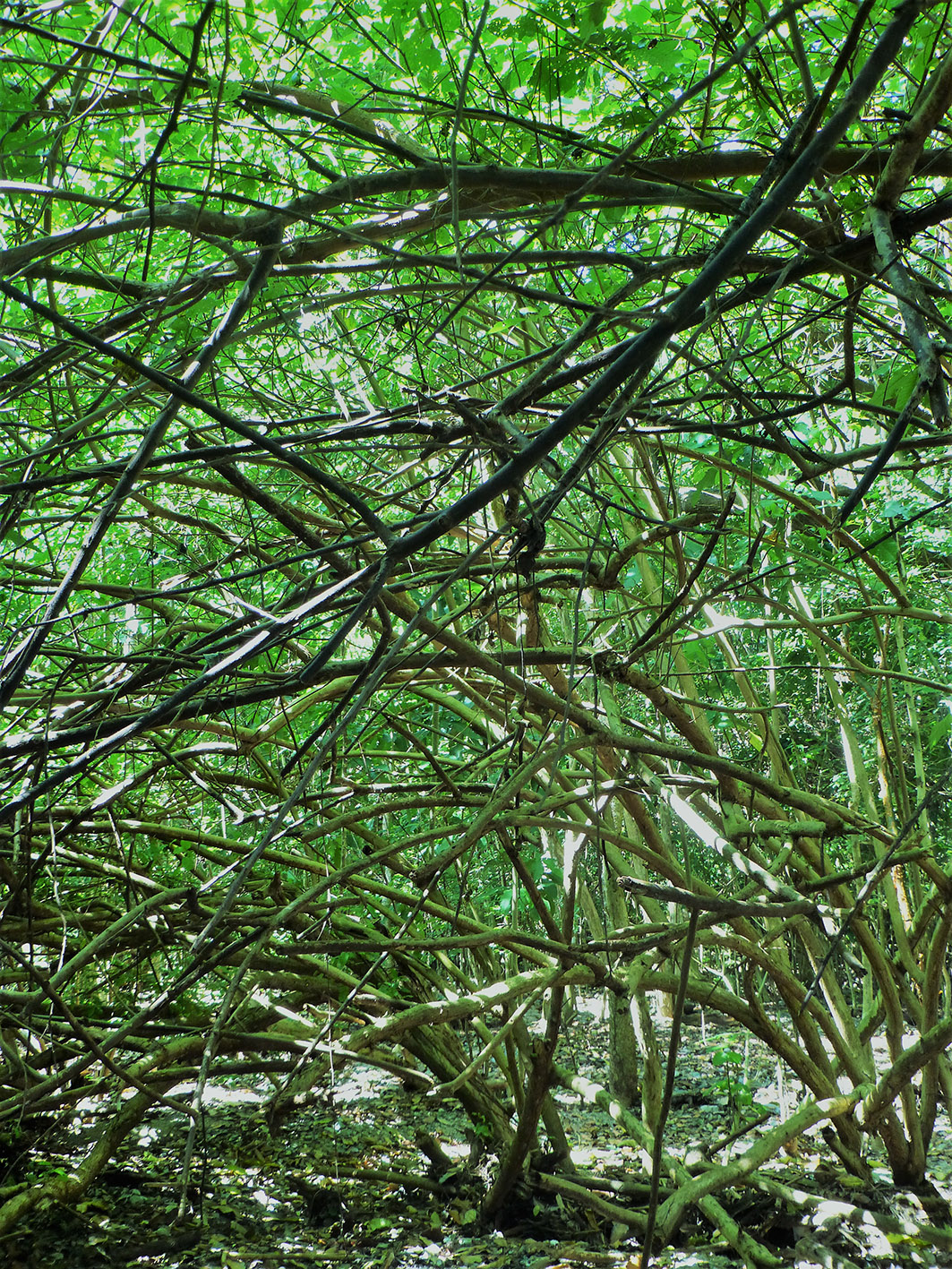
Ecosystem I is a pictorial installation, which at the same time is conceived as an intervention of a habitat built in the middle of the tropical rainforest of the Tayrona in the Colombian Caribbean. The idea of the intervention arises from the observation of the natural environment and the biological interactions that appear between the structures (natural or artificial), and the living organisms: the lianas or vines that use the support of the trees as they rise and entangle themselves as a woody tissue without beginning or end; or the development of green sub-aerial microalgae (chlorophytes) and other microorganisms on the cotton cloth walls of a kiosk of ancestral architecture.
Lianas comprise 10% to 40% of the individuals and plant species in tropical rainforests, contribute to diversity and help animals to move through the canopy, however, as they are proliferating due to the increase of carbon dioxide and temperature, they could alter the growth and reproduction of trees, but at the same time mean an adaptive process of forests to the factors of climate change. Tropical forests play a fundamental role in the global carbon cycle. Trees absorb carbon dioxide through photosynthesis and then store the carbon in their biomass, which reduces the amount of this greenhouse gas in the atmosphere.
The sub-aerial microalgae are also photosynthetic, and their growth is propitiated by the environmental conditions of light, humidity, temperature, food, support and environmental disturbances, printing on the white canvas a series of living organic and geometric forms that could well compose an abstract painting. Hence, the intervention incorporates and collaborates with these forms, keeping them visible on the outside of the canvas, turning them into the dense and multicolored background of the drawing of silhouettes of trees and tangled vines in the foreground. The algae are drawn by themselves, the lianas, replicating the action, are drawn by the artist. On the inner side of the canvas, the growth patterns of the microalgae are repainted with dots of photoluminescent paint, revealing a glowing microcosm.
The set of elements coexists in a hybrid and autonomous ecosystem, which allows perceiving this habitat as a new space of multiple processes and relationships. At the same time it enables different visual devices by interacting with natural light, artificial light, counter light or the absence of light, giving the installation a temporary and changing sense, a phenomenon that is also evident because the microalgae are alive and therefore will continue to spread over the surfaces. The result is a dynamic amalgam of images that reveal and fade at different times, like superimposed layers that turn on and off but are always included, just as the environment and living beings could be interconnected in an expanded ecosystem, without dividing or fragmenting it into categories such as nature, object, space, instant, art and utility.
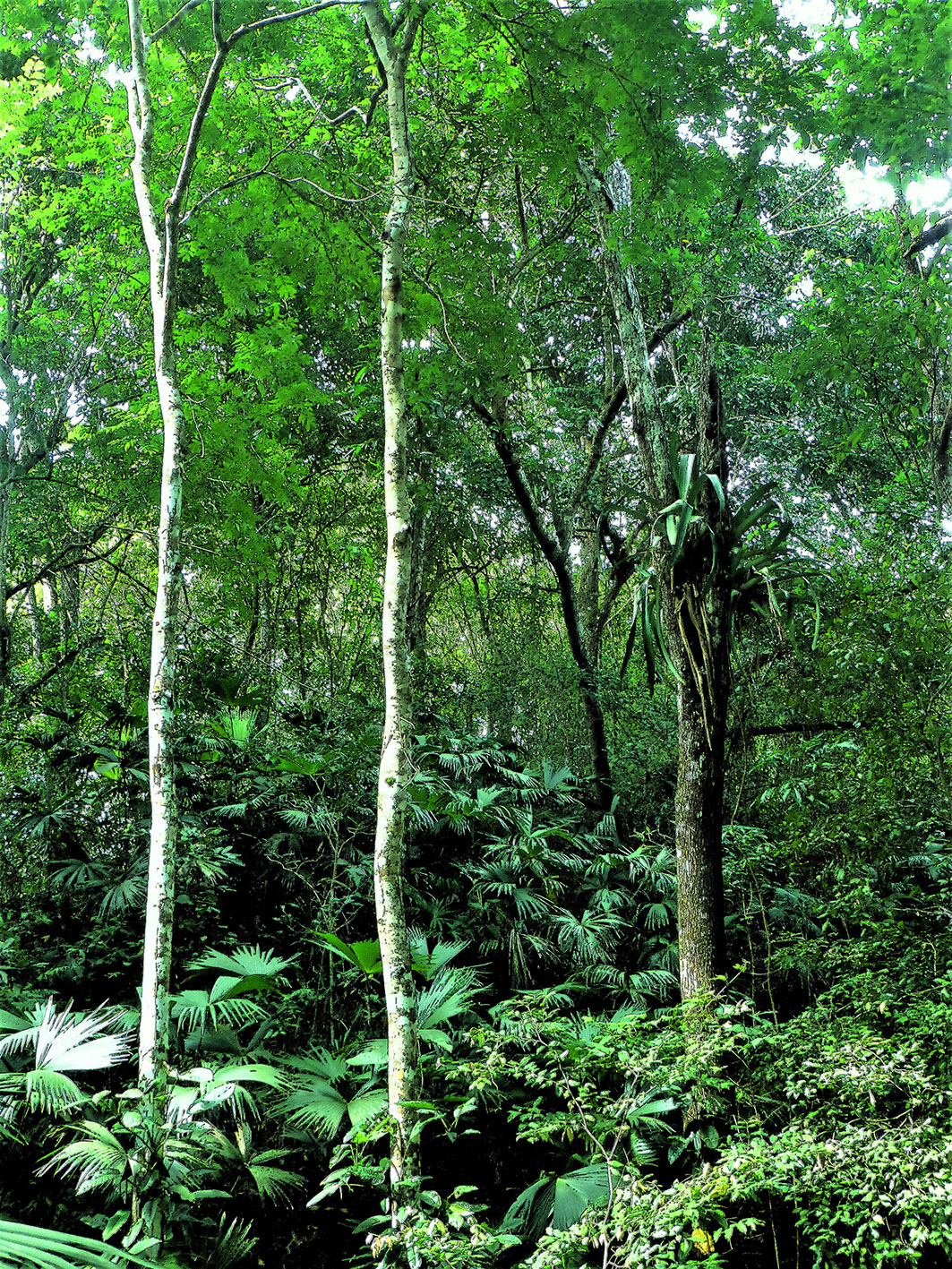
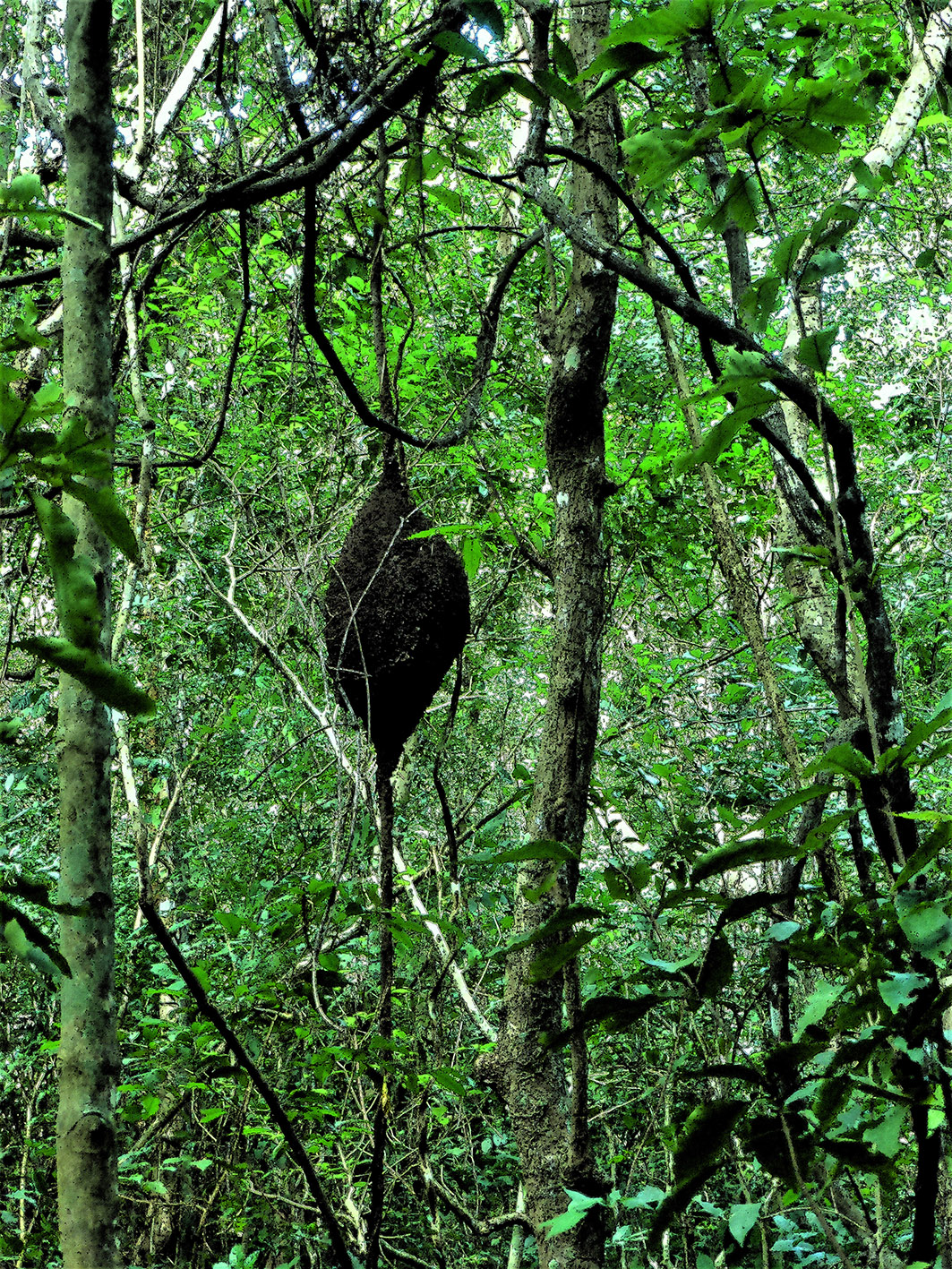
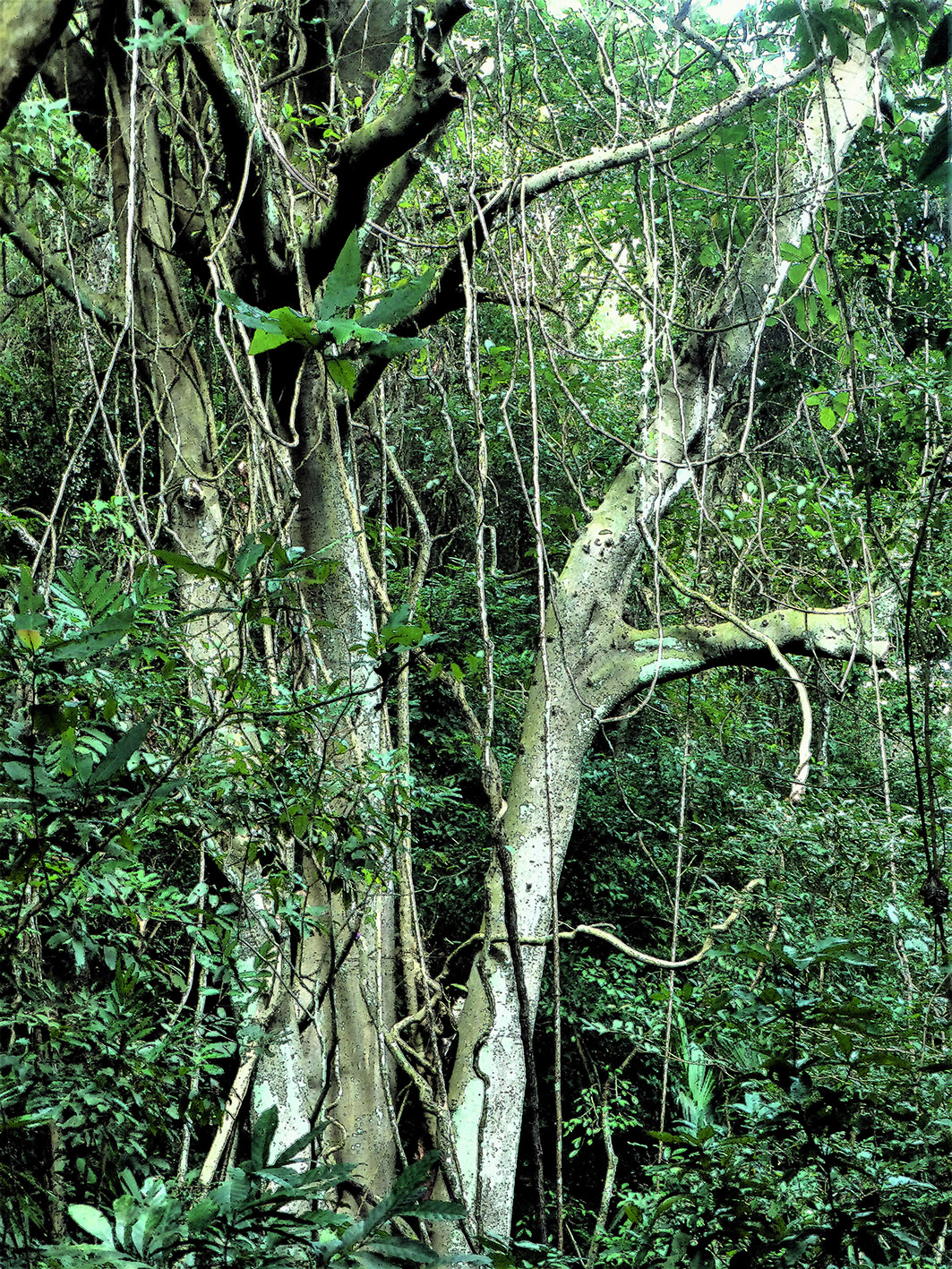
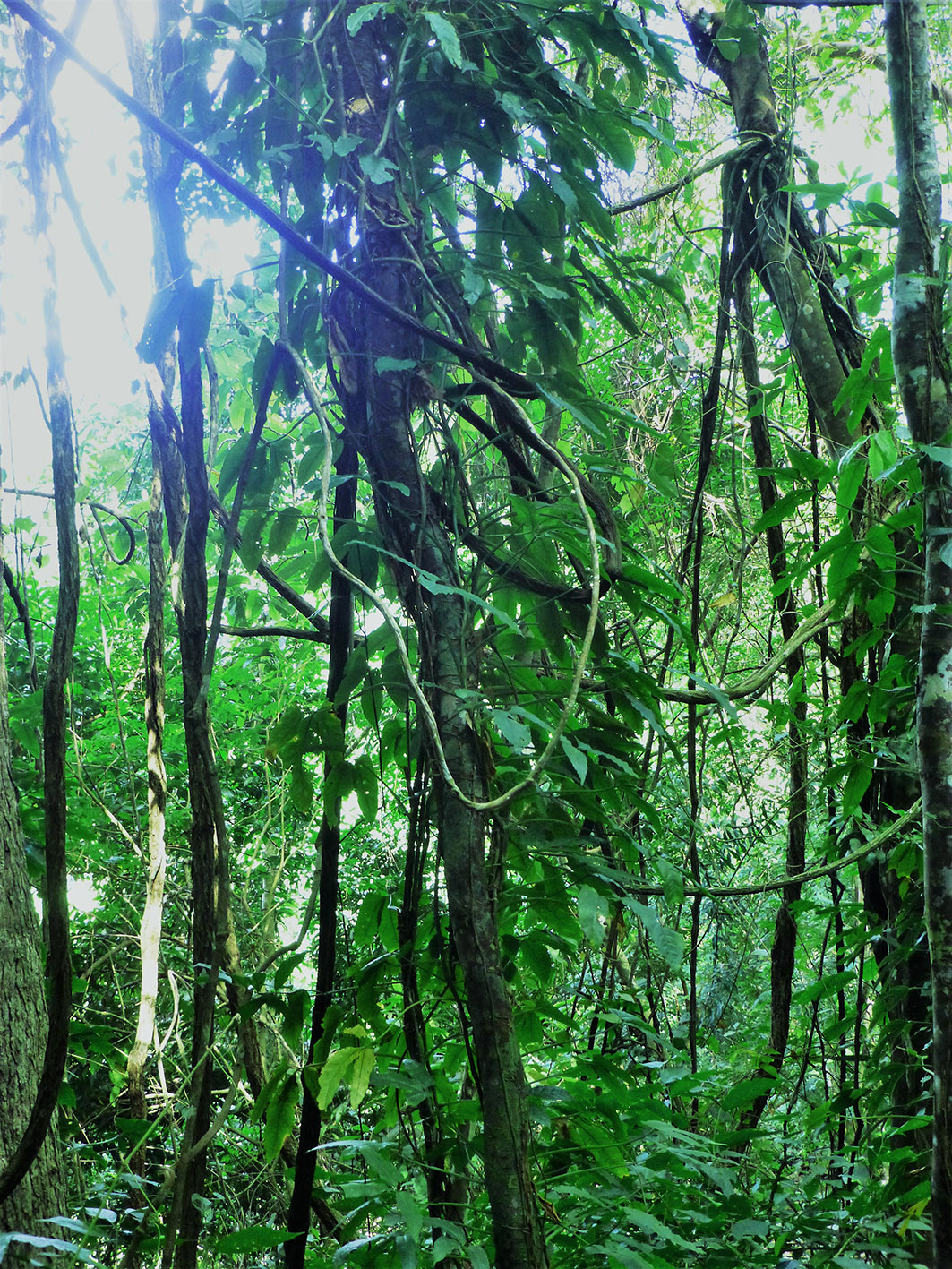
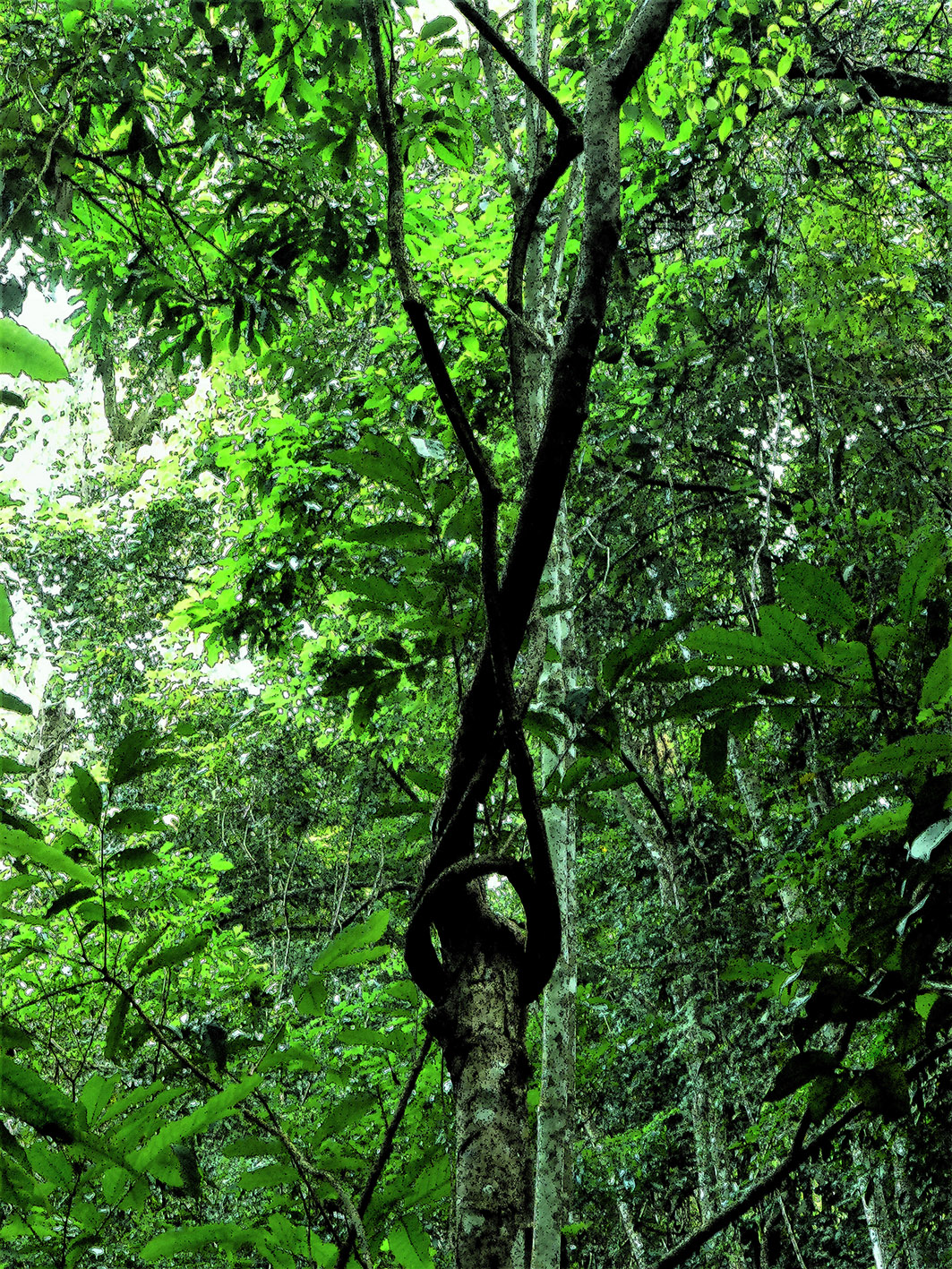
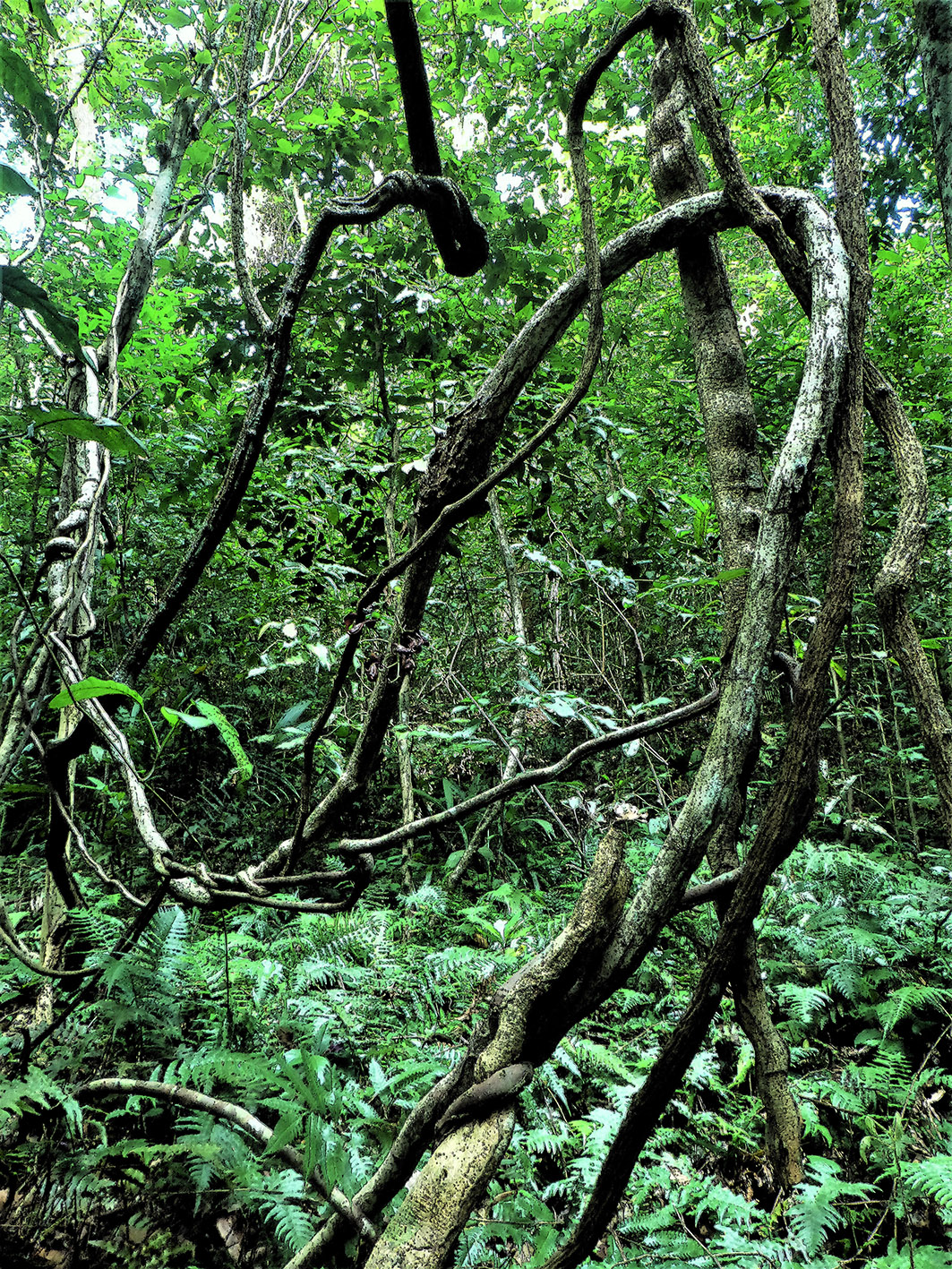
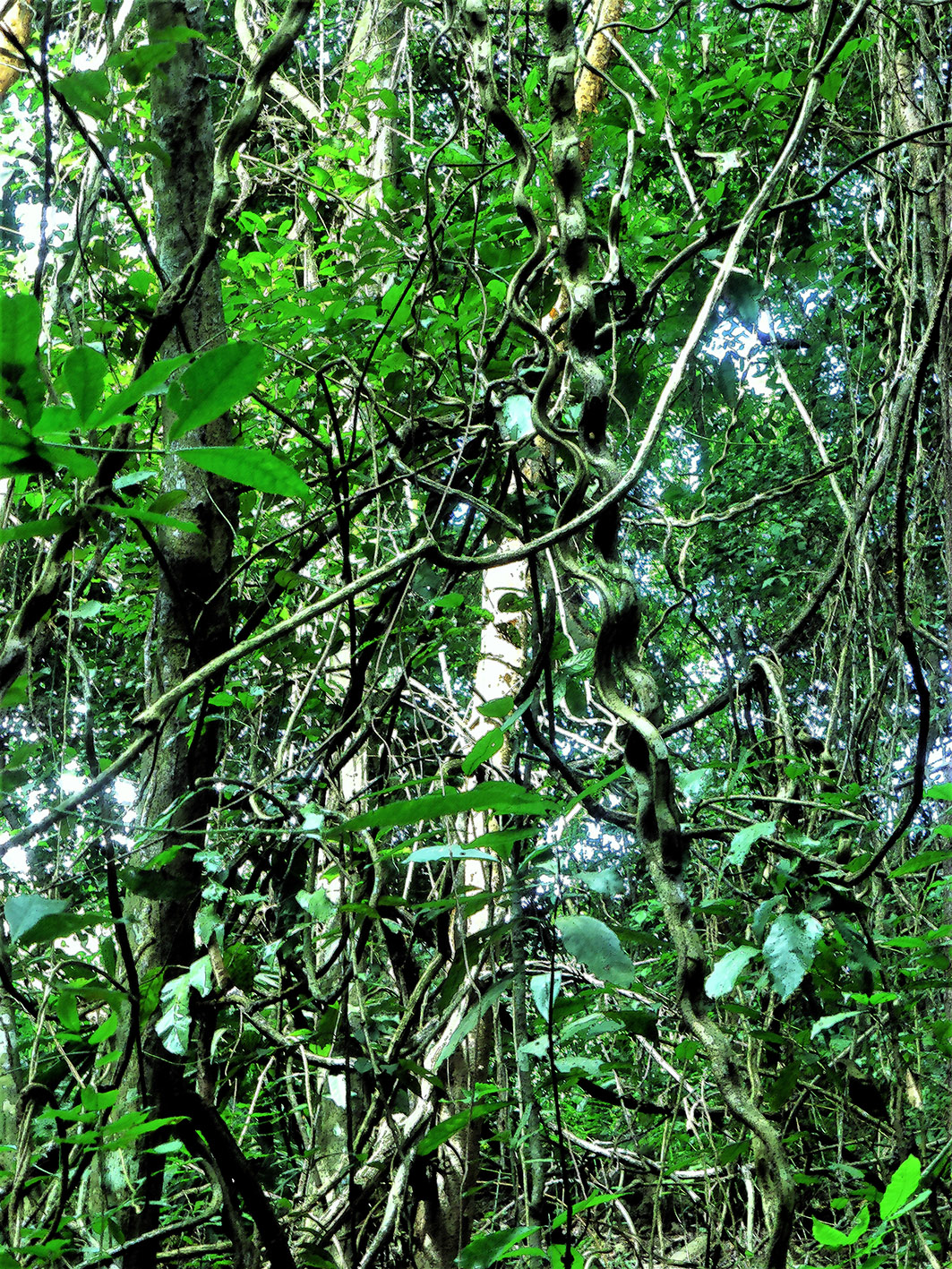
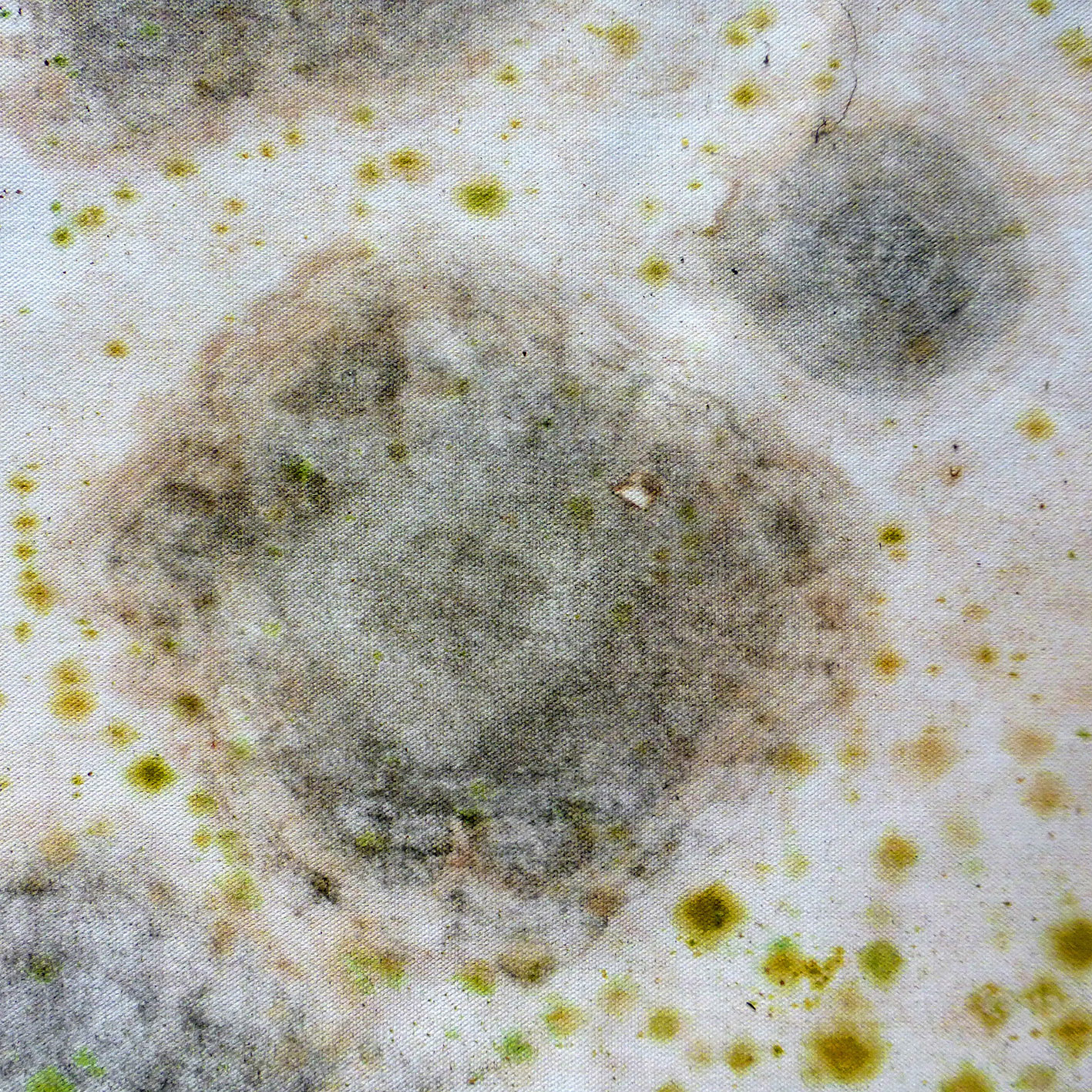
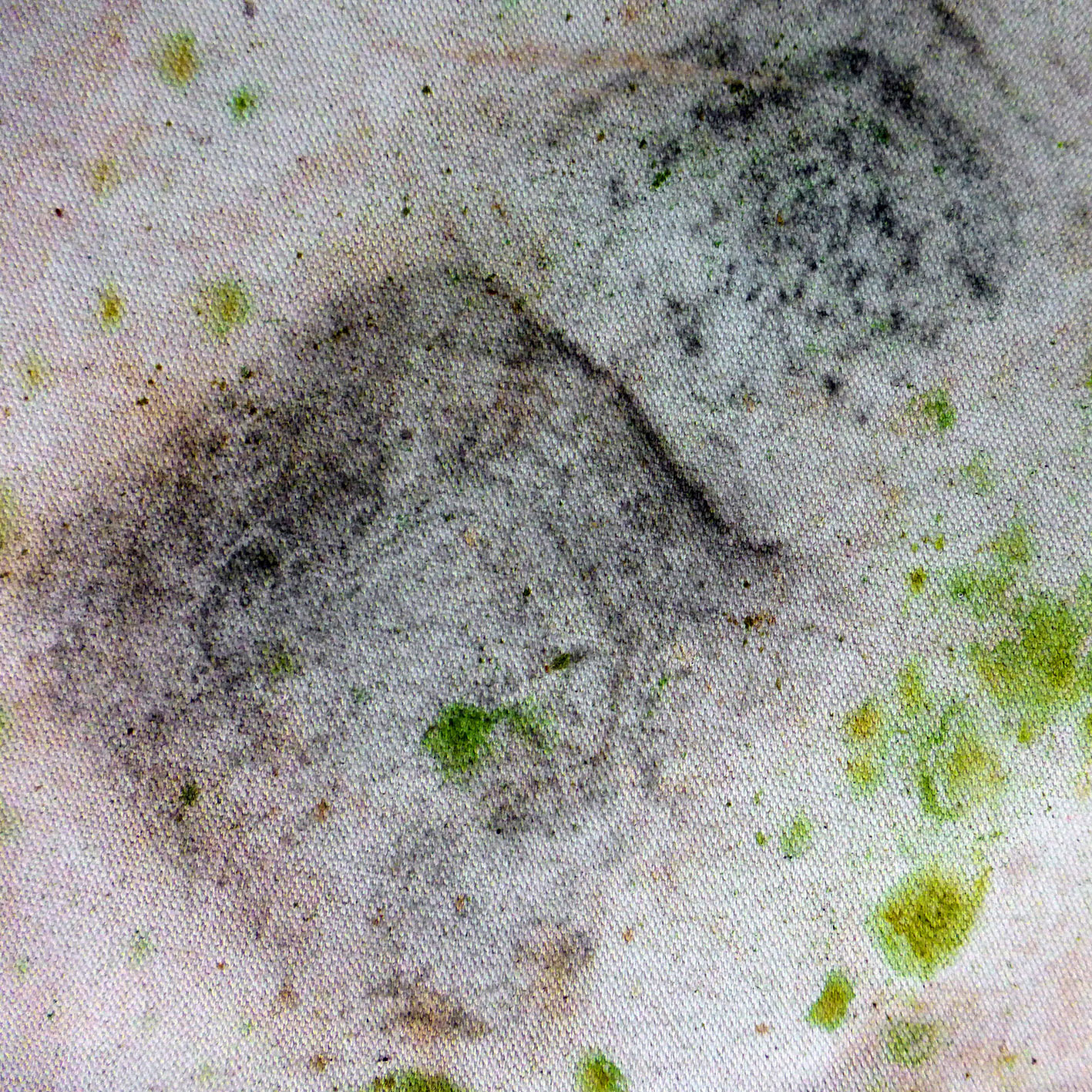
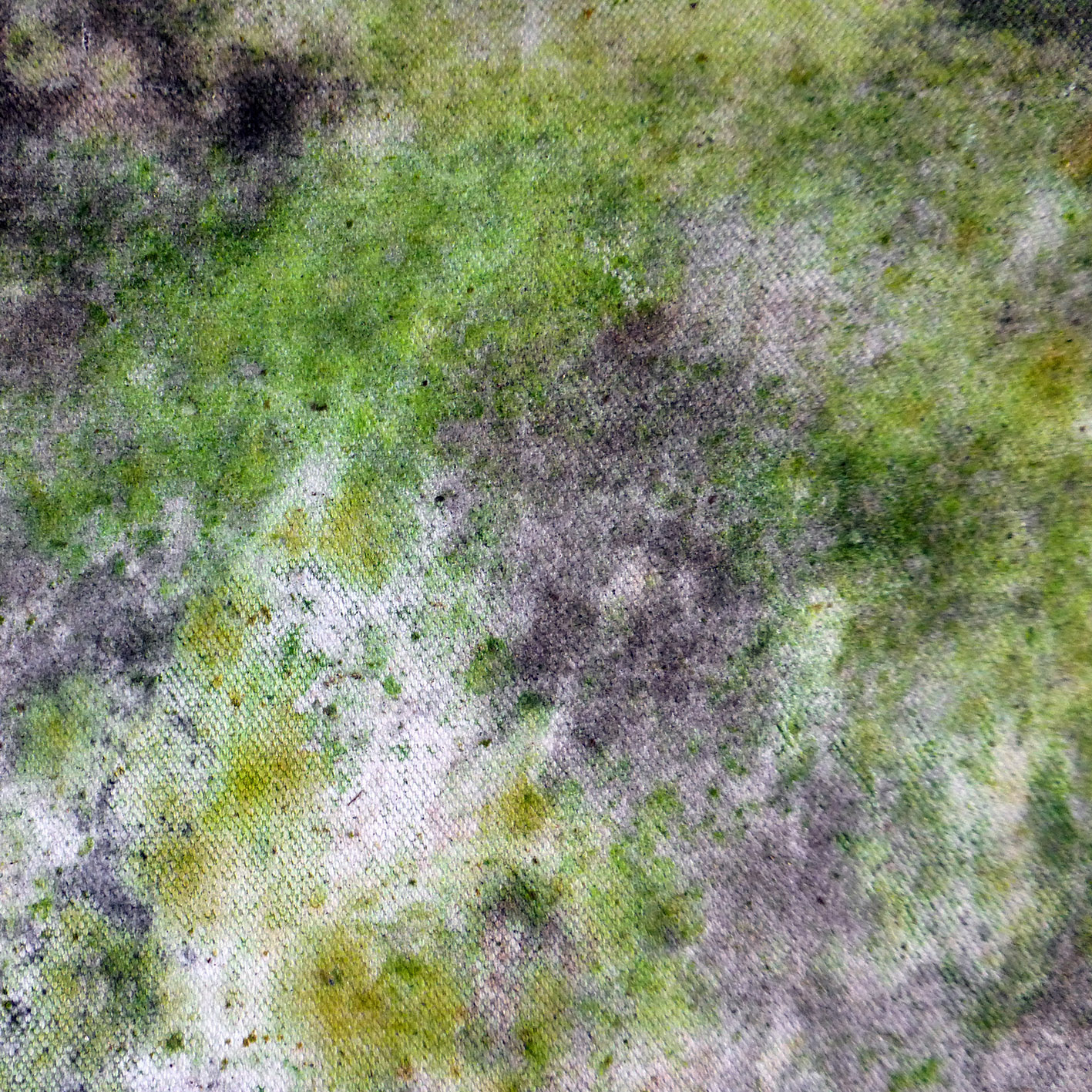
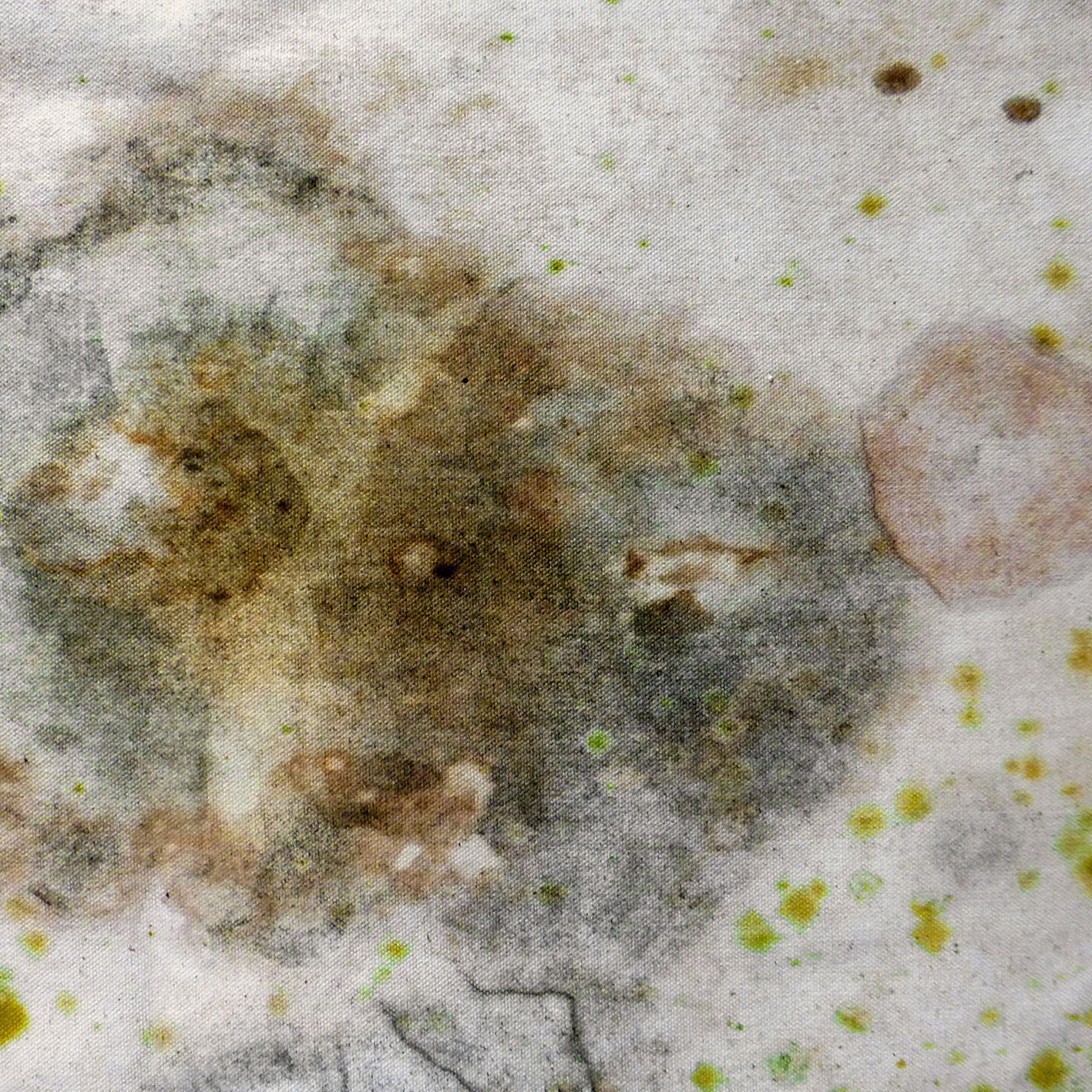
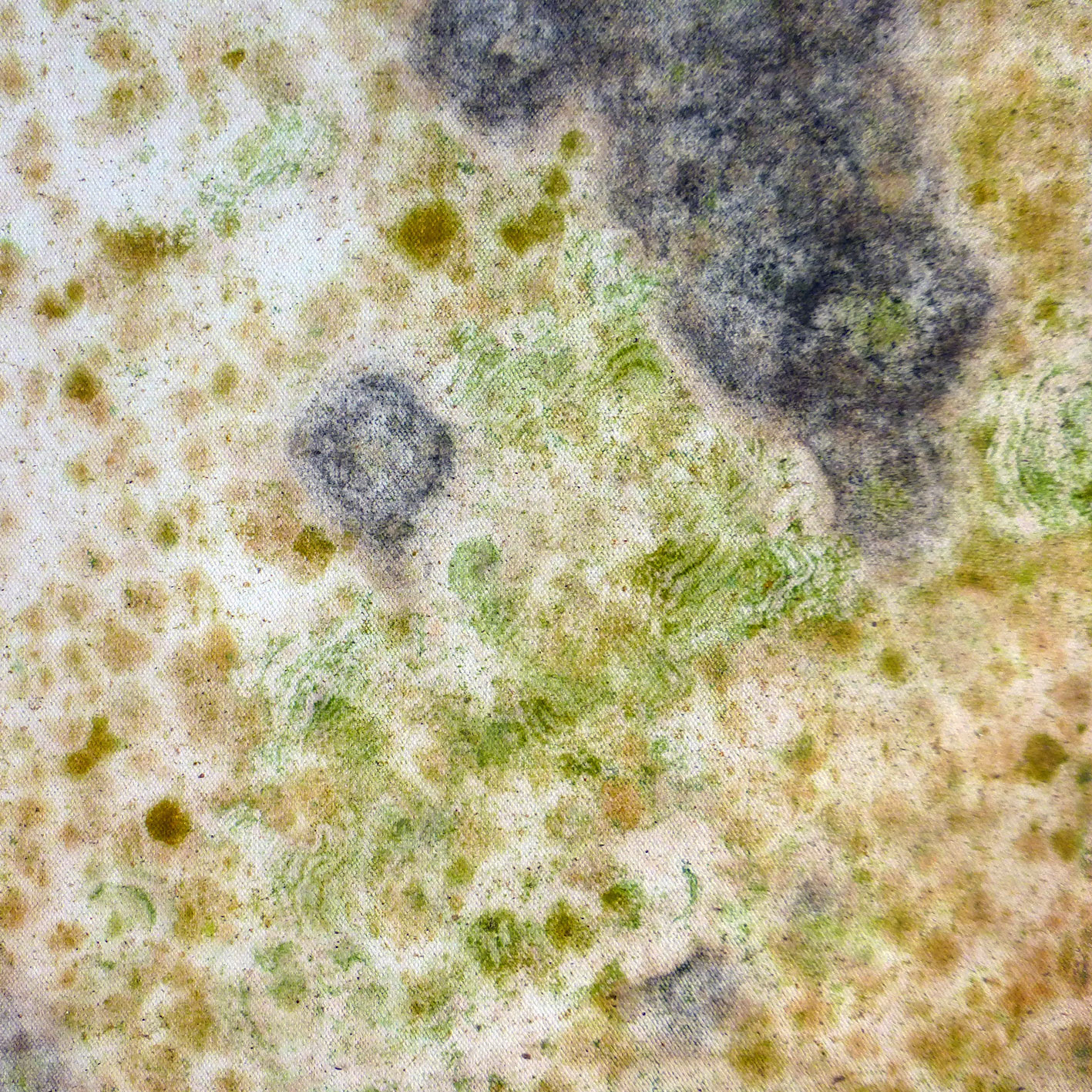
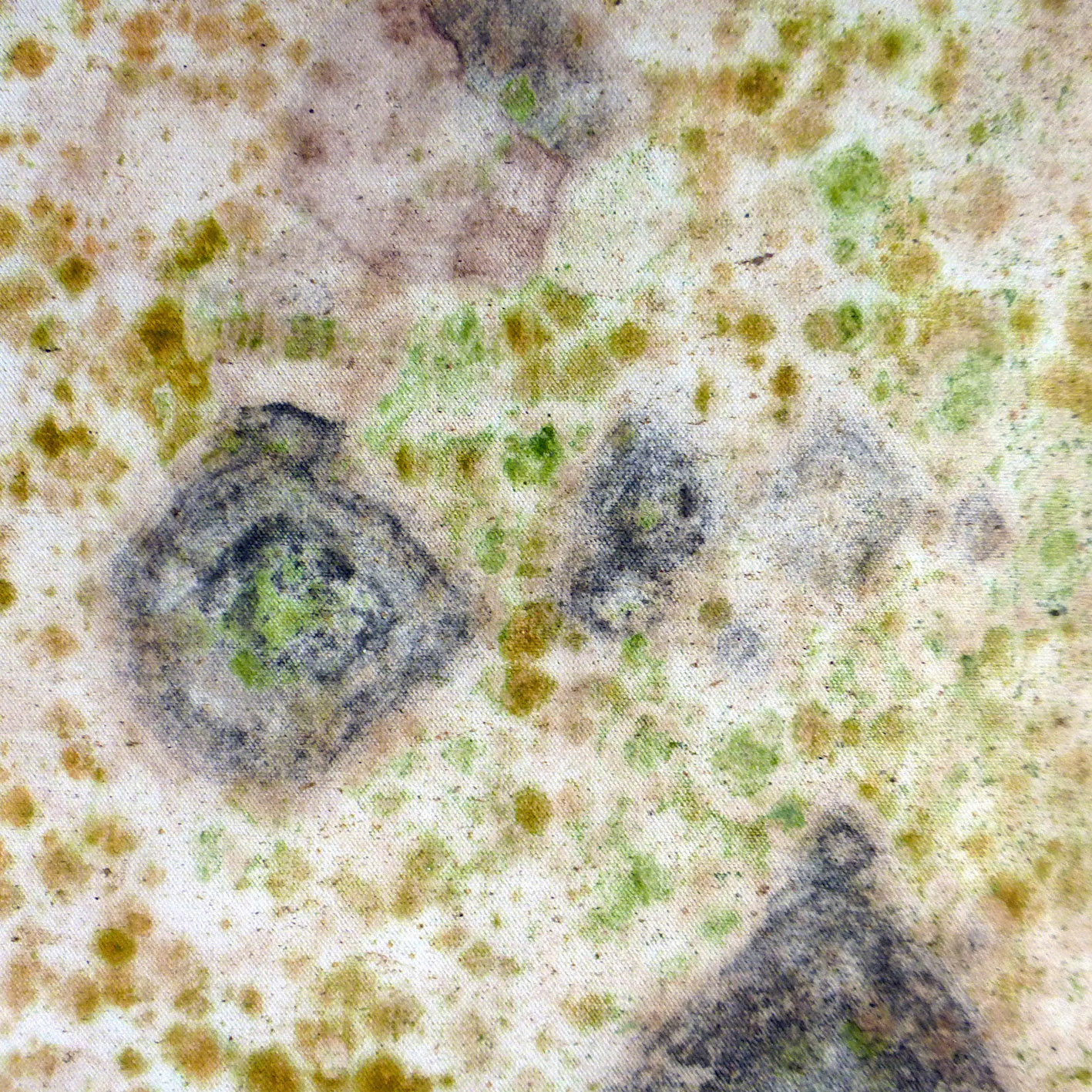
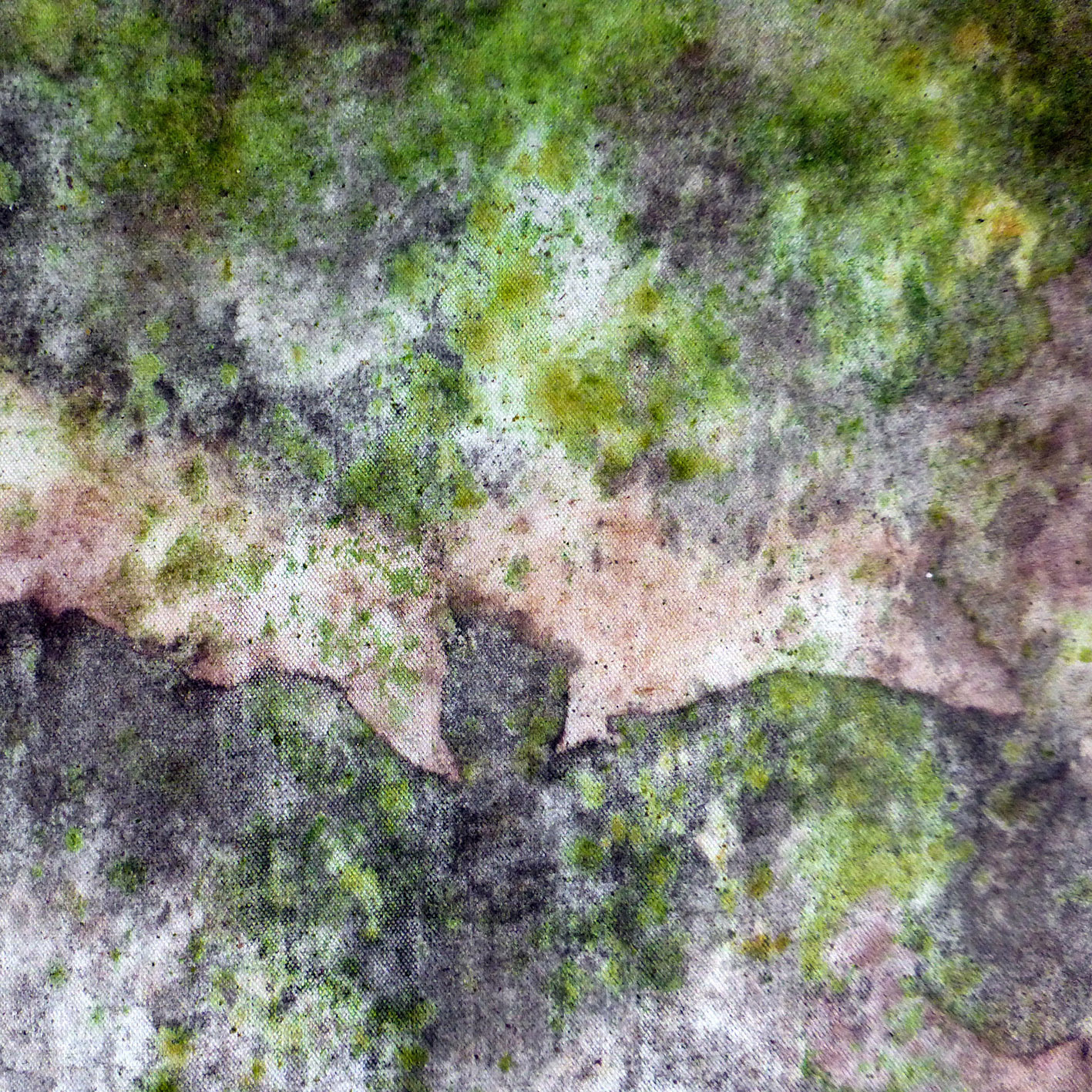
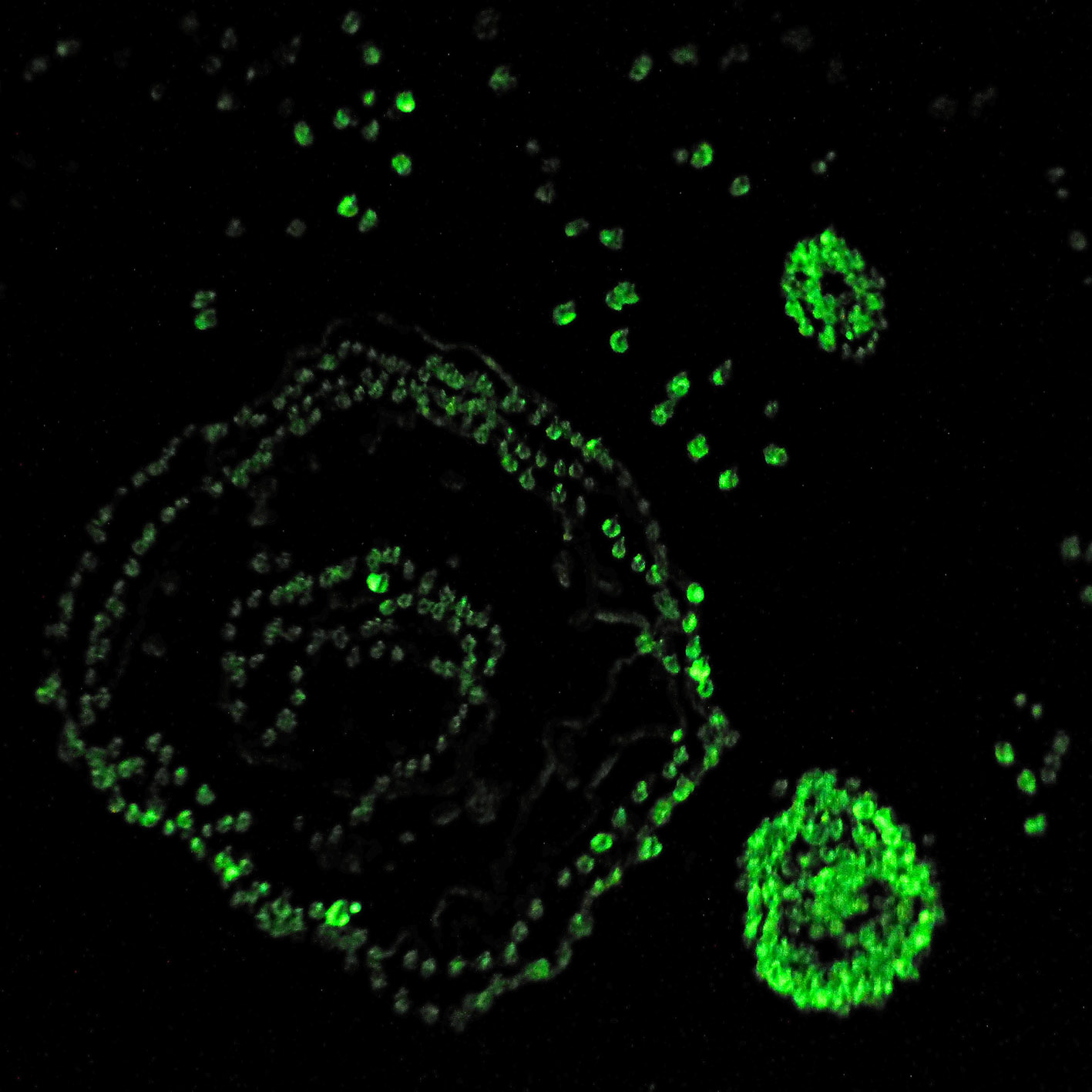
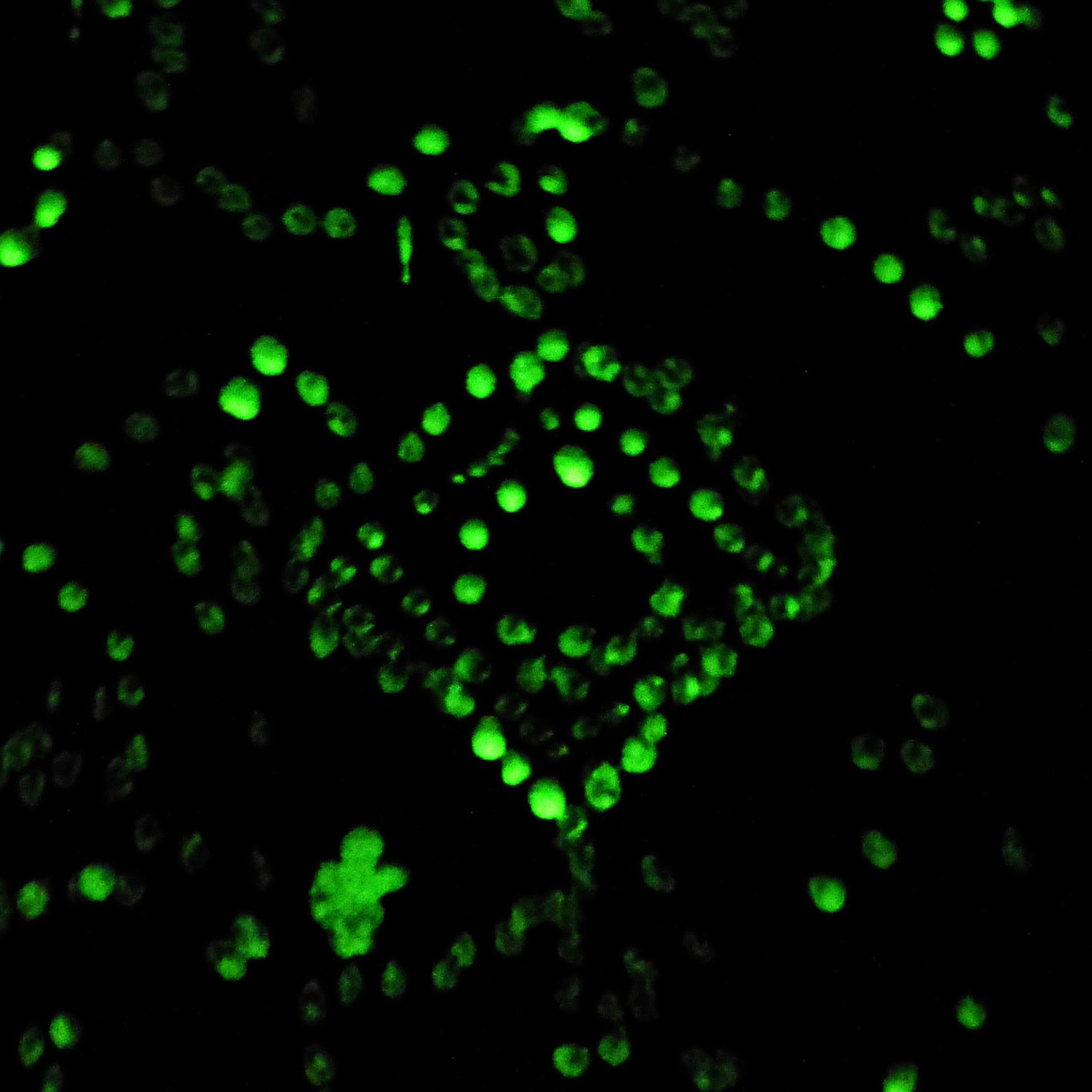
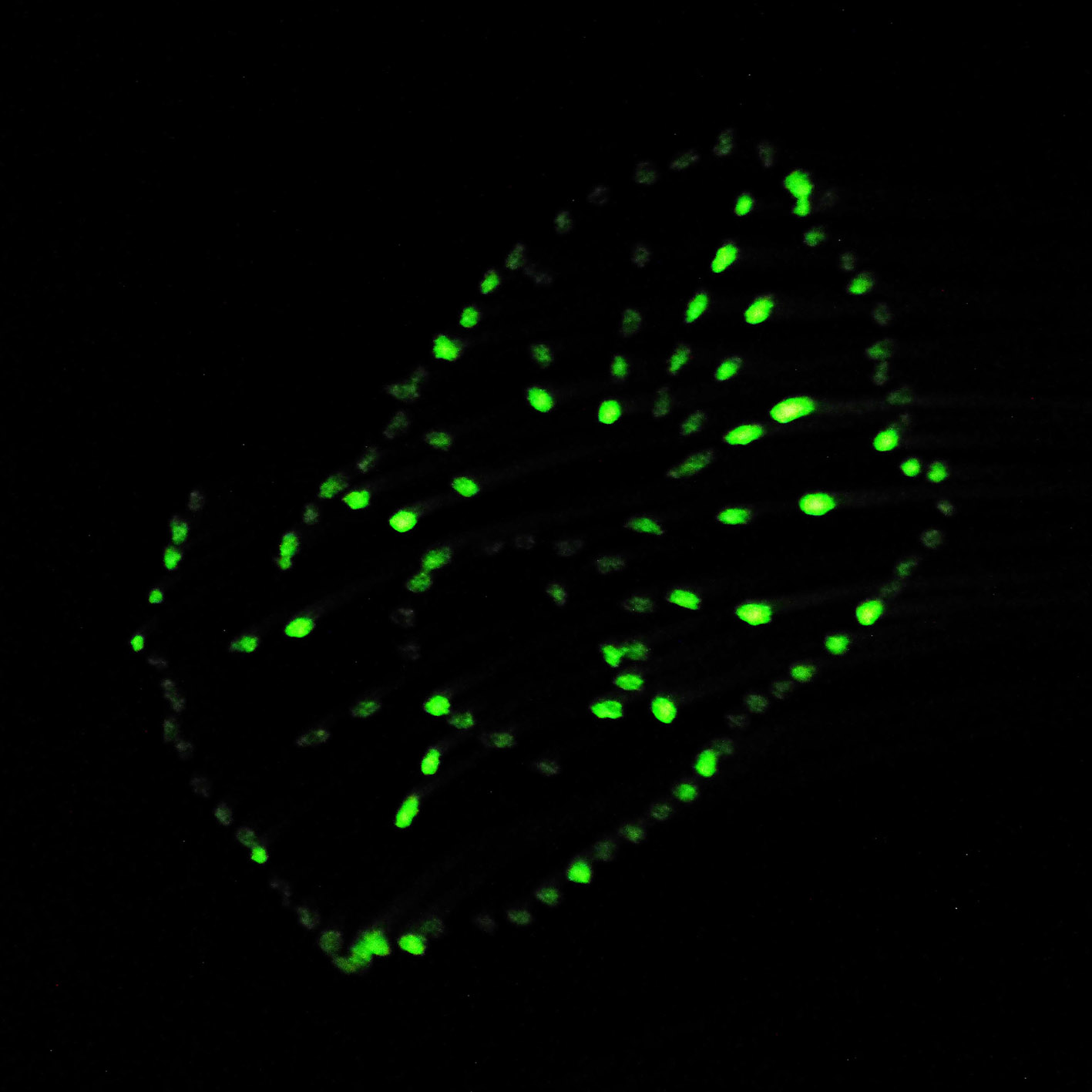
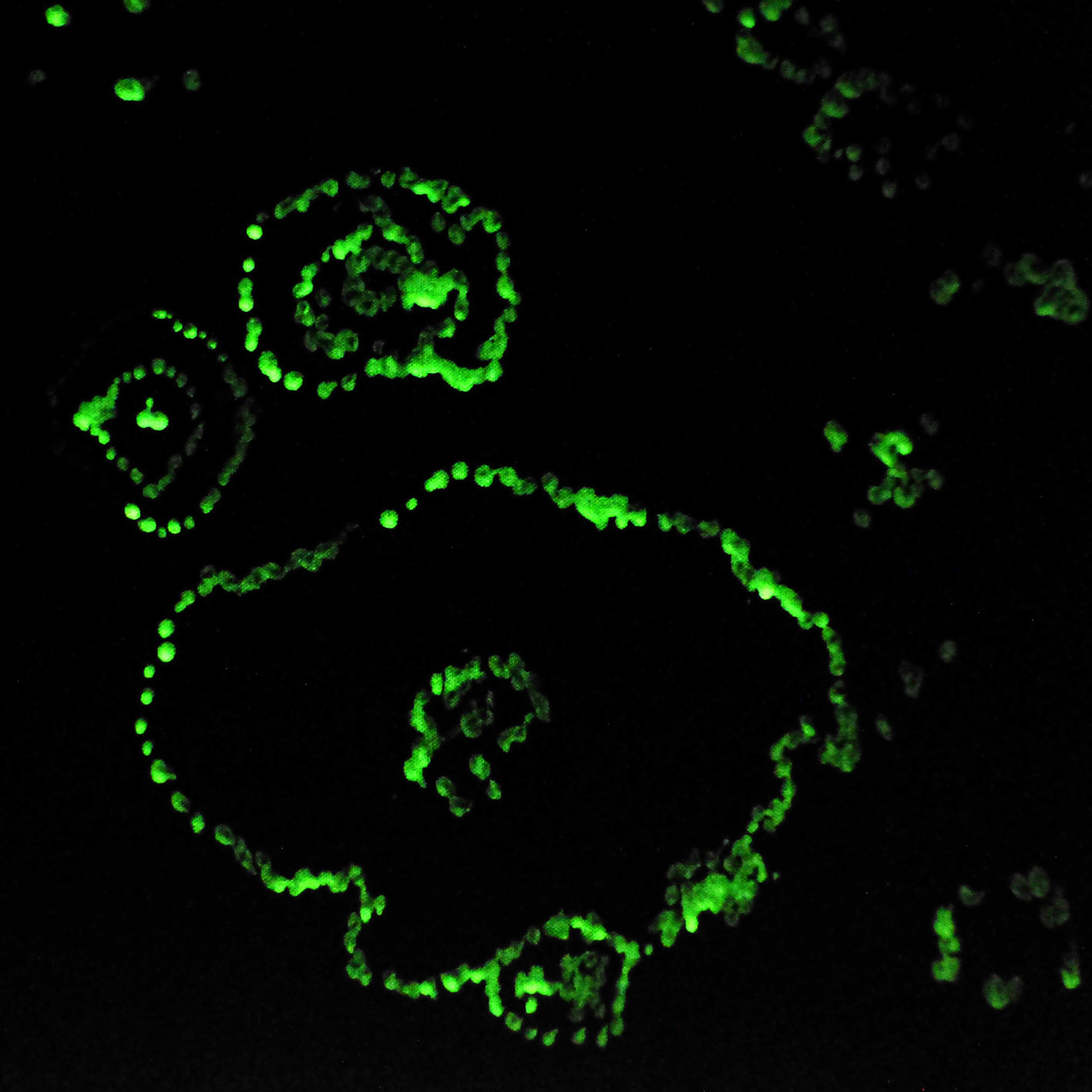
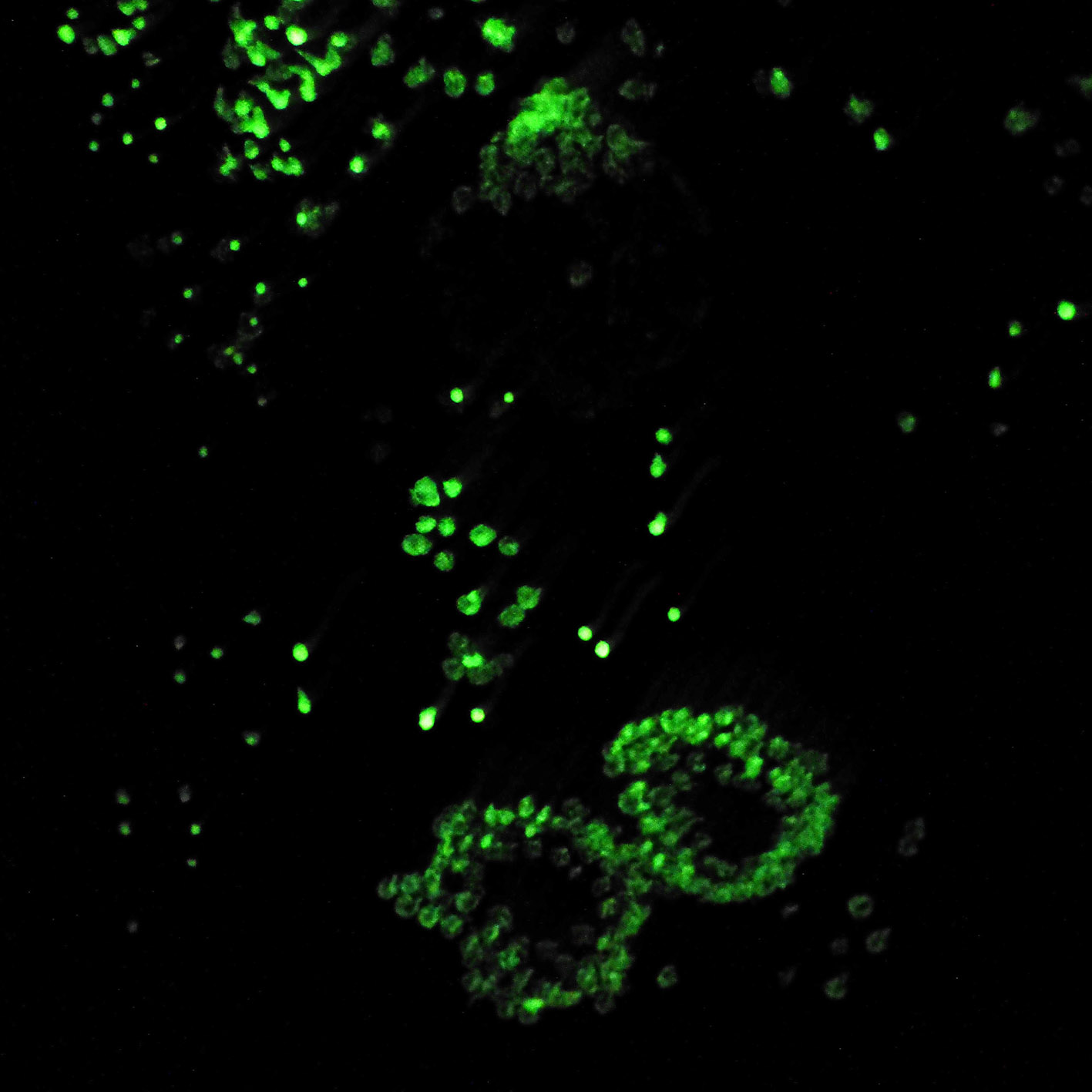
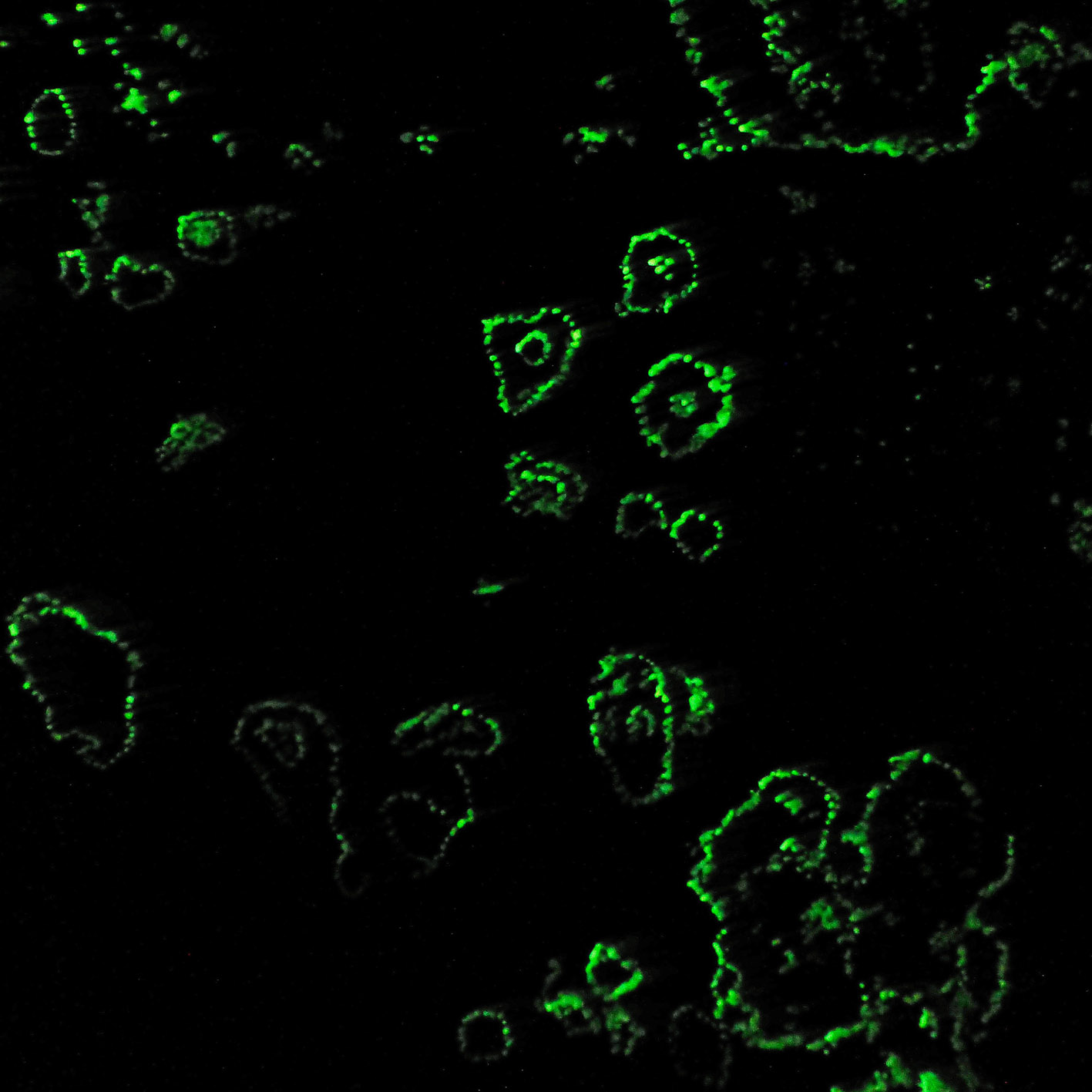
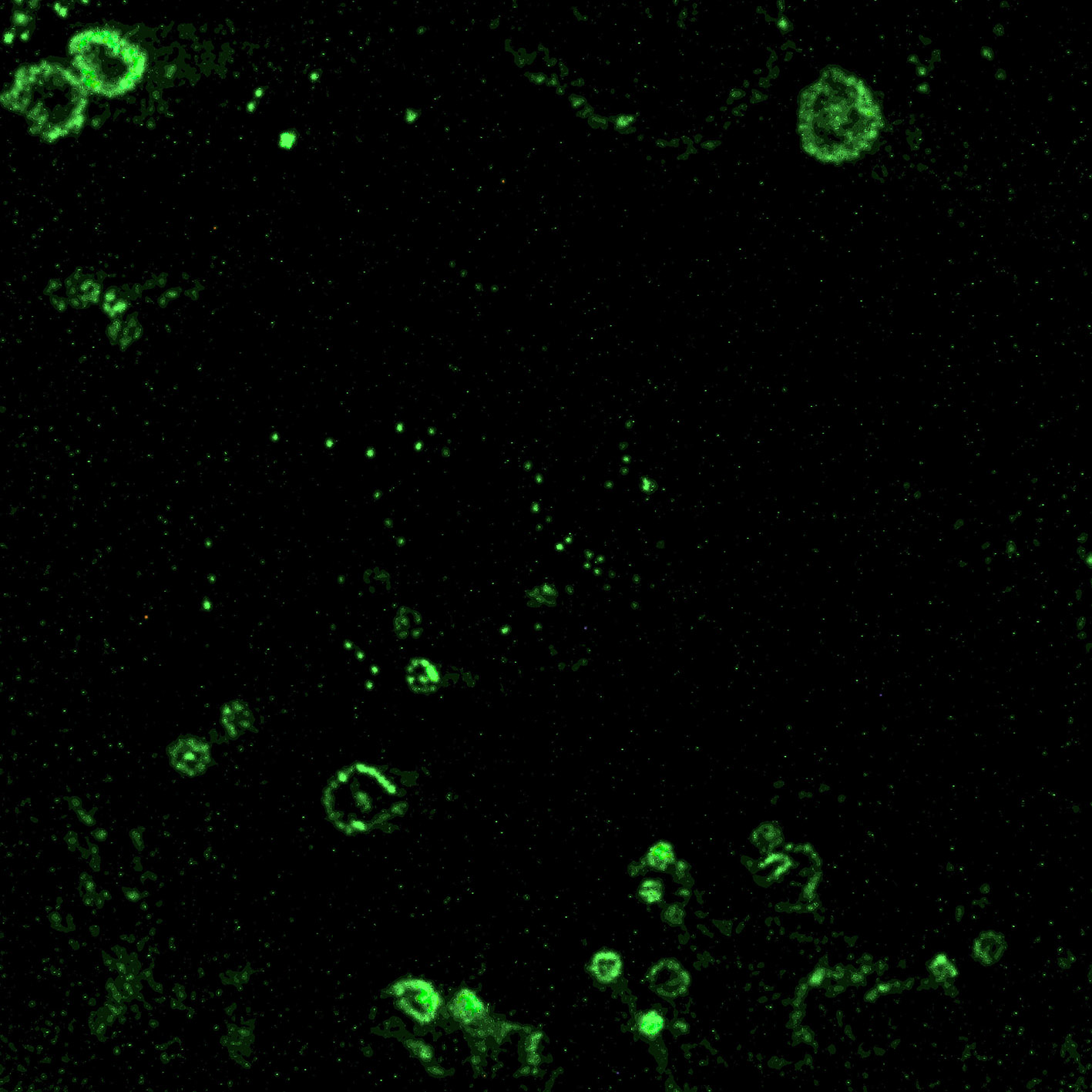
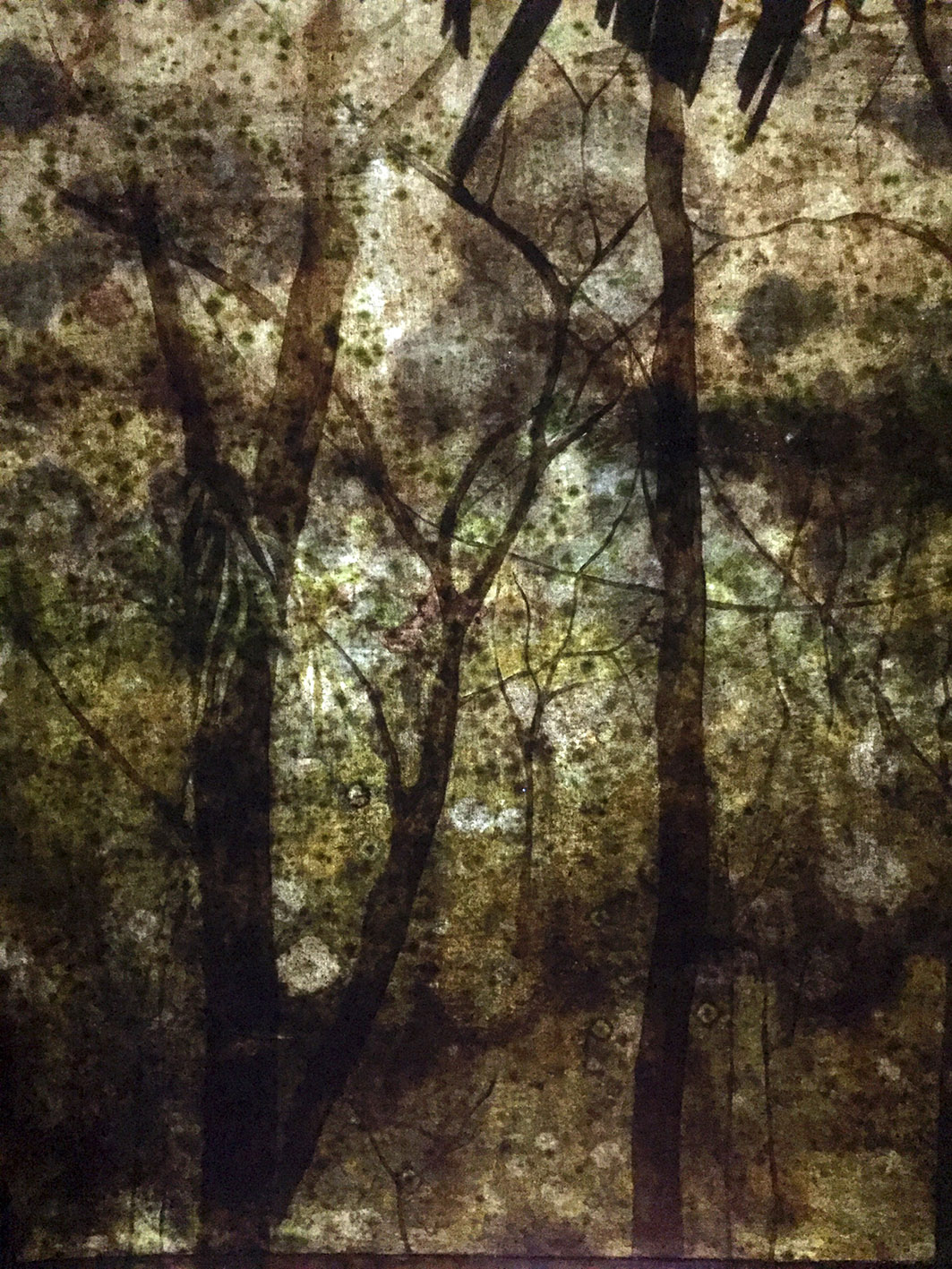
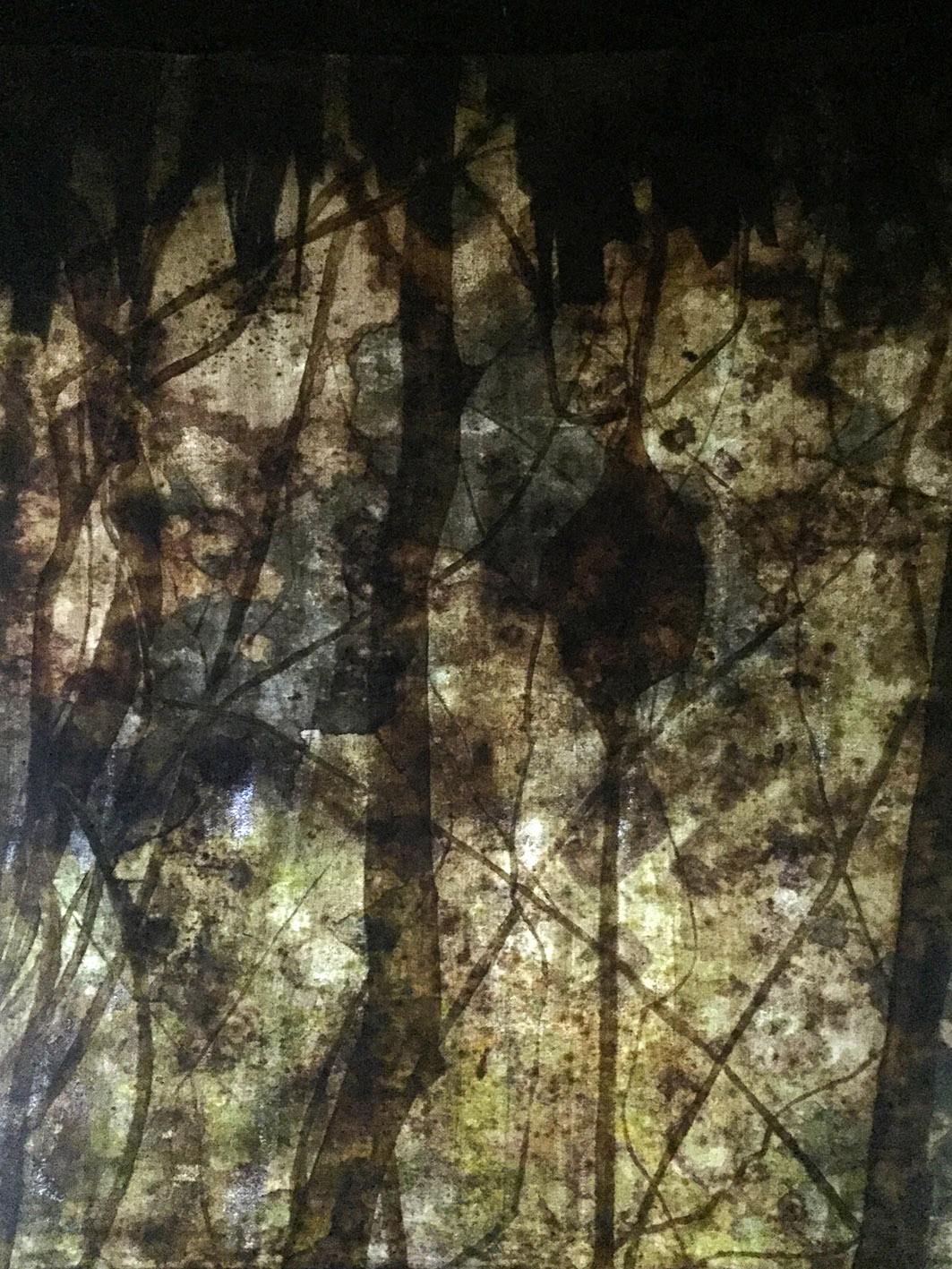
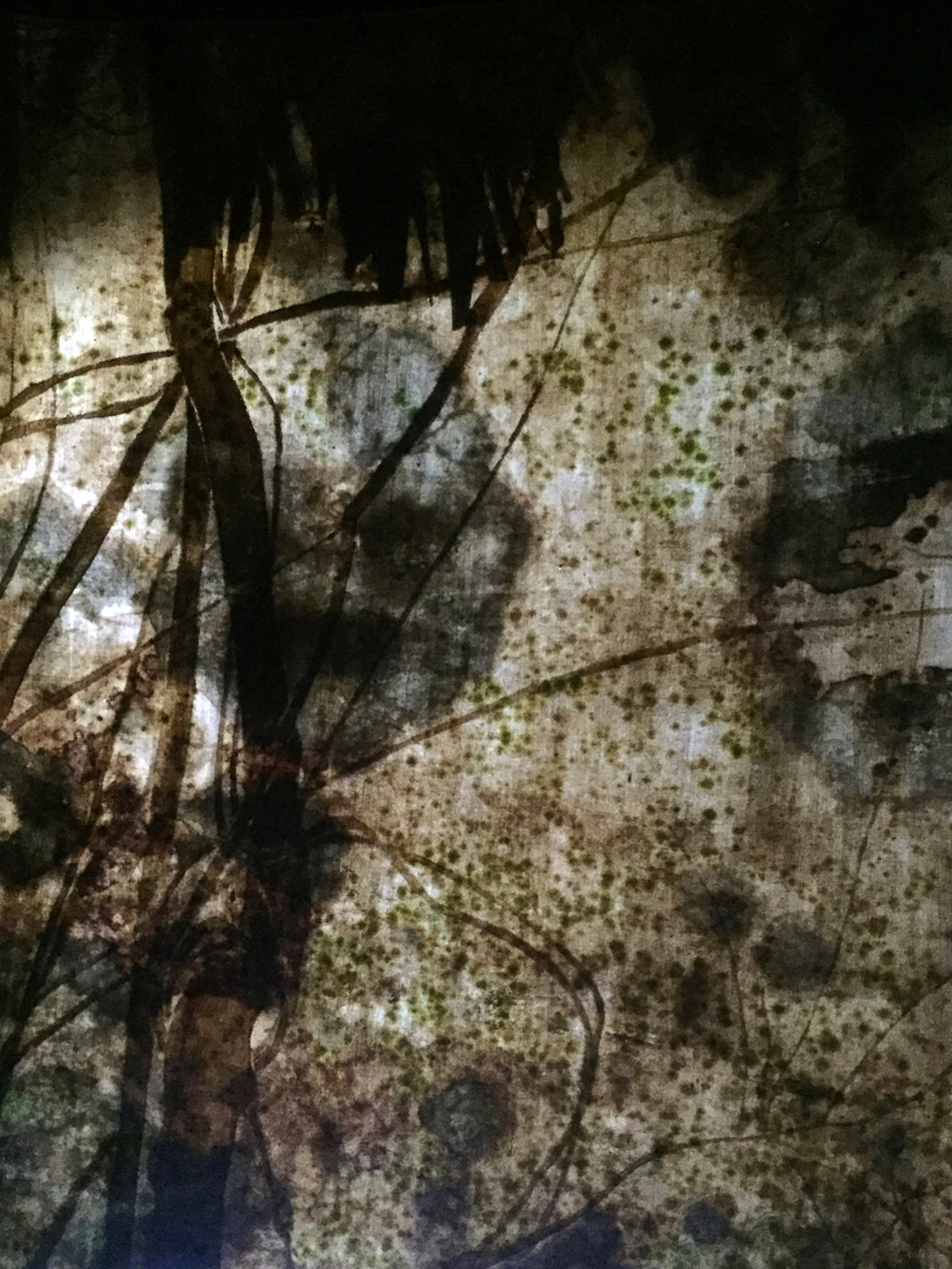
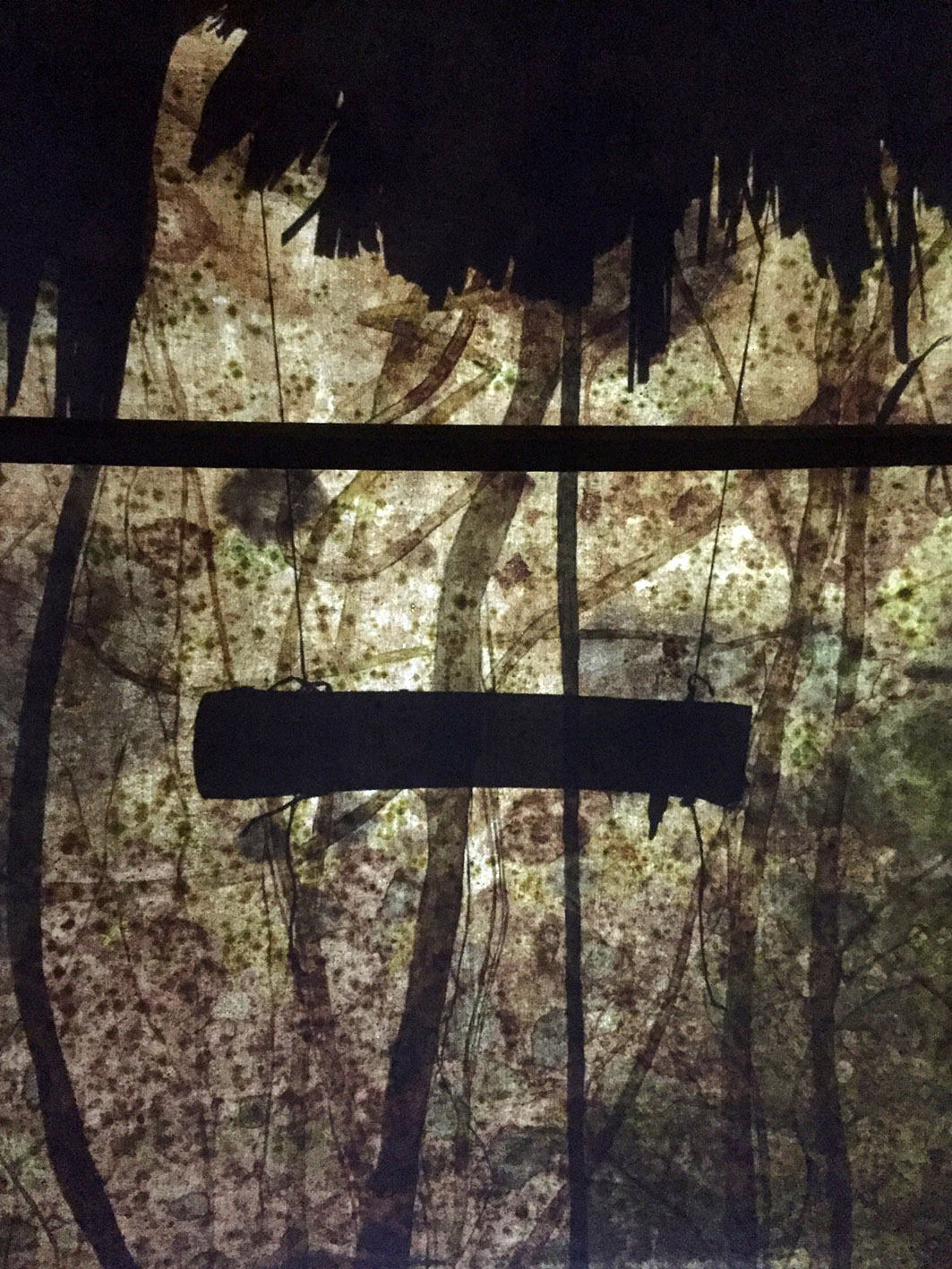
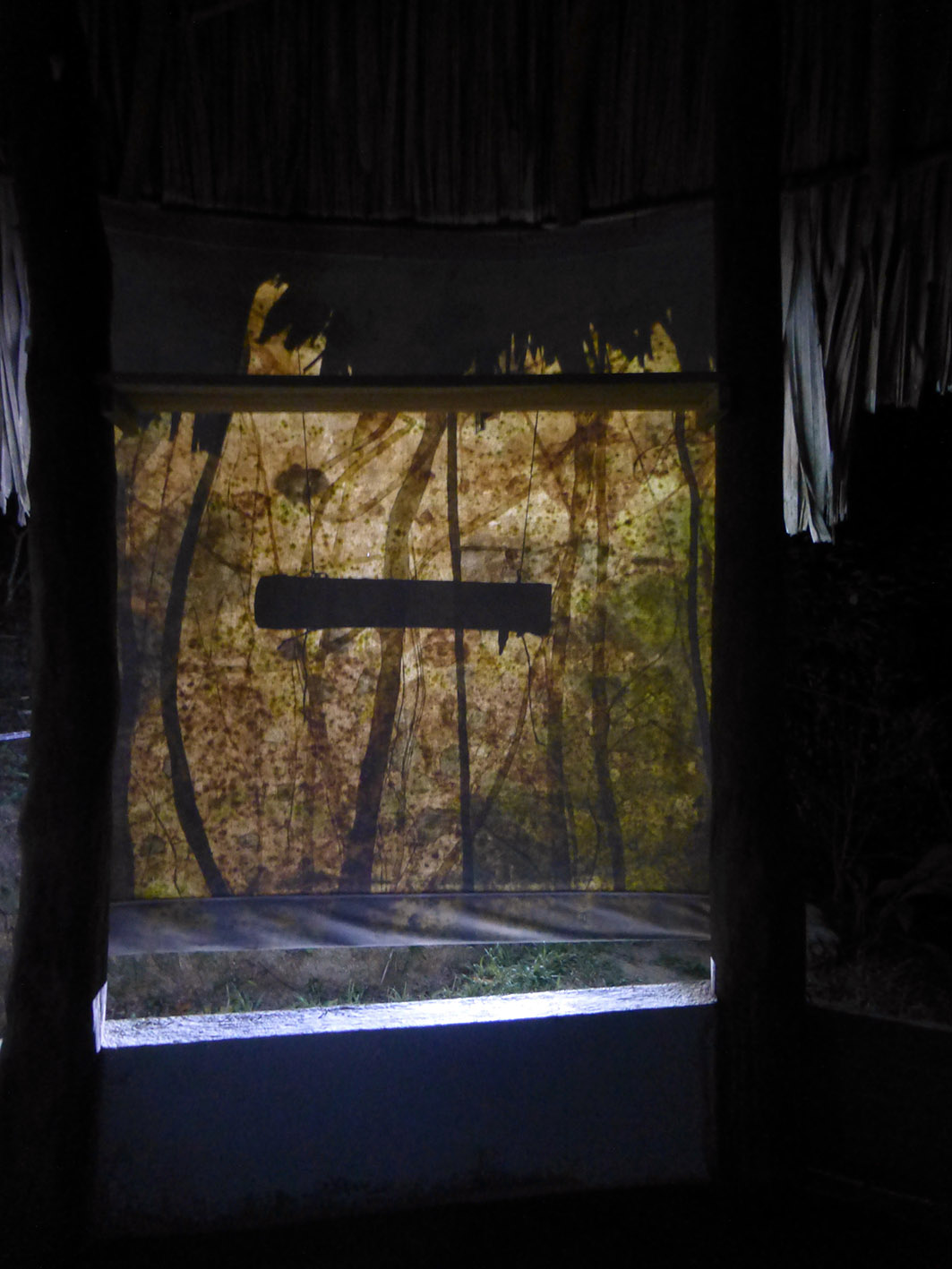
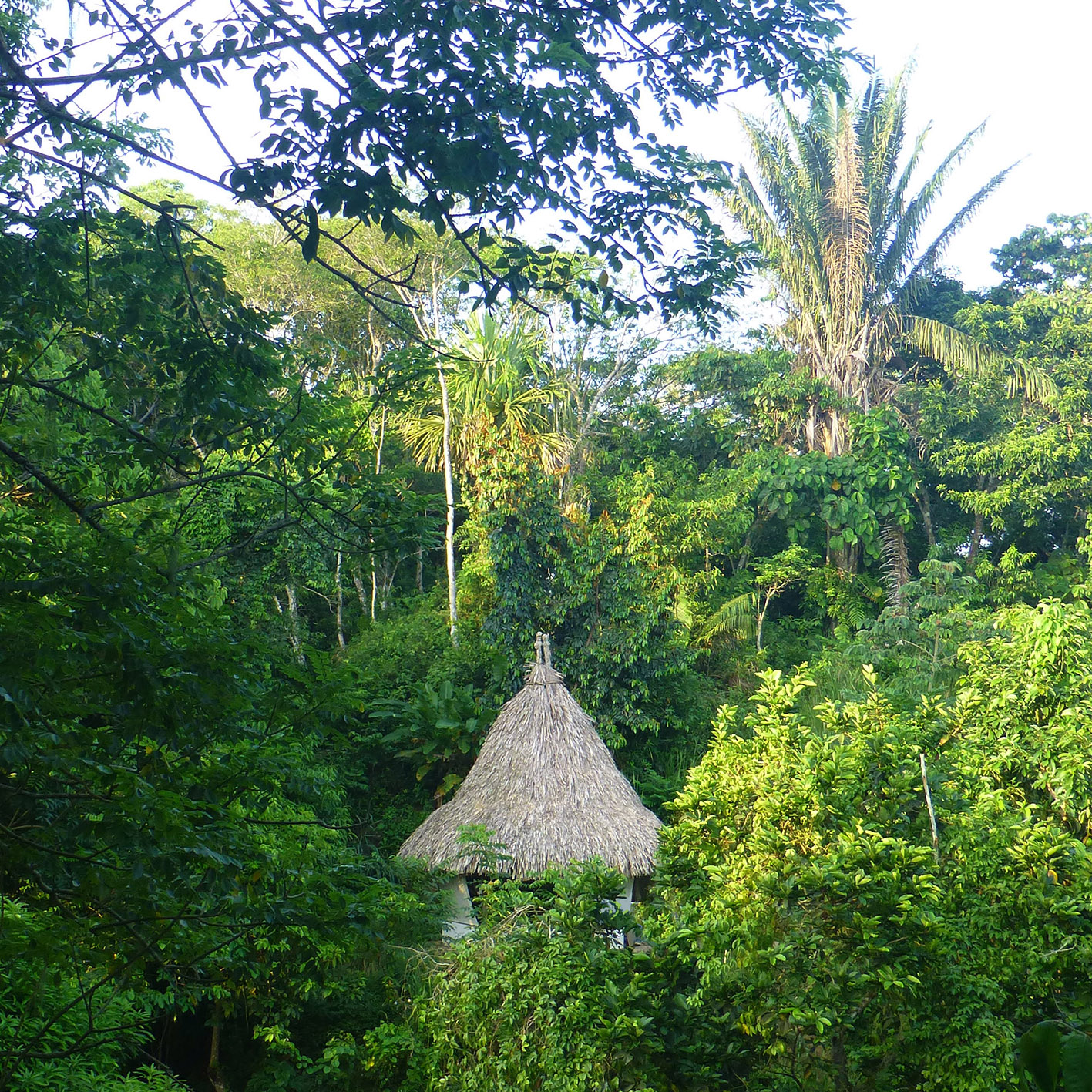
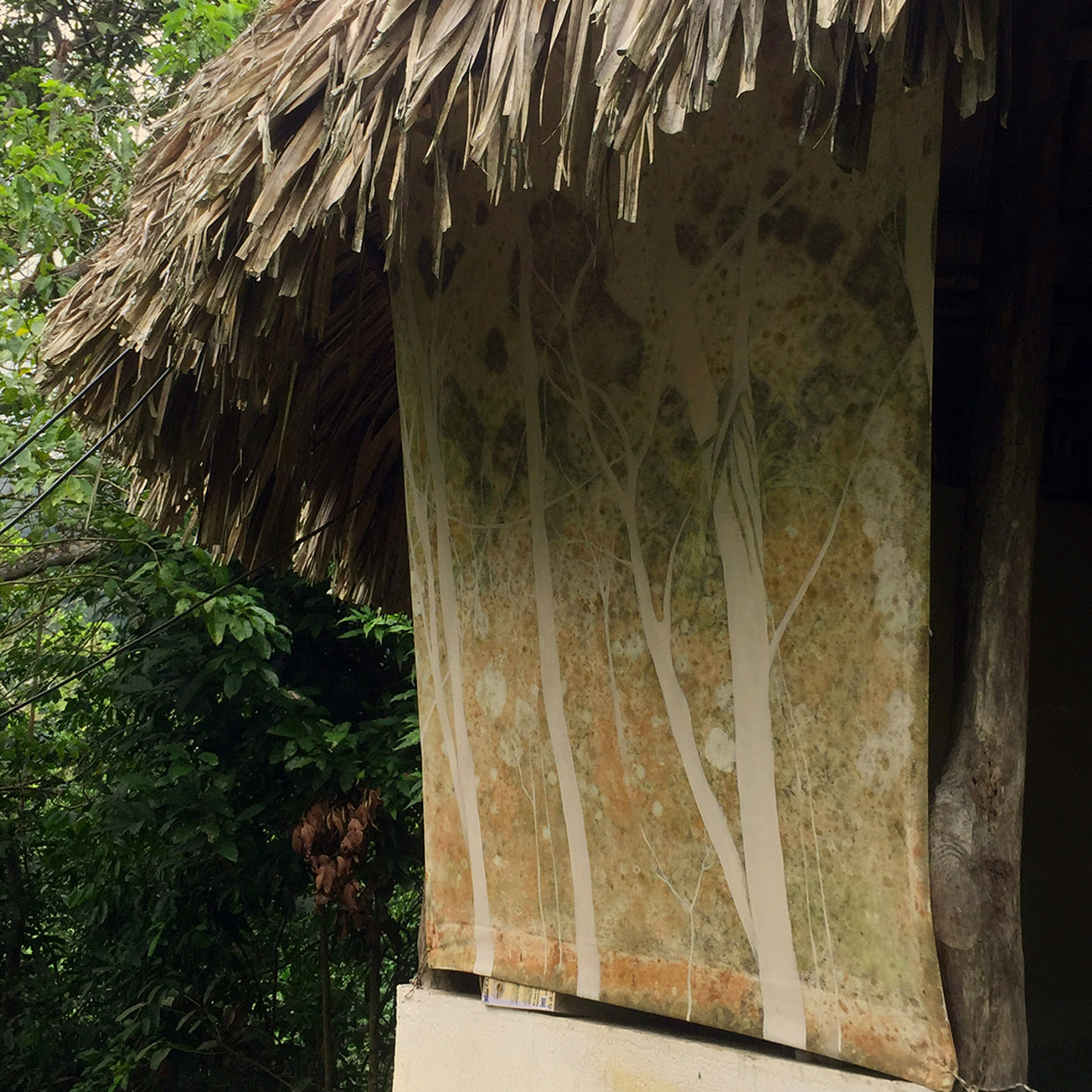
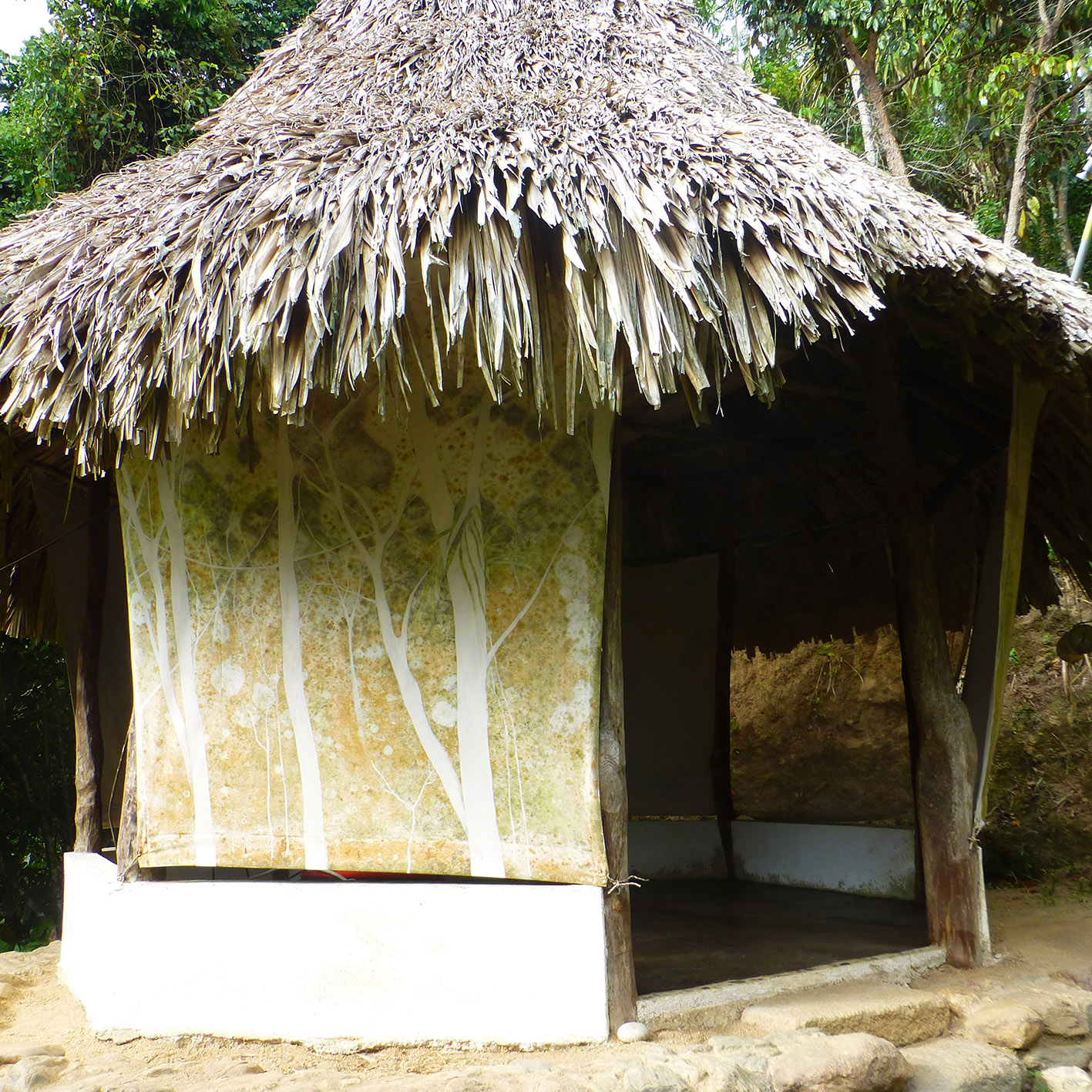
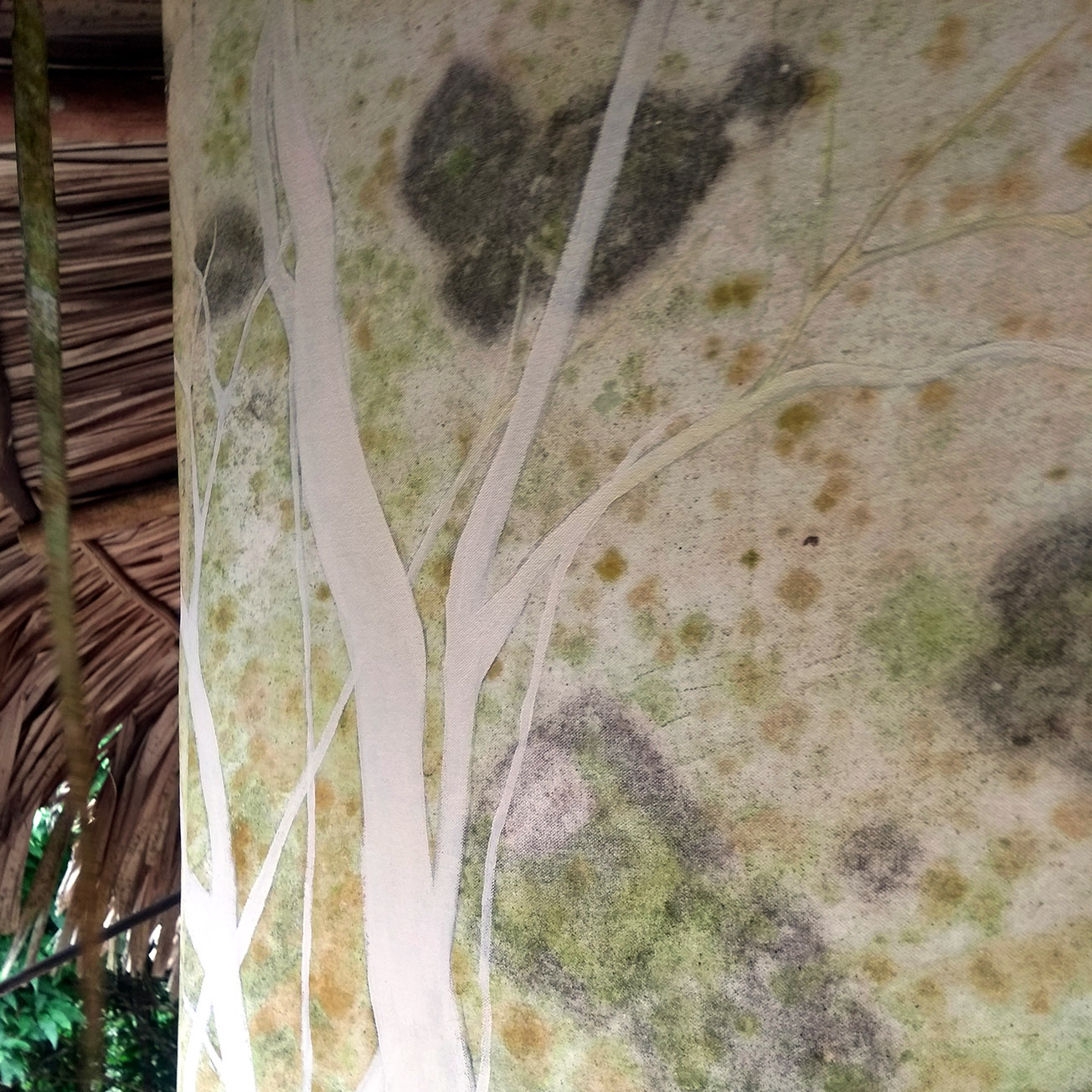
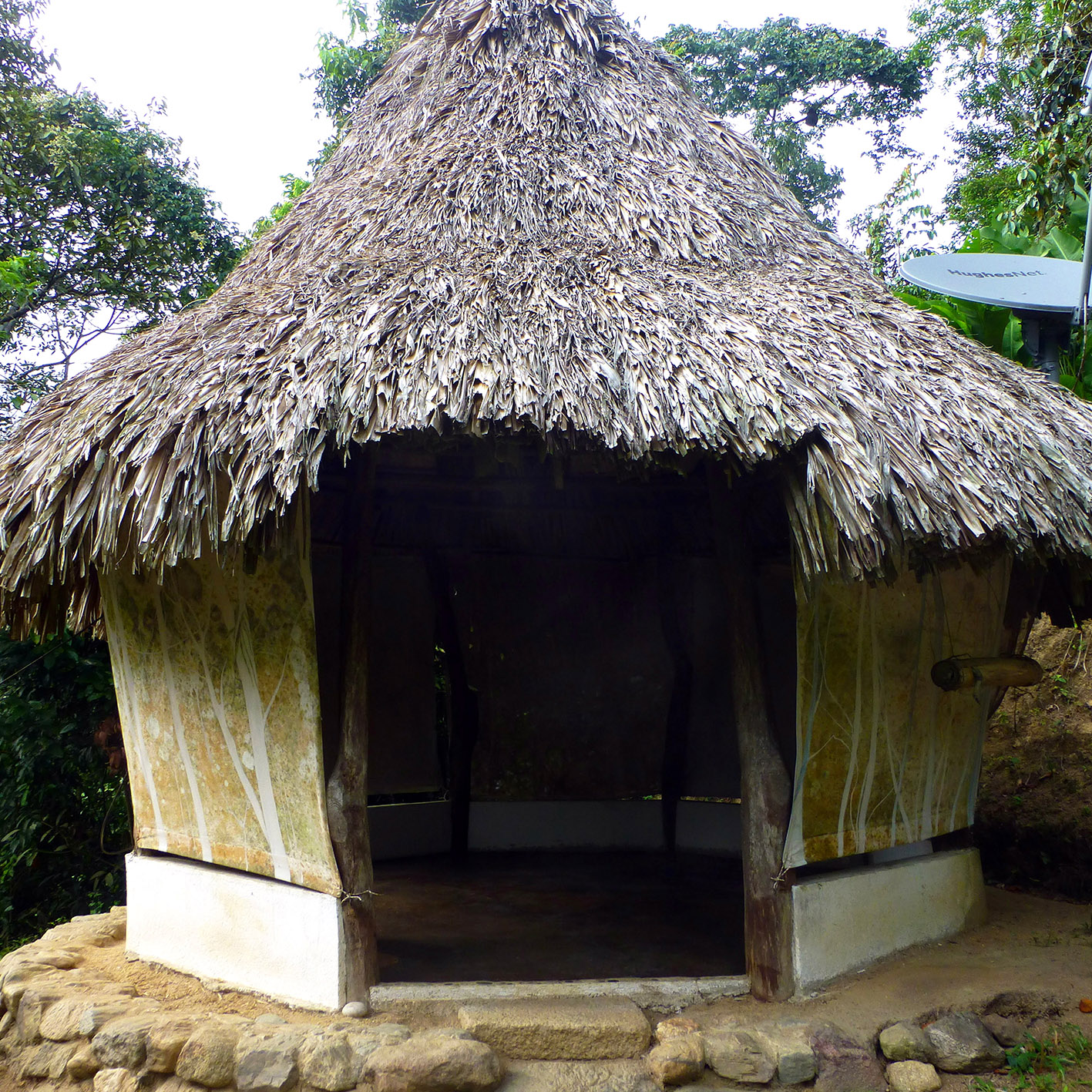
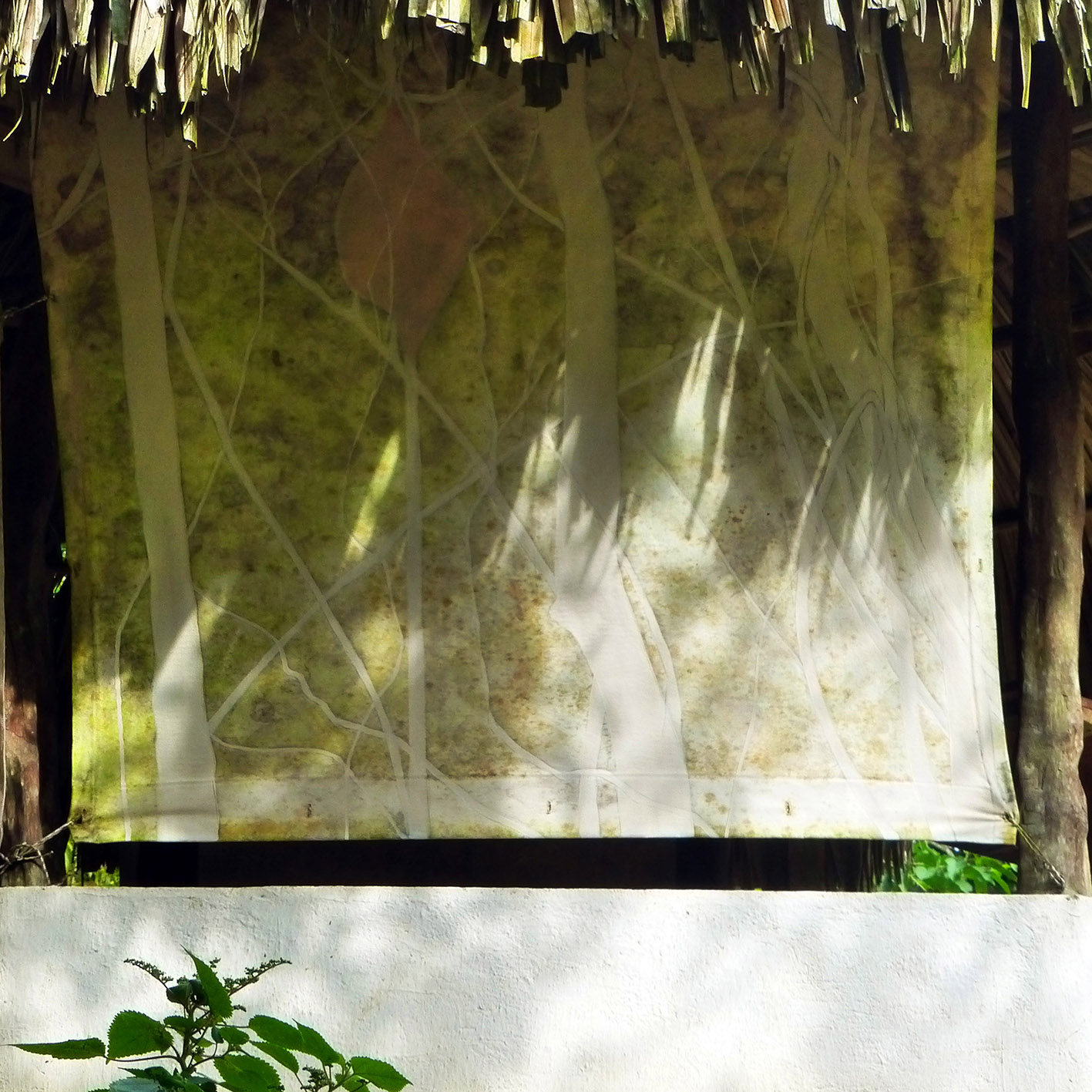
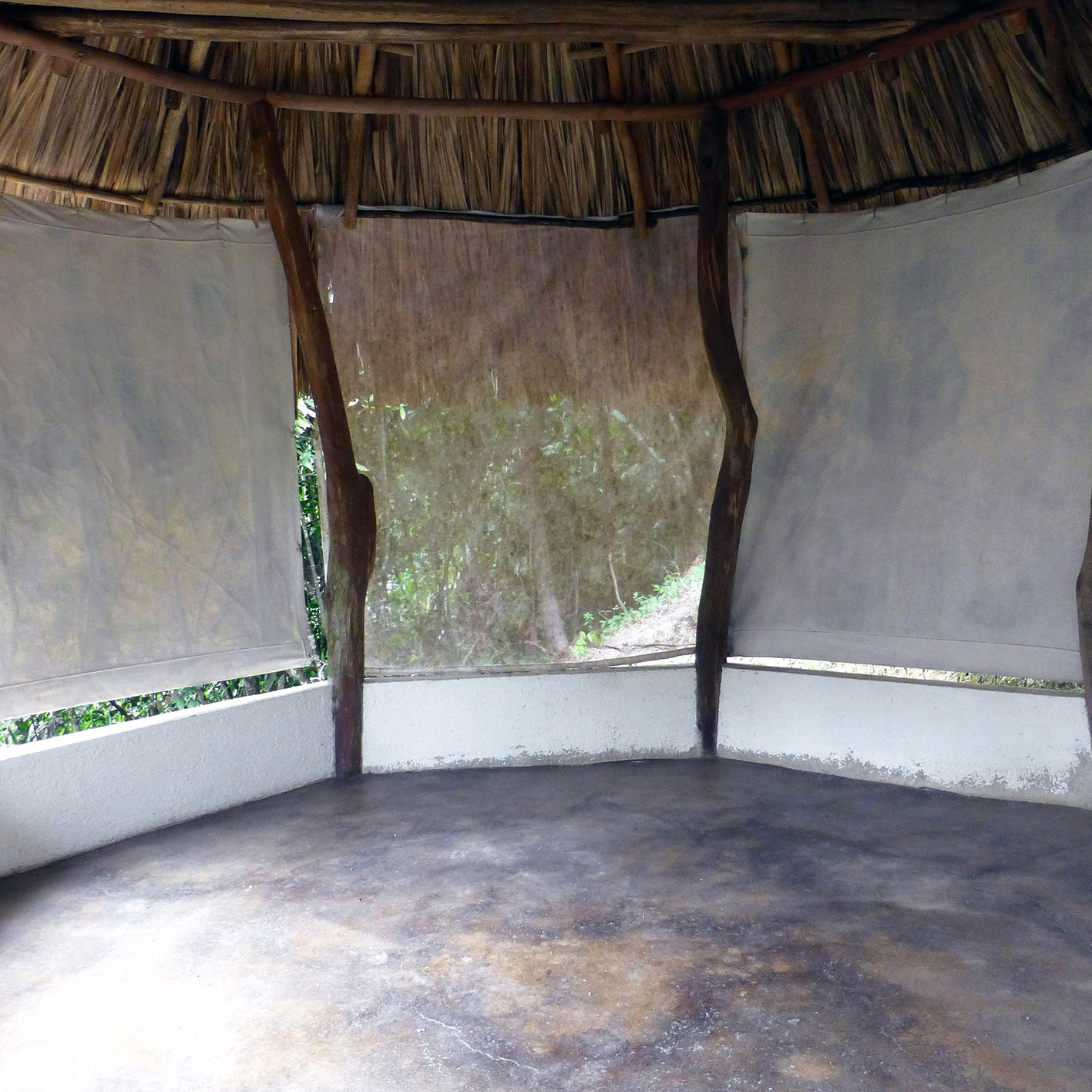
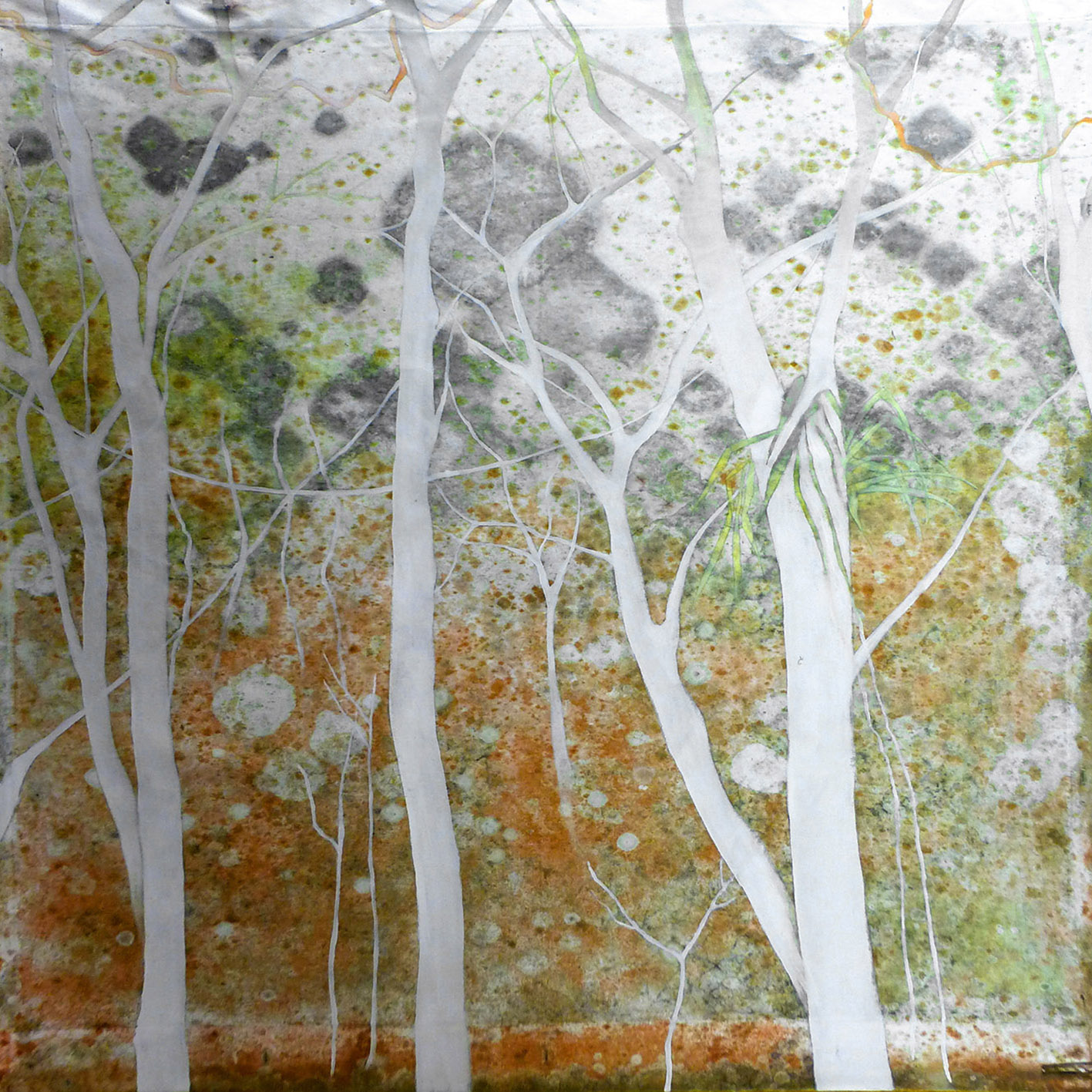
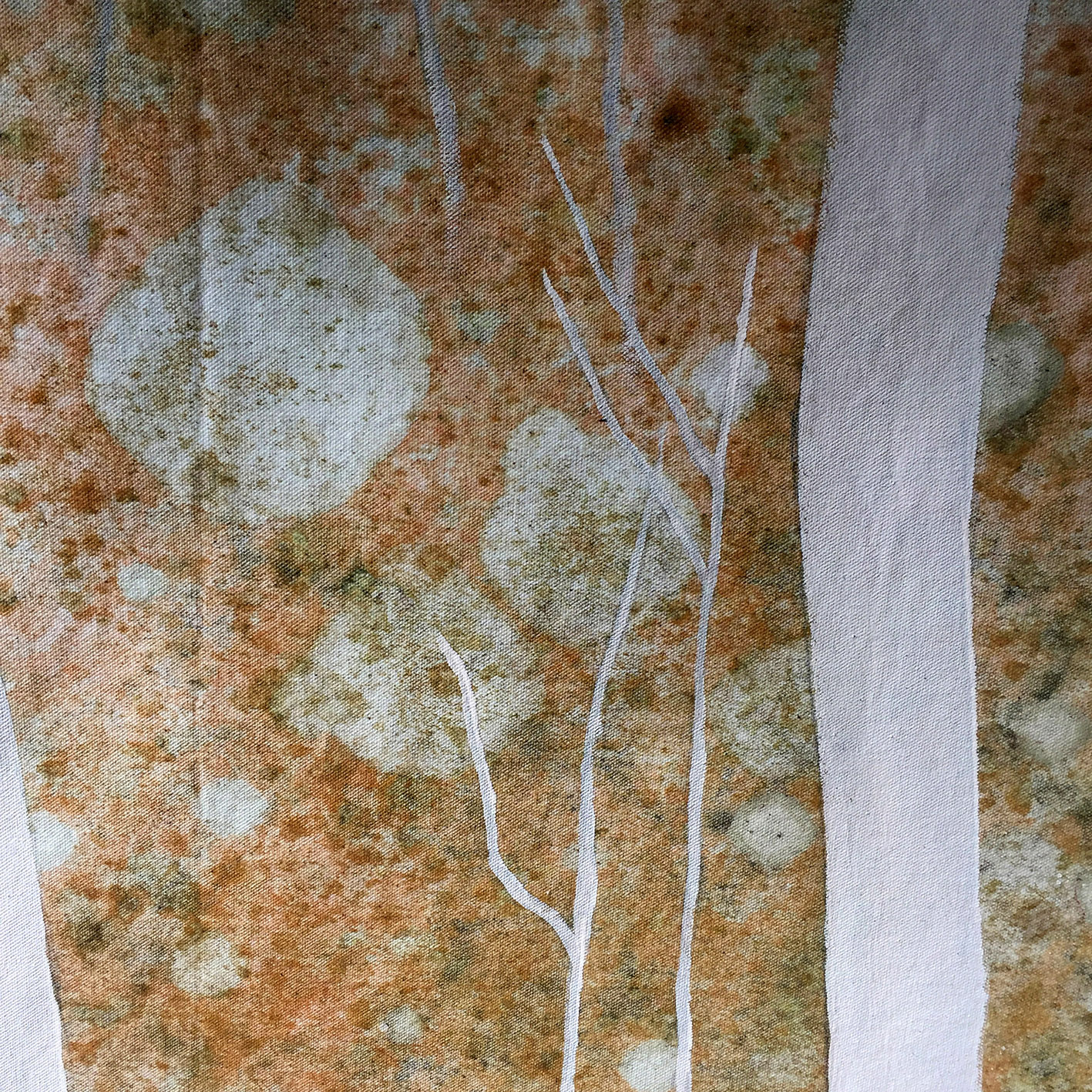
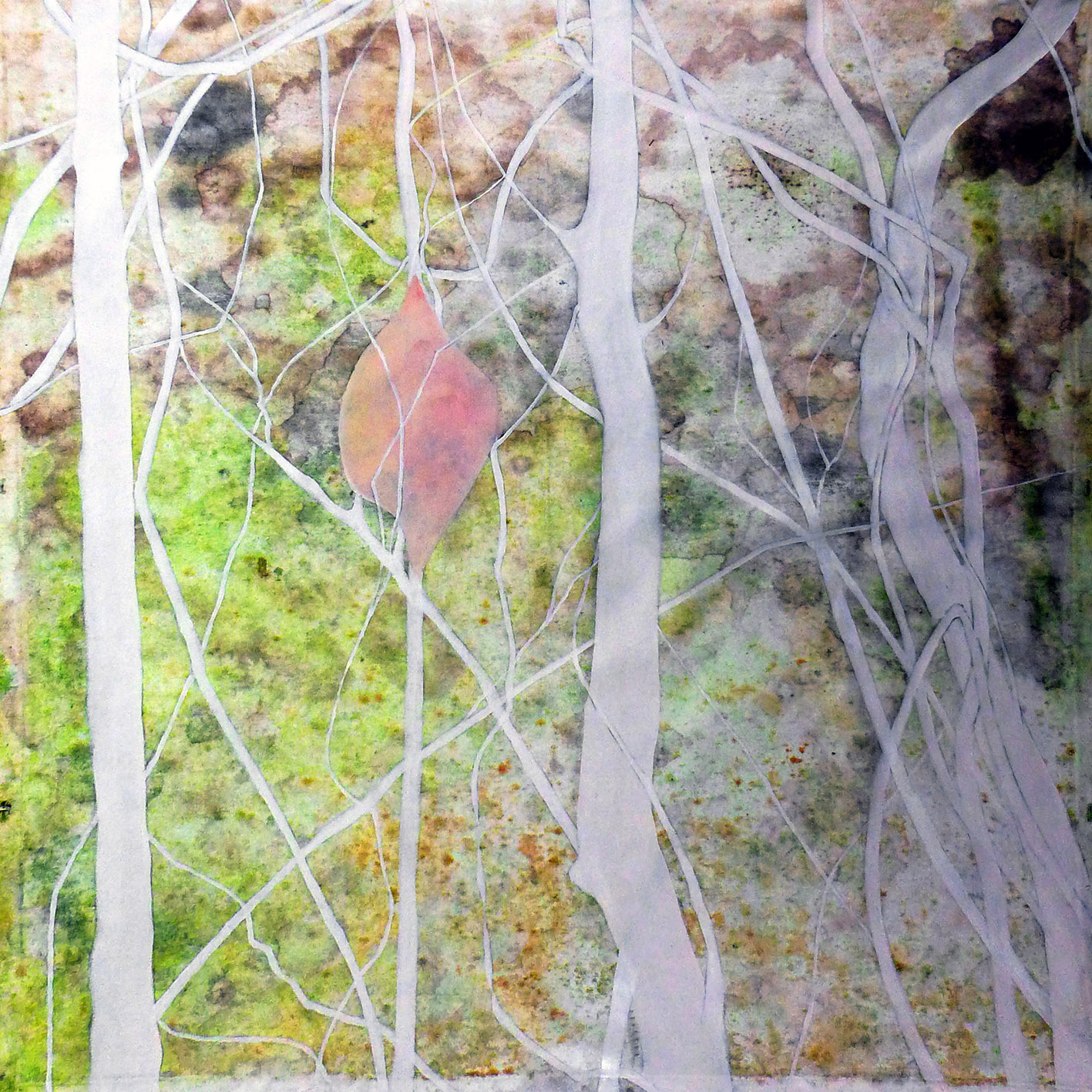
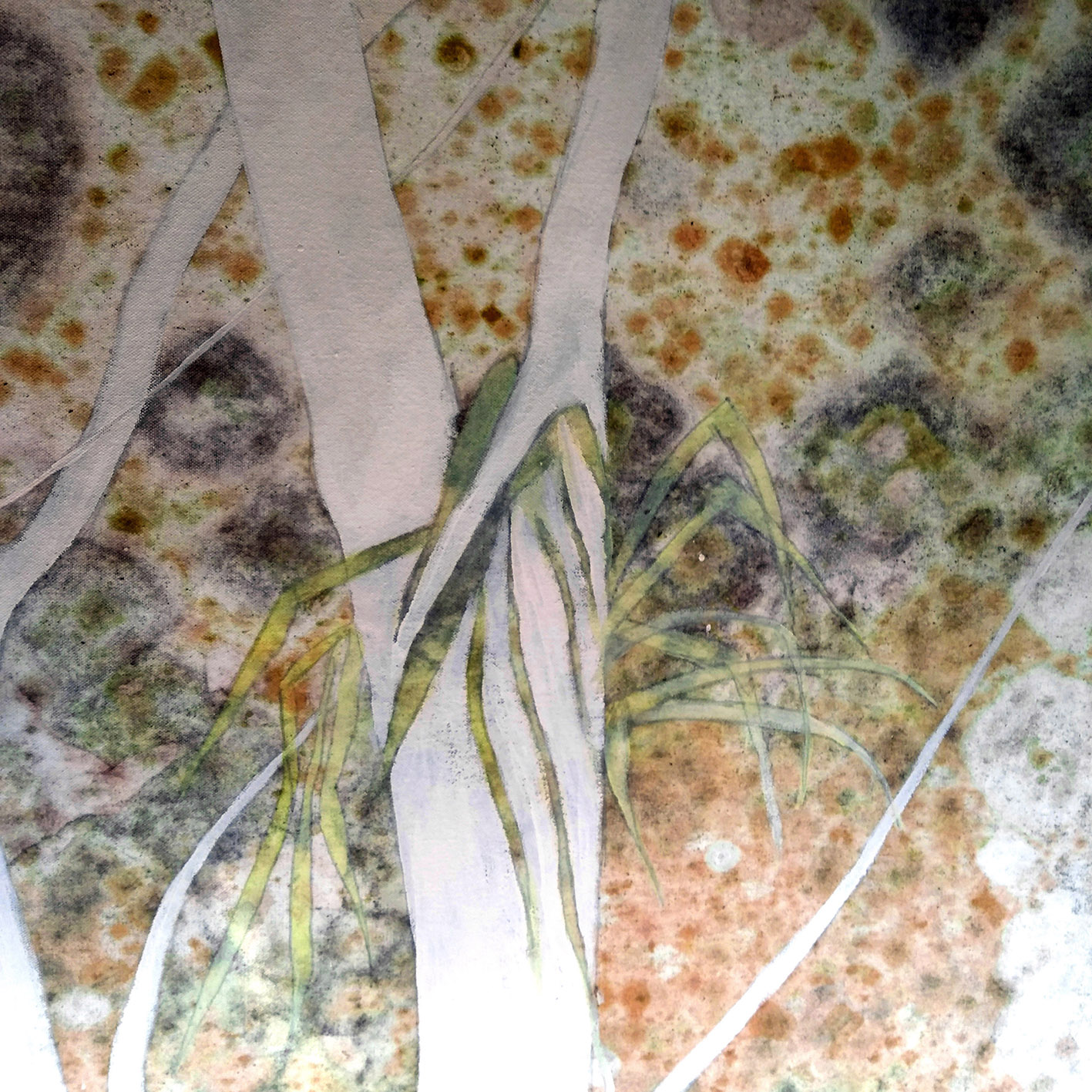
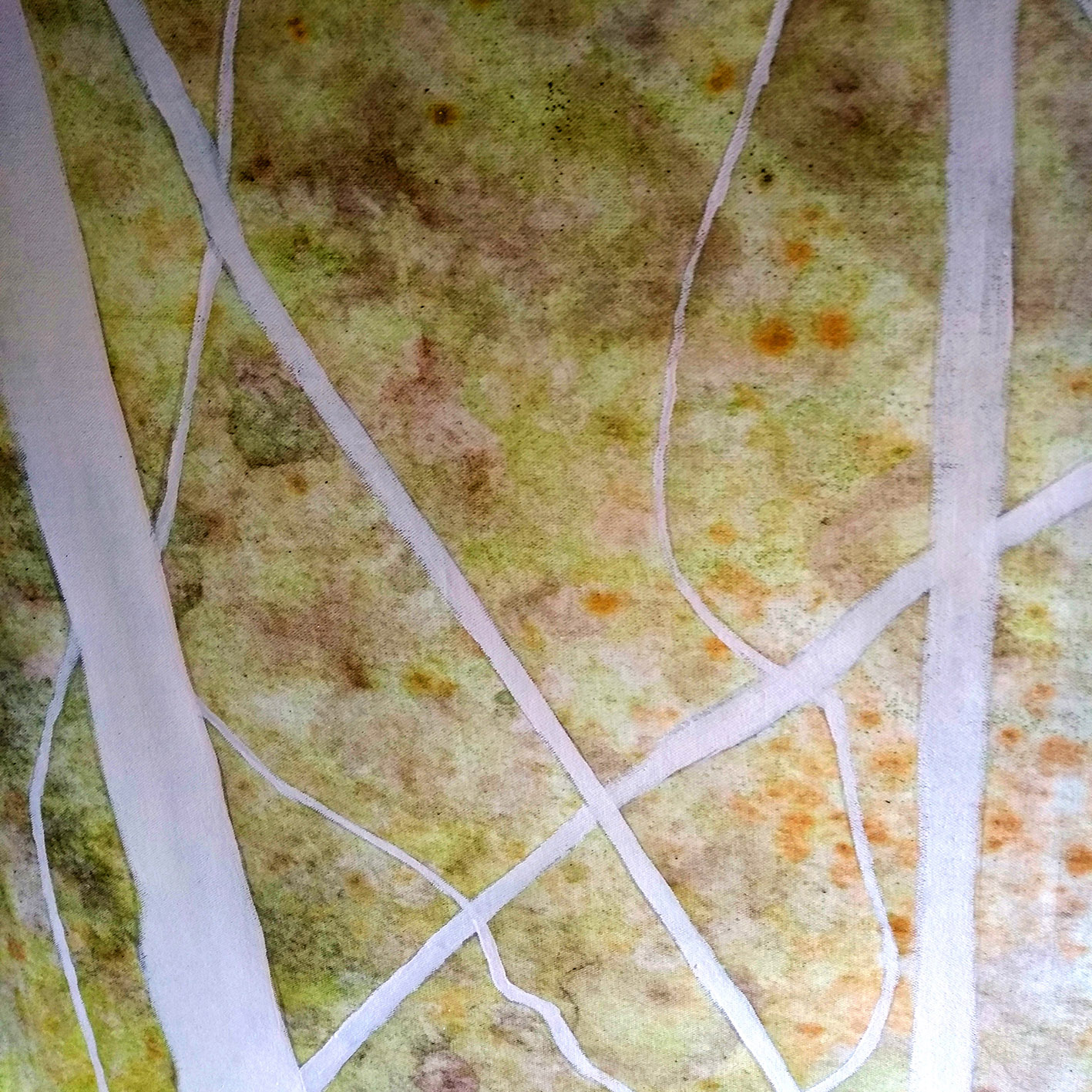
Ecosystem I, 2023
Installation; green sub-aerial microalgae, mineral pigment and photoluminescent acrylic on cotton canvas; 4 parts 140 x 120 cm each