Timeline
Timeline proposes a landscape intervention on the ¨Pandi-Icononzo Natural Bridge¨, which was formed when large stones fell through the crack that deepened the Sumapaz River on the Magdalenense slope of the eastern mountain range and became stuck, allowing communication between the Muisca settlements in the region from before the conquest. Considered a natural wonder, this place inspired legends, was explored in the scientific expeditions of the 19th century and became a silent witness and scene of horror in the era of violence, to now become an ecotourism destination. The intervention consists of writing a text on the sandstone that forms one of the walls of the crevice, always following the same sedimentary layer as if it were a line, resulting in a written line 20 metres long. The text is constructed with sections of stories referring to the site. The characters are written with red pigment, black ink and felt-tip pen, echoing the rock paintings of El Helechal (a nearby archaeological site); the chronicles of expeditionaries and the signatures that recent visitors have left on the rock, respectively. Timeline intersects on the same plane the geological and historical conceptions of time. The principles of stratigraphy postulate that strata are deposited and accumulate vertically and have the same age along their entire horizontal extent. The historical perspective accounts for past events as changes in time and usually represents them chronologically on a continuous, horizontal line. Timeline warns of the shortness of human existence in relation to the infinity of geological time by narrating episodes that took place from colonial times to the present day, on a single centimetric stratum that can contain the geological record of 500 years. The writing of the text resorts to cave painting and graffiti, as means that allow the subjectivity of the individual to leave its mark on the environment and thus reaffirm its existence. When the text is composed from previous narratives from different eras, Línea de Tiempo produces a timelessness of story and place.
Read the text of the intervention
¨…Una noche de luna llena acordaron la construcción de un puente sobre el abismo. Buziraco aceptaba a cambio el alma del cacique Pandé y de sus descendientes (1). Este puente es ciertamente un espectáculo particular maravillosamente conformado por 3 piedras sueltas, cuya piedra central forma una verdadera clave de bóveda (2), encima de una grieta por la cual se precipita a una profundidad de 125 metros un torrente que lleva el nombre de Río de Sumapaz (4). La impresión que aquel espectáculo produce es de terror y espanto (8). La grieta no tiene una anchura mayor de 15 metros. Sus muros casi verticales están formados por delgadas capas de arenisca (10). Los indígenas han dispuesto a lo largo de la piedra una barandilla ligera para aplacar lo horrible del abismo (2) que consideran espantoso como la boca del infierno (3). A veces allá en el fondo pasan con rapidez vertiginosa cosas blancas como visiones de condenados dantescos. Son los tumbos espumosos del río que huyen entre quejas ahogadas y lúgubres (11). Se oye un ruido sordo, que al principio tiende a atribuirse a las aguas que caen, pero que es causado por una especie de pájaro nocturno (2) que vive en las grutas subterráneas de la grieta. Parecen ser los guácharos una variedad del eaprimulgus (5). Algún cataclismo debió aterrorizar a las personas que vivían en aquellos tiempos pues (9) cerca hay un grupo de peñascos con jeroglíficos pintados con tinta roja indeleble que contienen el símbolo chibcha de aguas abundantes (7). Dicen que Buziraco siglos después reclamó las almas de los pobladores de Pandi (1). El puente natural se convirtió durante la Violencia de los 50 en el botadero de los cadáveres que arrojaban (13) bajo la premisa de una política de limpieza de la región en contra de grupos comunistas, dirigentes sociales y liberales comunes (12). La víctima habría pasado la baranda de seguridad del sitio y subido al peñón más alto para tomarse la selfi. Sin embargo, cuando estaba en la orilla de la piedra se resbaló (14), sucedió siempre cerca de la medianoche, antes de que cantara el gallo y los estertores se perdieran con los graznidos de los guácharos (1)…¨
(1) PULIDO GARCIA, E. (2017). EL PUENTE NATURAL DE PANDI. Revista Equinoccio Periodismo Literario. 1ra Edición.
(2) VON HUMBOLDT, A. (1810). VISTAS DE LAS CORDILLERAS Y MONUMENTOS DE LOS PUEBLOS INDÍGENAS DE AMÉRICA.
(3) MOLLIEN, G. (1944). VIAJE POR LA REPÚBLICA DE COLOMBIA EN 1823. Biblioteca Popular de Cultura Colombiana, Viajes, Vol. VIII, Cap. IV, pag. 64.
(4) LE MOYNE, A. (1945). VIAJES Y ESTANCIAS EN AMÉRICA DEL SUR LA NUEVA GRANADA, SANTIAGO DE CUBA, JAMAICA Y EL ISTMO DE PANAMÁ 1828 – 1839. Biblioteca Popular de Cultura Colombiana, Viajes, Vol. IX, Bogotá.
(5) PEREZ, F. (1863). CARTA DEL BARON GROS AL JEÓLOGO ELIE DE BEAUMONT. En Jeografía Física I Política de los Estados Unidos de Colombia.
(6) BOUSSINGAULT J.B. y F.D. ROULINY (1849). VIAJES CIENTIFICOS A LOS ANDES ECUATORIALES. Colección de Memorias sobre Física, Química é Historia Natural. Nueva Granada, Ecuador y Venezuela. Librería Castellana, Paris.
(7) PEREZ, F. (1863). JE0GRAFIA FISICA I POLITICA DE LOS ESTADOS UNIDOS DE COLOMBIA. Miembro de la Nueva Comisión encargada de los Trabajos Corográficos de la República. Imprenta de la Nación, T. II, Bogotá.
(8) GUTIÉRREZ DE ALBA, J.M. (1871). IMPRESIONES DE UN VIAJE A AMÉRICA 1870 - 1884. T. VI, Fiestas V, Tolima.
(9) ANDRÉ, M. ED. (1884). AMÉRICA EQUINOCCIAL. En América Pintoresca Descripción de Viajes al Nuevo Continente por los Más Modernos Exploradores. Montaner y Simon Editores, Barcelona, pag. 624-633.
(10) CUERVO, M.L. (1940). GRIETA Y PUENTE DE ICONONZO. Revista Colombiana de Ciencias. Vol. 3, N. 11.
(11) ROSALES, J.M. (1950). EL PUENTE DE ICONONZO. Boletín de la Sociedad Geográfica de Colombia. Vol. 8, N. 2.
(12) PABÓN QUINTERO, W.R. (1999). UN LIBERAL Y HACENDADO EN PANDI. En La violencia y los ríos. El Puente Natural de Pandi. Monografía de grado, Departamento de Historia, Facultad de Ciencias Humanas, Universidad Nacional de Colombia, Bogotá, pag. 64-70.
(13) MOLANO BRAVO, A. (2017). ADIÓS A LAS ZONAS VEREDALES. El Espectador. Agosto 19.
(14) NACION (2018). POR TOMARSE SELFI, TURISTA RESBALÓ DE PEÑÓN Y CAYÓ A PROFUNDO RÍO EN CUNDINAMARCA. Febrero 27.
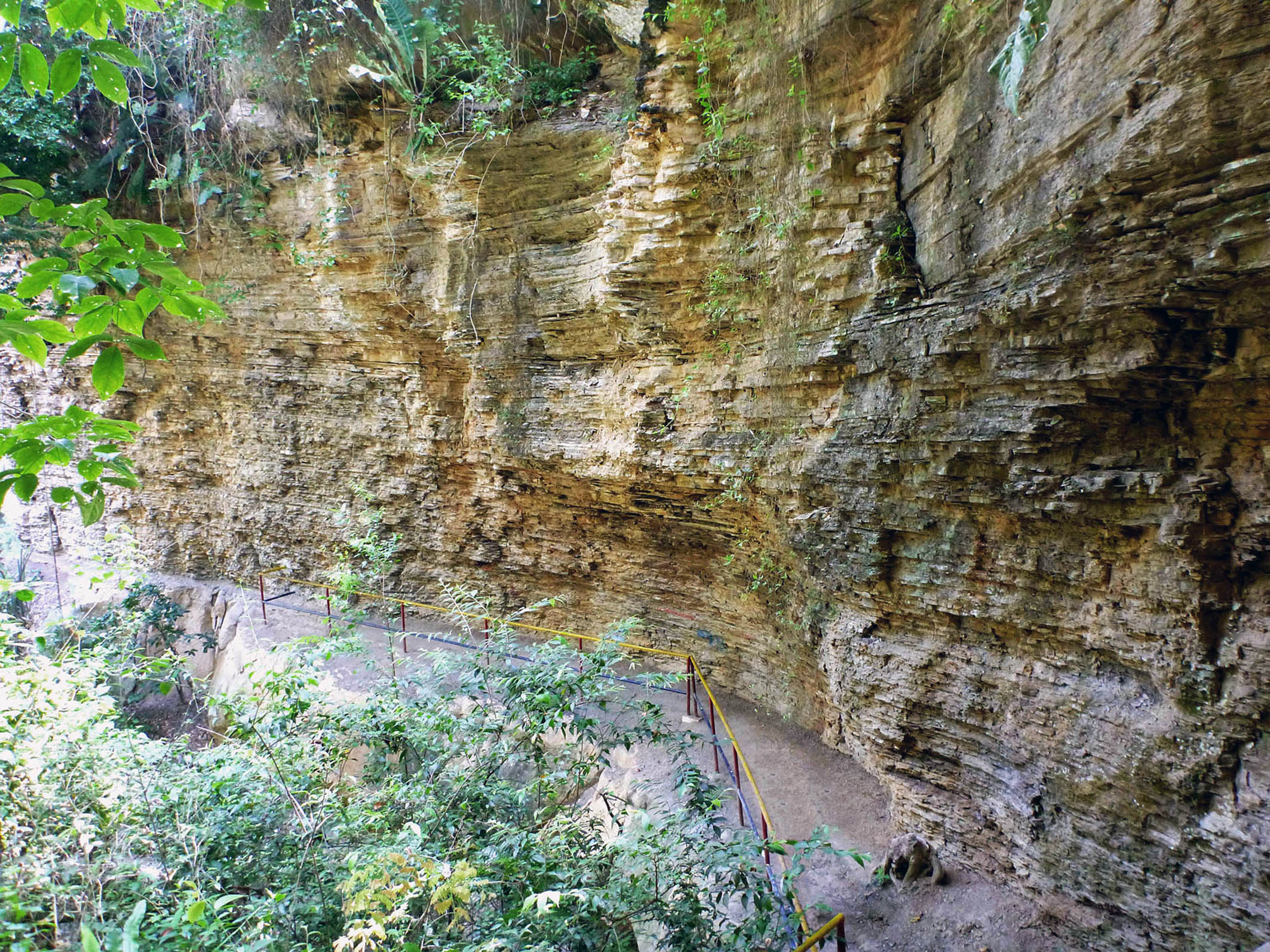
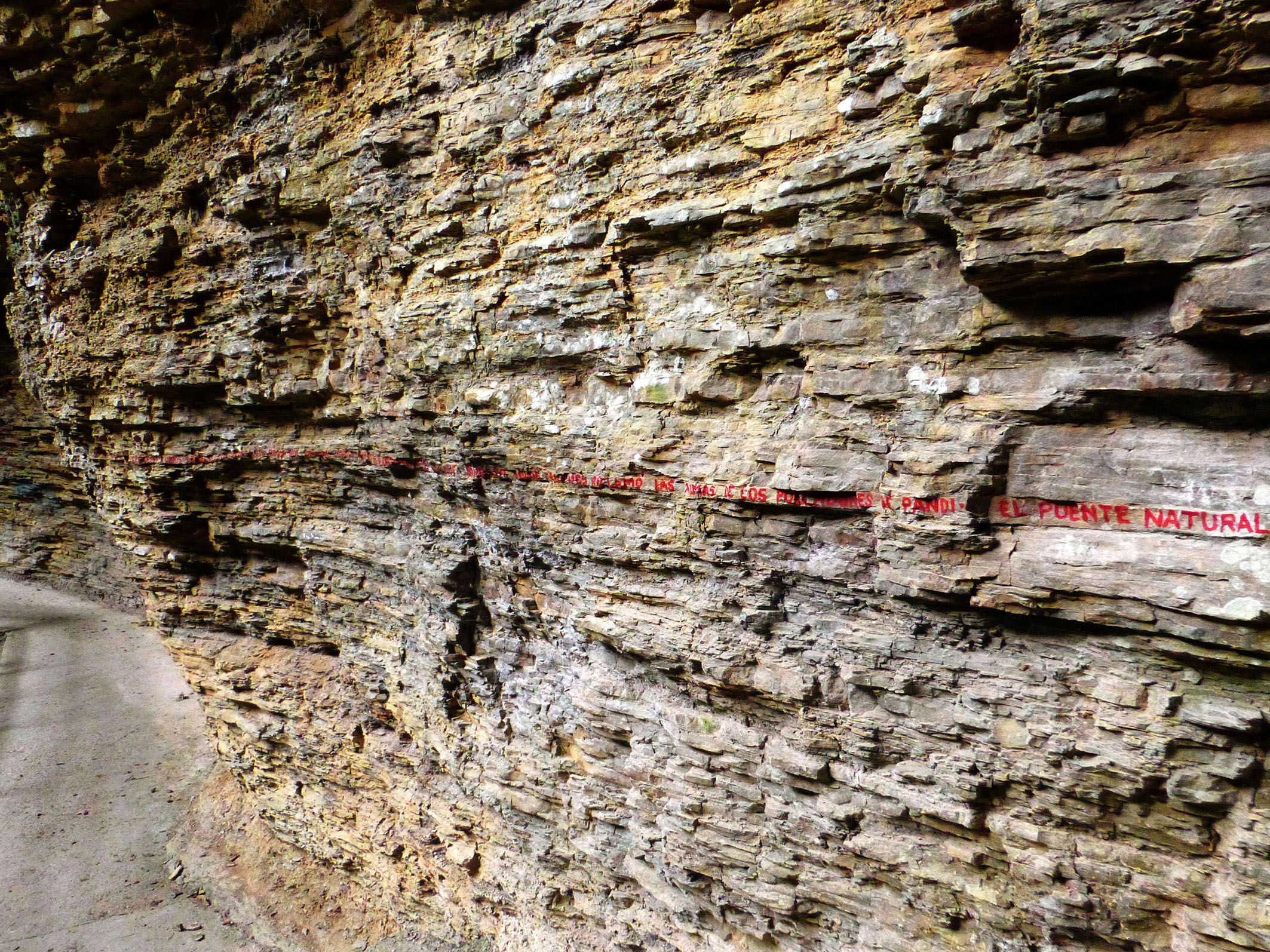
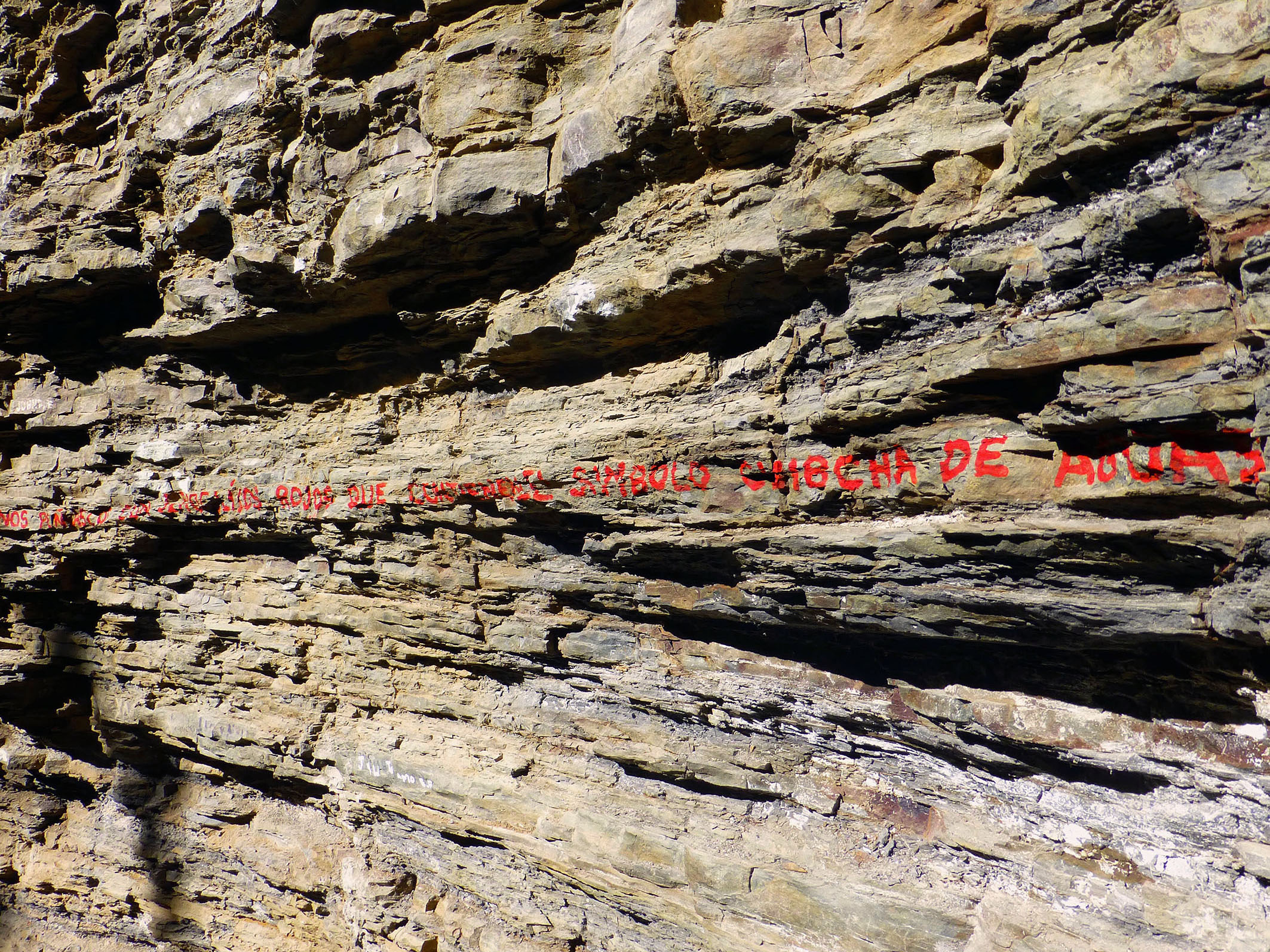
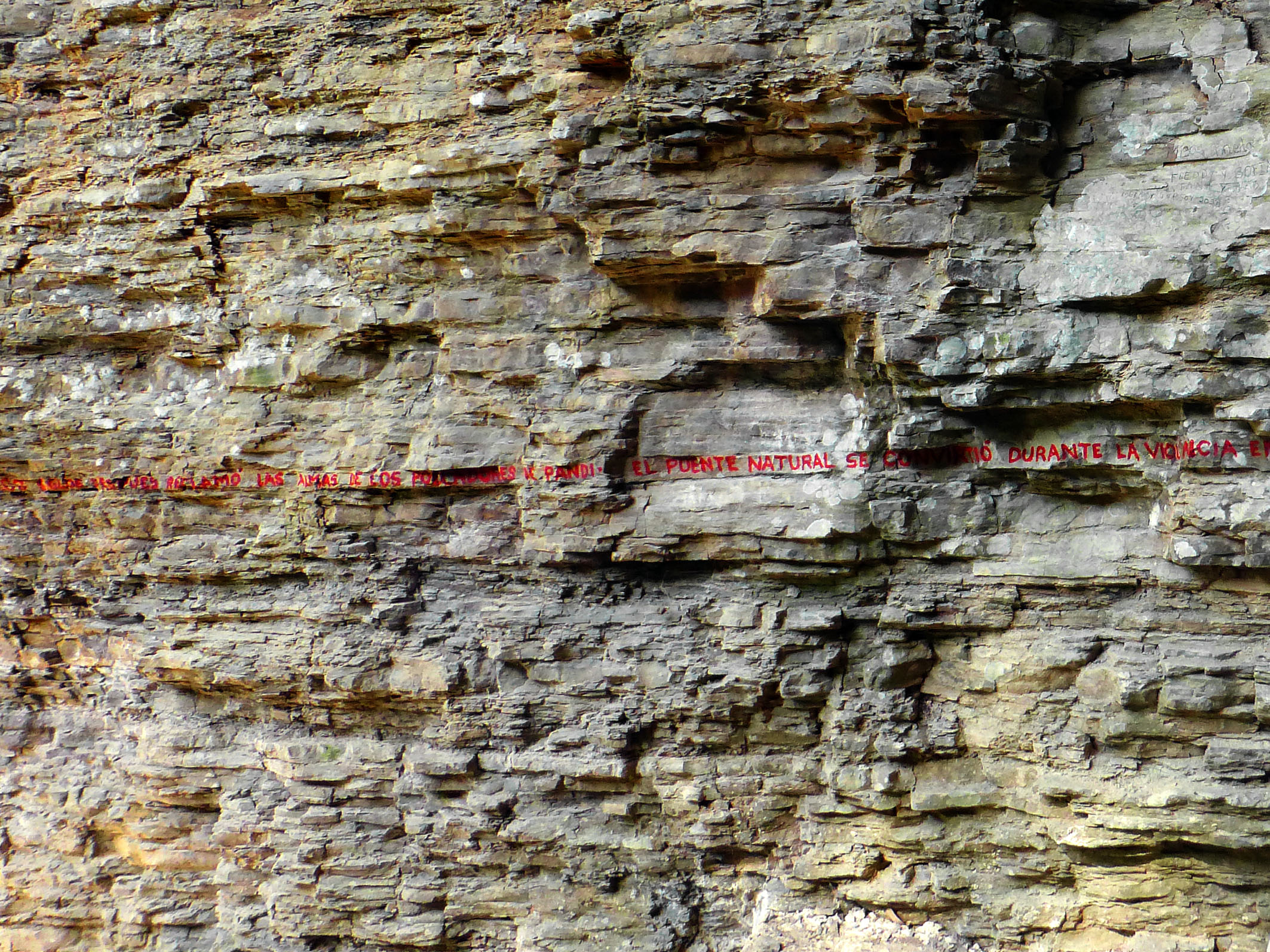
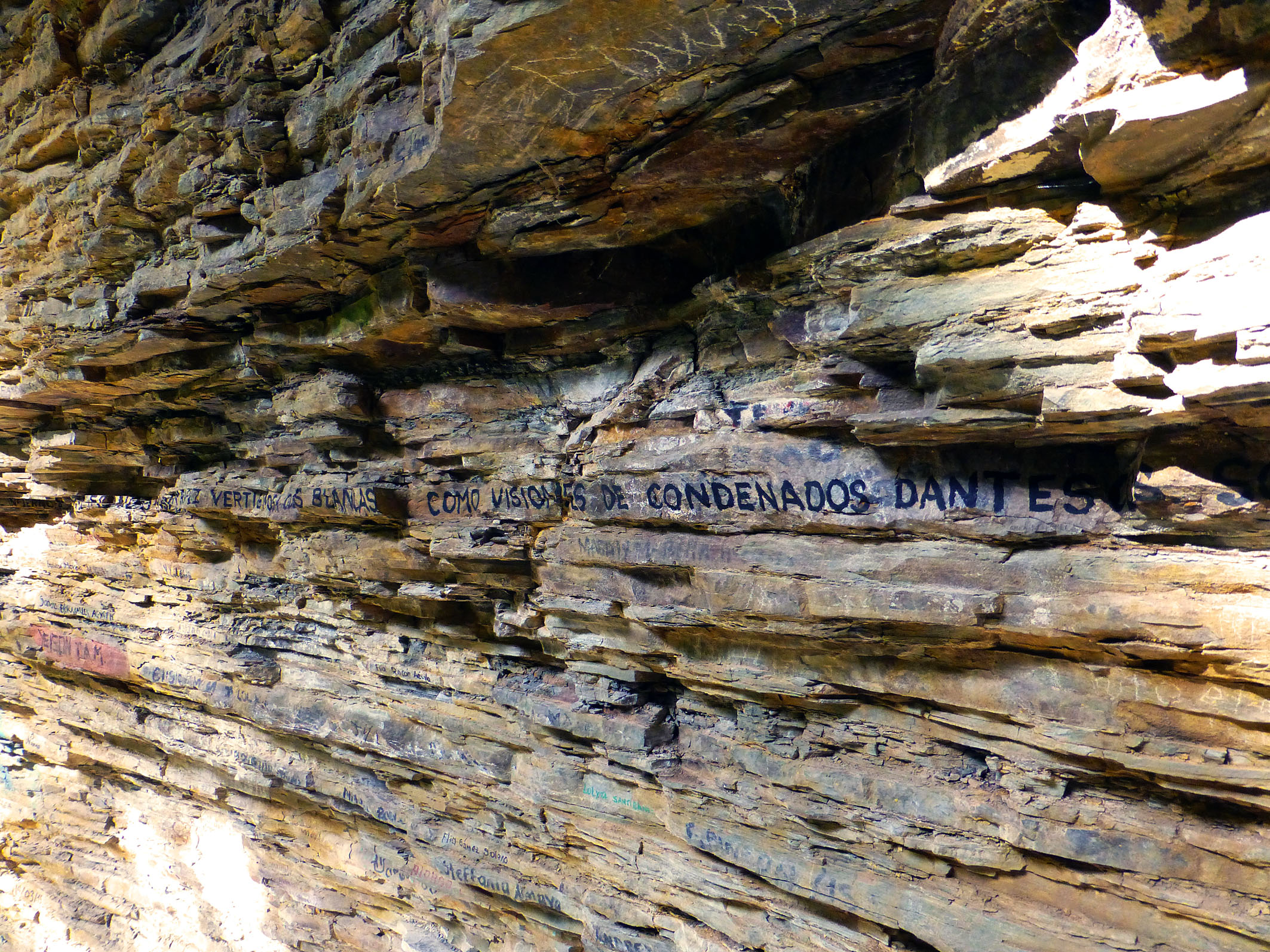
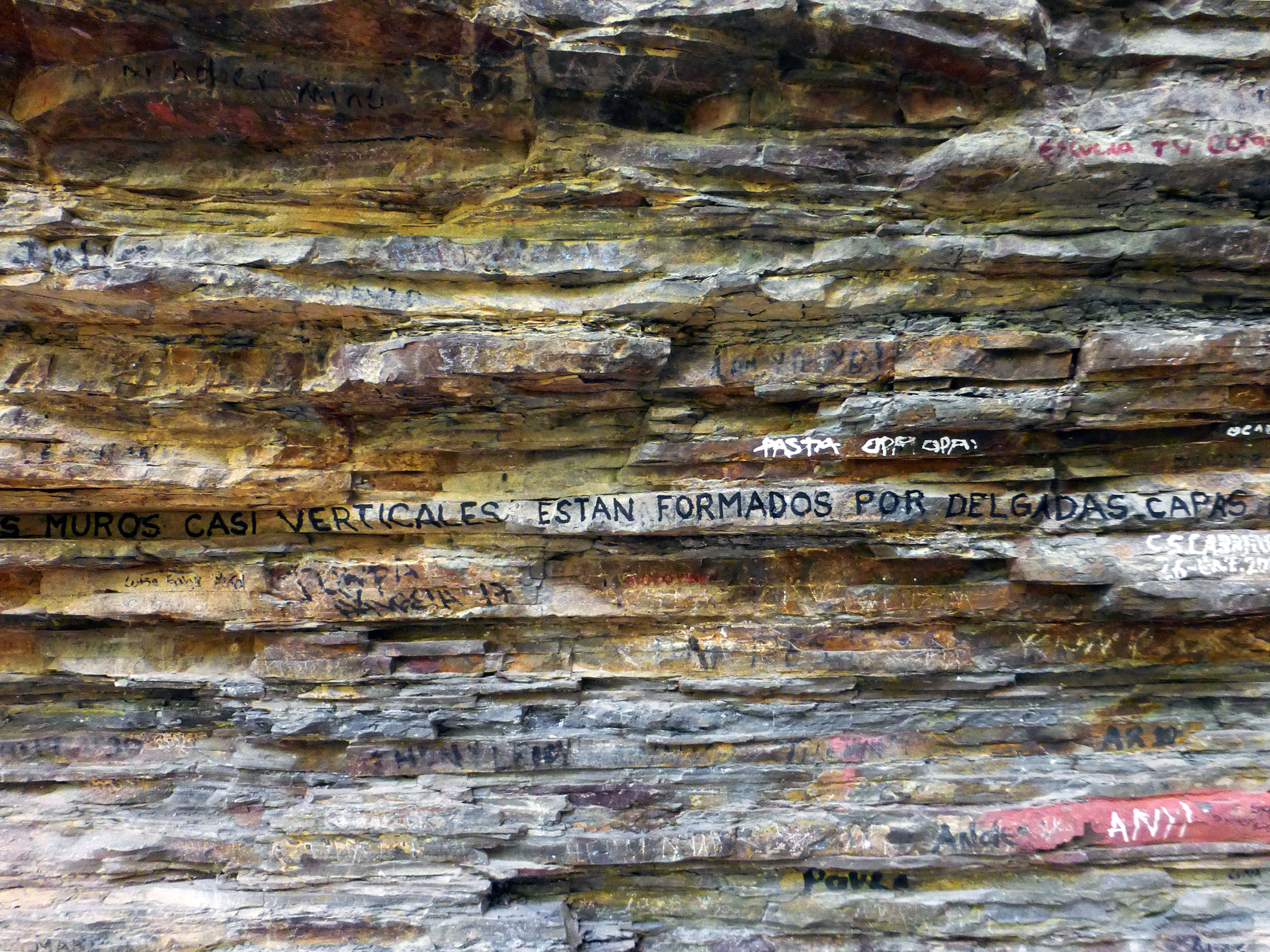
Timeline, 2020
Site specific intervention, mineral pigment, ink and marker pen, text, dimensions variable