Tecnolitas
"Artifacts of time, monolithic and stereotomic, that settle on the earth as if they were born from it, where their sedimentary and stratified condition accounts for a totality composed of infinite particles capable of containing the atomic condition of the world in the same space. Its fossil stability resides in the transformation itself: its mass wears away and thus allows to show the fragility of a living geological matter that configures all that exists, but at the same time is translated by the present condition of the physical and cultural context." Text by Daniel Eslava
In recent years it has been proposed to redefine the current geological epoch, the Holocene, as the "Anthropocene" due to the impact of human activities on the planet, or "Capitalocene" if we consider that these activities are developed within a system of economic and political power, or even "Technocene" if we focus on the industrial and technological waste that accumulates in the lithosphere, hydrosphere and terrestrial atmosphere. In June 2023 the Anthropocene Working Group (AWG) of the International Stratigraphic Commission announced that a horizon with elevated levels of radioactive isotopes, identified in the sediments of Lake Crawoford in Canada, could mark the beginning of the Anthropocene around 1950. Tecnolitas (2023) is a series of synthetic stratigraphies in the form of lithological cores or cores, made from the casting of successive layers of mineral aggregates, calcareous cements, technological debris and recycled petroleum polymers, which addresses the discussion of the Anthropocene, reflects on the technofossils and proposes, anticipating the millions of years it may take for sediments to become rocks, possible geological records of our time.
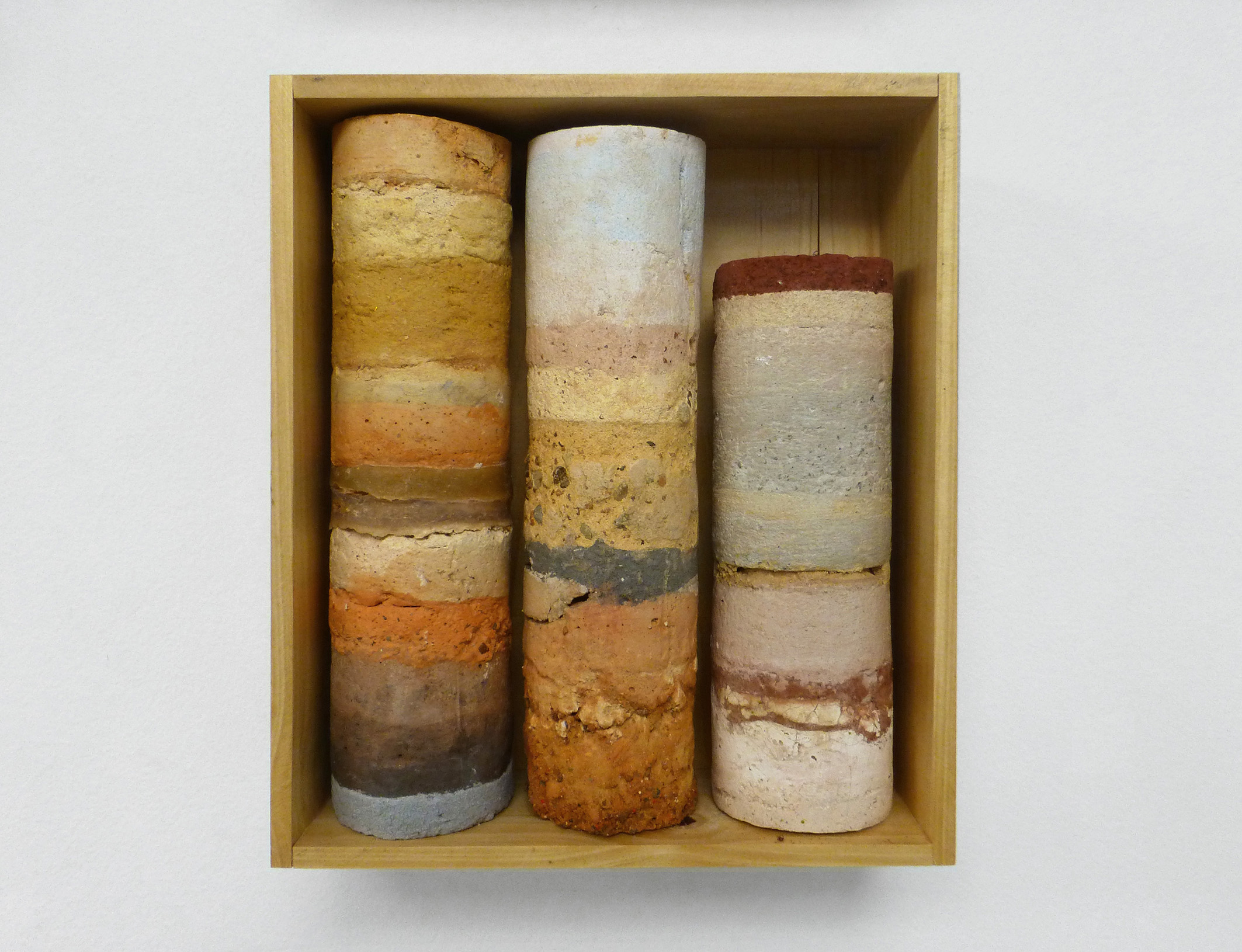
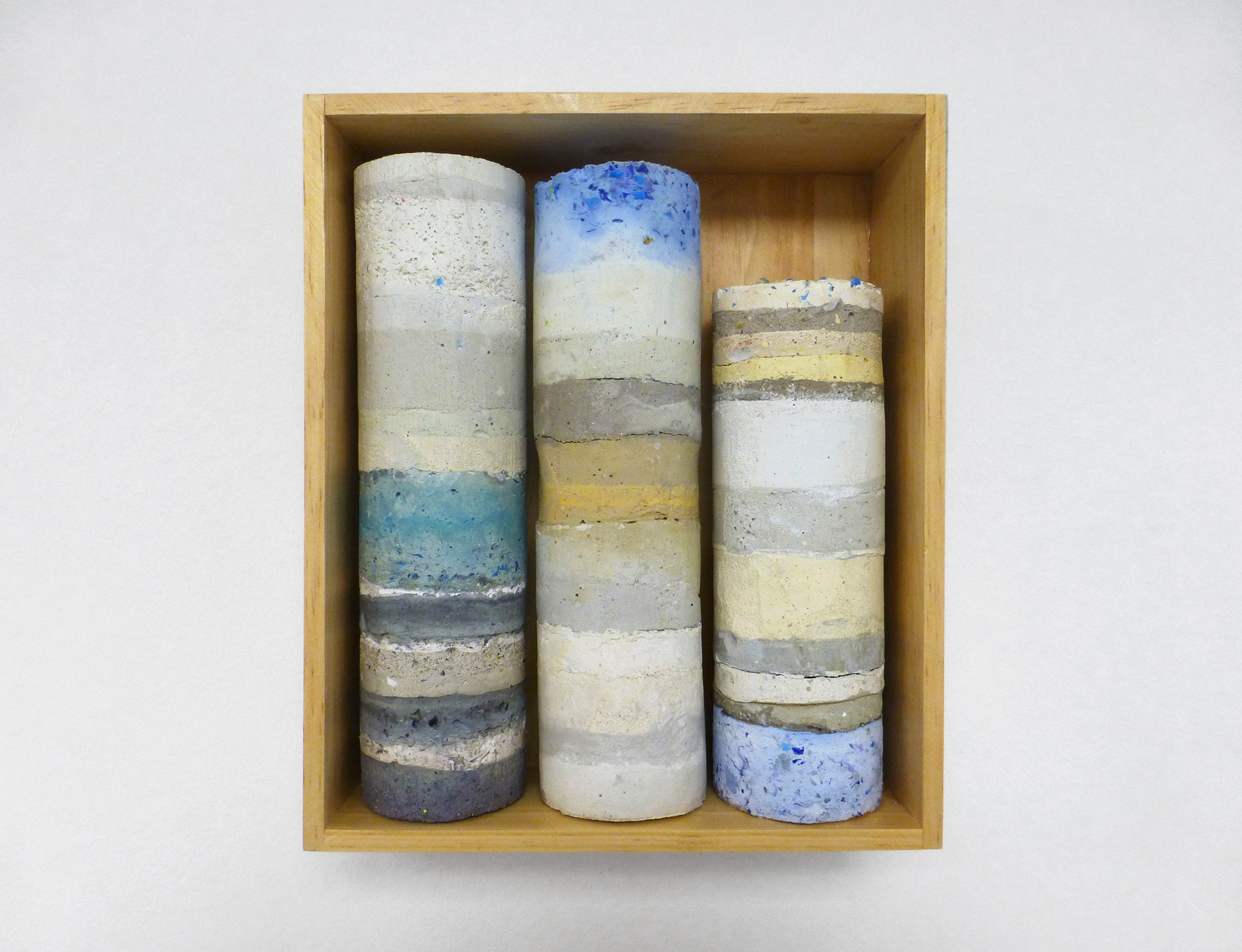
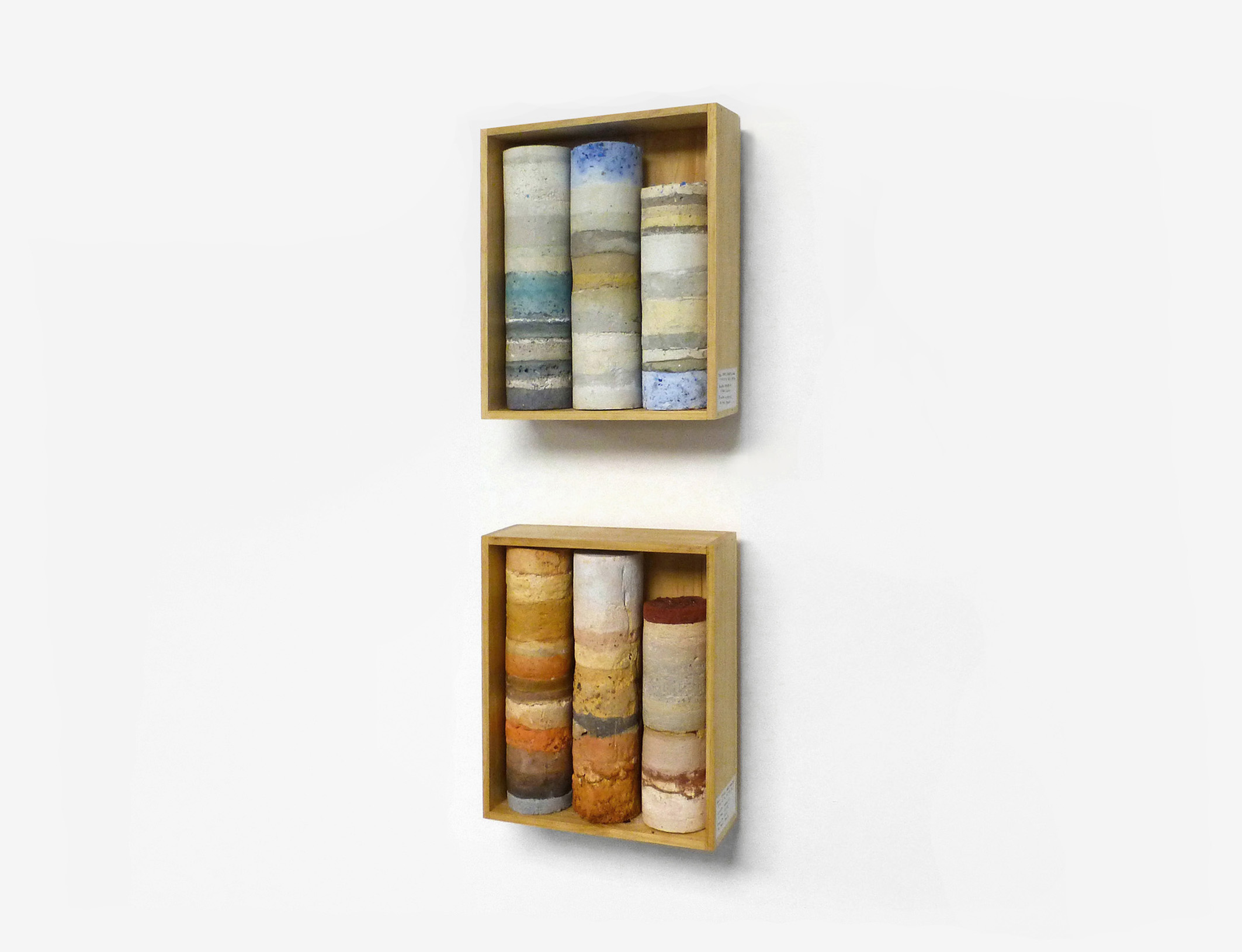
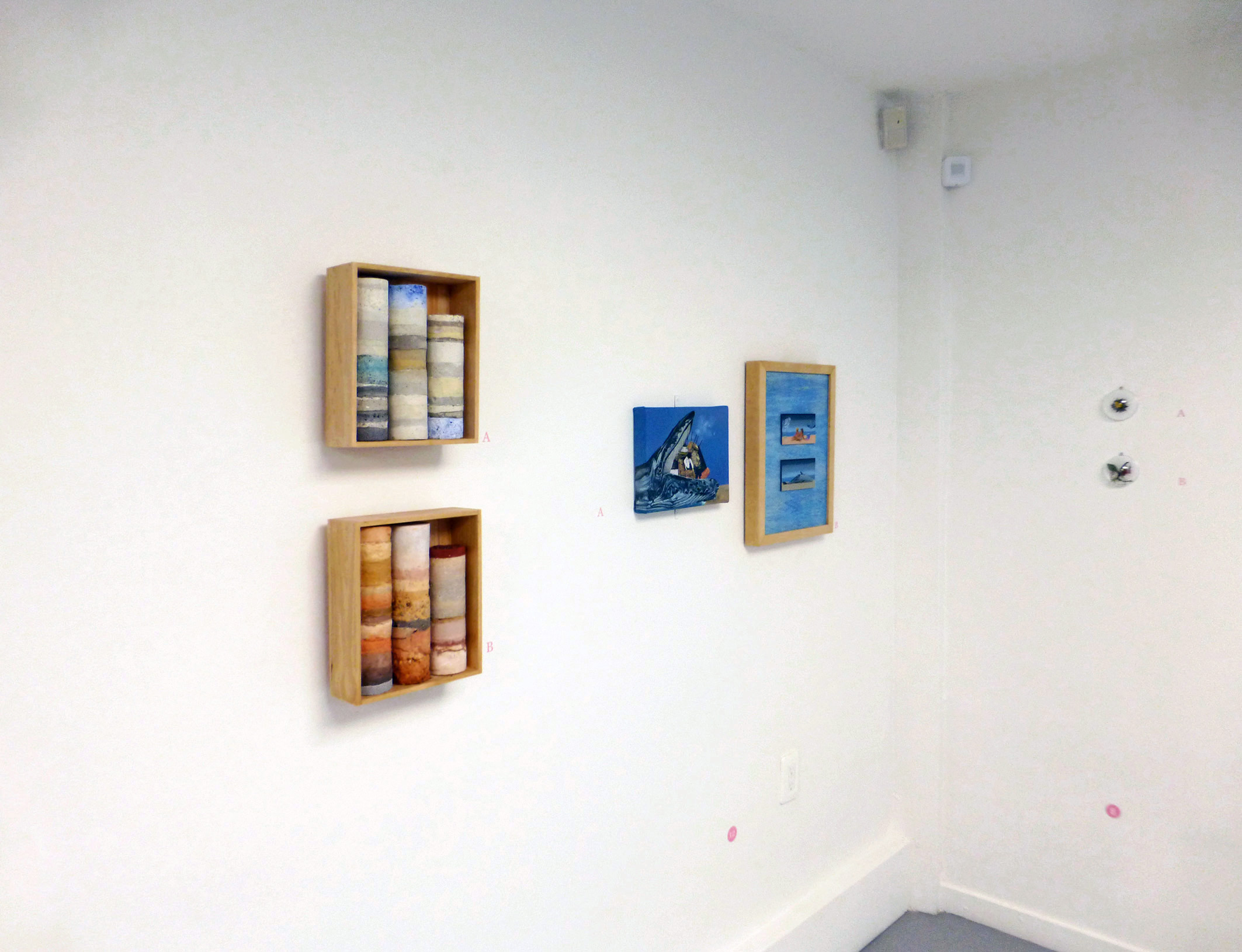
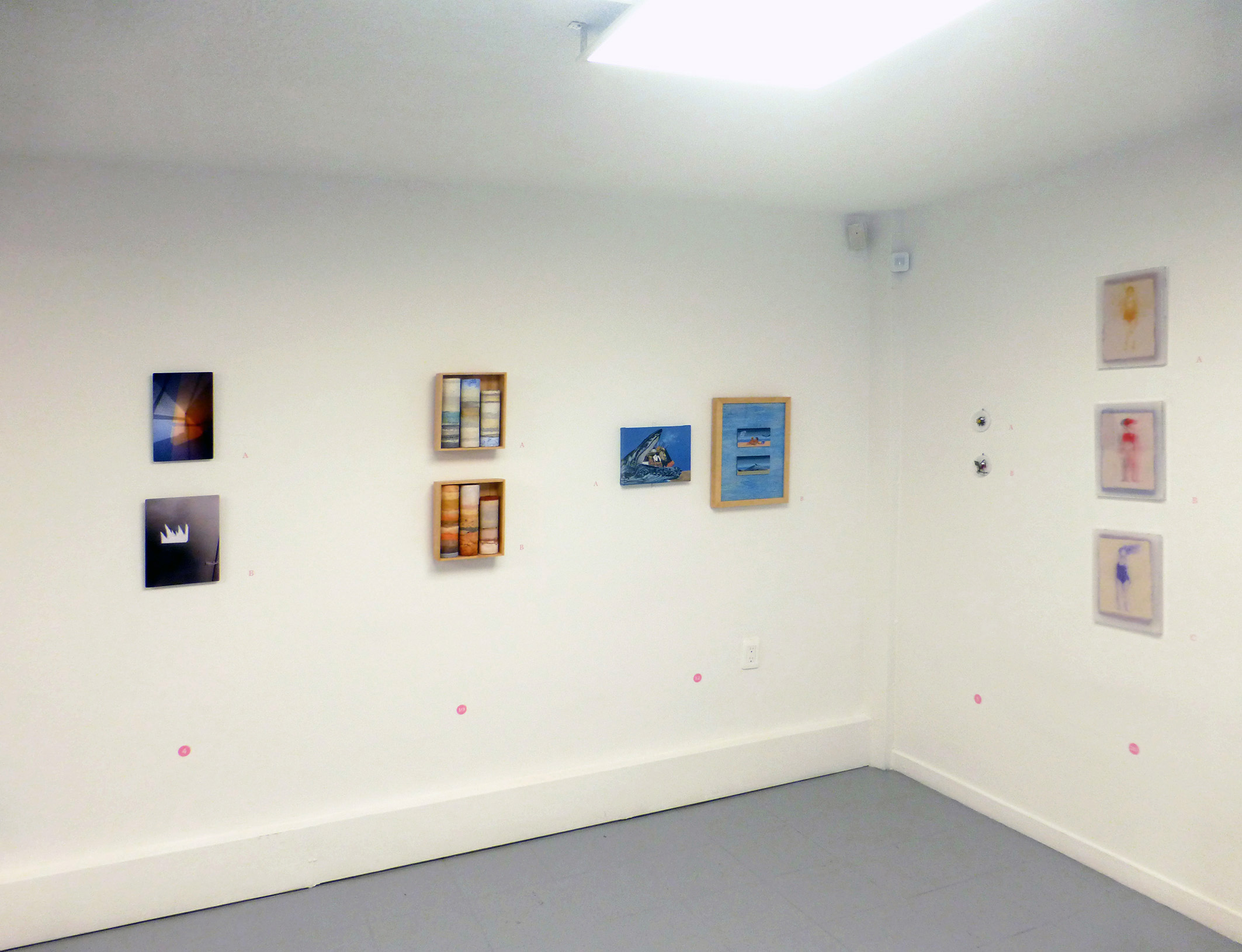
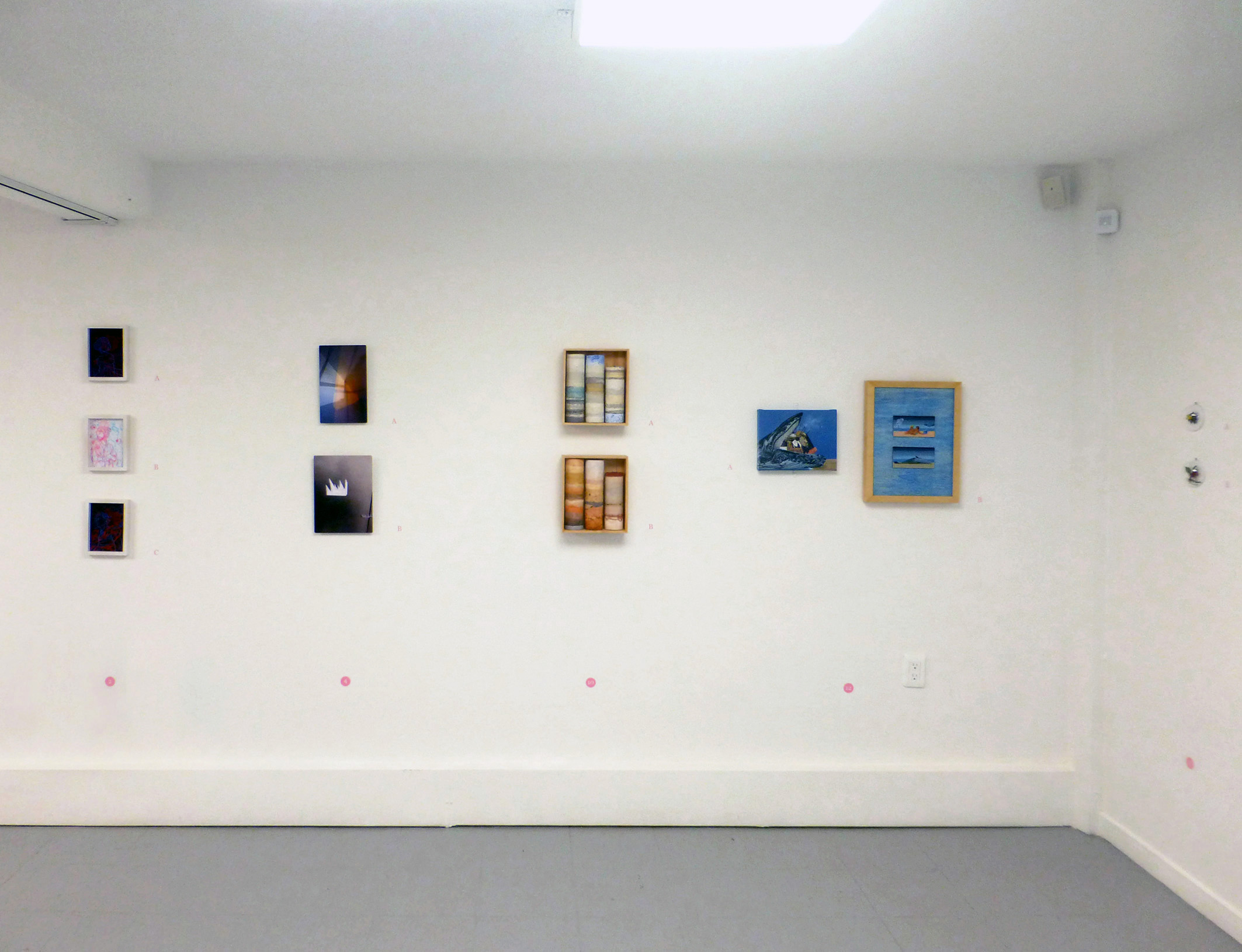
Tecnolitas, 2023
Sculpture; aggregates, cements and mineral pigments, recycled petroleum-derived polymers, technological and industrial waste, natural wood box; 27 x 23 x 8 x 8 cm.